This Article explores the use of science as a tool of public policy and examines how science policy impacts indigenous peoples in the areas of environmental protection, public health, and repatriation. Professor Tsosie draws on Miranda Fricker’s account of “epistemic injustice” to show how indigenous peoples have been harmed by the domestic legal system and the policies that guide the implementation of the law in those three arenas. Professor Tsosie argues that the theme of “discovery,” which is pivotal to scientific inquiry, has governed the violation of indigenous peoples’ human rights since the colonial era. Today, science policy is overtly “neutral,” but it may still be utilized to the disadvantage of indigenous peoples. Drawing on international human rights law, Professor Tsosie demonstrates how public policy could shift from treating indigenous peoples as “objects” of scientific discovery to working respectfully with indigenous governments as equal participants in the creation of public policy. By incorporating human rights standards and honoring indigenous self-determination, domestic public policy can more equitably respond to indigenous peoples’ distinctive experience. Similarly, scientists and scientific organizations can incorporate human rights standards into their disciplinary methods and professional codes of ethics as they respond to the ethical and legal implications of their work.
Jan 25, 2013
Tsosie on 'Indigenous peoples and epistemic injustice'
Prof. Rebecca Tsosie of Arizona State has a new article in the Washington Law Review titled "Indigenous Peoples and Epistemic Injustice: Science, Ethics, and Human Rights". From the Abstract:


Jan 24, 2013
About those 45,000 antiquities...
 |
| A problematic Amber piggie? |
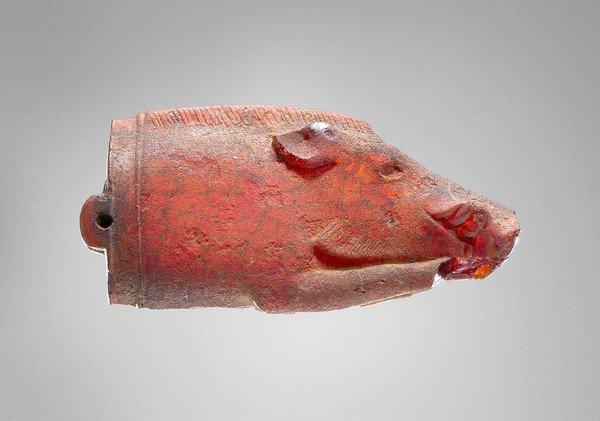
The review is likely to reveal that problems in the Getty's collection go far deeper than the nearly 50 looted objects returned since 2007 , according to Getty records and interviews with antiquity dealers and former museum officials. Hundreds of objects still in the collection were acquired with false ownership histories aimed at disguising their origins in the illicit antiquities trade, records and interviews show. The depth of its problem was underscored in November, when the Getty published a catalog of 56 carved ambers, objects that the ancient Greeks and Etruscans used in amulets for the magical properties they were believed to possess. At first look, "Ancient Carved Ambers in the J. Paul Getty Museum" represents the museum at its finest -- decades of scholarship published online in an illustrated catalog that engages the public in a rarely studied artifact of the ancient world. But records -- including internal Getty files -- show that the ambers were almost certainly looted from tombs in northern Italy.
This will be a fascinating effort to track in the coming months. The Getty is conducting this retroactive history search, and is a very good effort. The point to note though is how deep this examination goes into the objects, and whether it will trigger continued returns. Will the nations of origin even want the return of all of this study material? Will these nations have the capacity to store and study these objects in the same way the Getty can? Is this a contradiction the Getty hopes to make? All interesting questions.
- Jason Felch, Getty studies its antiquities, Los Angeles Times, January 19, 2013, http://articles.latimes.com/2013/jan/19/entertainment/la-et-getty-ambers-20130119.
Jan 16, 2013
Challenges for Preservation in Dahshour, Egypt
 |
| This Pyramid at Dahshour is being threatened |
In the case of Dahshour, villagers say their cemeteries are full and authorities don't give permits or land for new ones. So they took matters into their own hands and grabbed what they insist is empty desert to erect family tombs. "The dearest thing for us is burying our dead," said Mohammed Abdel-Qader, a resident of nearby Manshiet Dahshour. "This land here is wide and flat, it's a valley. Where are the antiquities they talk about? ... We have no antiquities here.". . .The cemetery expansion is the most dangerous encroachment yet because of how close it comes to the Dahshour monuments, which are on the UNESCO World Heritage site list, Younes said. Moreover, Dahshour is largely unexcavated, since the area was a closed military zone until 1996. What remains buried is believed to be a treasure trove shedding light on the largely unknown early dynasties. "When you build something over archaeological site, you change everything. We can't dig in and know what is inside," Younes told The Associated Press. "This is the only virgin site in all of Egypt."

The story notes that the construction of new tombs, though illegal, may also be cover for looting. The piece paints a troubling picture. Consider the difficult time Egyptian officials must have had in protecting and preserving a site like this. They must weigh the concerns of angry local populations, be wary of the more dangerous antiquities looters, and also work to preserve the site.
Jan 10, 2013
Getty Announces Return of Morgantina Terracotta Head
 |
| The head of Hades, likely looted from Morgantina, to return to Aidone in 2014 |
The Getty press release is slim on details of the acquisition and on what circumstances led to the decision to make a voluntary return. The release states that "joint research" with colleagues in Sicily since 2010 has brought new information to light "suggesting that it was appropriate to return the object". The evidence is the discovery of four other terracotta fragments near Morgantina which must match this head in some way. The only mention of wrongdoing in the release states that these four fragments were uncovered at "the site of a sanctuary of Demeter, which was clandestinely excavated in the late 1970s."
The language of the release is careful and I guess serves its purpose. I wonder if there is room here for an analysis of the shape and form that these press releases. I think so. Think about how it differs and resists the words we often use to describe this activity. The words 'repatriation', 'Italy', 'looting', and even 'crime', are not mentioned. But despite the problem I have with the language, it appears from the release as if the Getty is doing cultural justice here. The object was looted and it is returning home soon. But I'm left wondering how many other objects from sites like Morgantina does the Getty retain. The release ties the return to the discovery of physical evidence at the site, and connects this with the object. But what about the contemporary evidence like who bought the object from who and what questions were asked when an object was acquired. We know from investigative reporting like Chasing Aphrodite how little inquiry was made. But this would be so much more direct, cheaper and useful than elaborate scientific tests. My rule of thumb when visiting a museum is, if they don't tell you about the history of an object, there is very good chance it was looted.
This head will be transferred over to the Archaeological Museum in Aidone, where it will likely be displayed near "la dea di Aidone" previously known as the Getty goddess, returned in 2010. The head first will be a part of a Getty-organized traveling exhibition titled "Sicily: Art and Invention between Greece and Rome" which will start at the Getty, stop off at the Clevelend Museum of Art, and culminate in Palermo in June 2014.
Jan 9, 2013
Student Note on "Cultural Revival in the New Libya"
Kim Lee has authored a student note entitled "The Amaigh's Fight for Cultural Revival in the New Libya: Reclaiming and Establishing Identity Through Antiquity", 11 Seattle Journal for Social Justice 1 (2012). From the introduction:
A look at the Amazigh and the ongoing conflict in Libya illustrates this issue. This article seeks to investigate the problems that are caused by a lack of governing laws and conventions by using the Amazigh as a lens into the issue, and to serve as a catalyst for further exploration of the subject. This article’s primary purpose is to draw attention to the debate about indigenous antiquities and cultural property, while acknowledging that events surrounding the debate are constantly developing. More specifically, this article asserts four main points. First, because indigenous communities are already underrepresented in their societies, a barrier is created that prevents the recognition of threats to their archaeological artifacts and cultural property. Second, there is often a dearth of information associated with antiquities of indigenous communities, making current bodies of law difficult to apply. Third, even if such information were available, current international law is still inapplicable because it is seriously inadequate when it comes to addressing indigenous artifacts and cultural property. And fourth, the complex nature of But very few of these conventions and treatises address indigenous antiquities and cultural property. This is especially true when an indigenous community has been oppressed by a governing regime that is later overthrown, and when specific information regarding the indigenous community’s antiquities is difficult to obtain or perhaps even nonexistent. Given the large number of indigenous communities in the world, this is an issue that must be addressed. A look at the Amazigh and the ongoing conflict in Libya illustrates this issue. This article seeks to investigate the problems that are caused by a lack of governing laws and conventions by using the Amazigh as a lens into the issue, and to serve as a catalyst for further exploration of the subject. This article’s primary purpose is to draw attention to the debate about indigenous antiquities and cultural property, while acknowledging that events surrounding the debate are constantly developing. More specifically, this article asserts four main points. First, because indigenous communities are already underrepresented in their societies, a barrier is created that prevents the recognition of threats to their archaeological artifacts and cultural property. Second, there is often a dearth of information associated with antiquities of indigenous communities, making current bodies of law difficult to apply...
Follow this blog on facebook and twitter

Dec 31, 2012
The Best Heritage Writing of 2012
 |
One of my favorite stories this year was Nancy Greenleese's profile of Dr. Laurie Rush at the annual ARCA conference and her work with others to raise awareness in the U.S. military to the destruction of archaeology. Dr. Rush's writing on the use of cultural property as a 'force multiplier' was an example of thoughtful practical action that can be taken to secure heritage.
In terms of blogging, every year more and more voices join the blogosphere, and its always a pleasure to see more and more voices enter the conversation and offer unique perspectives. I found myself reading every post at Jason Felch and Ralph Frammolino's Chasing Aphrodite which has taken the investigative reporting of their book and expanded its scope to include other figures in the antiquities trade, including Douglas Latchford, and Subhash Kapoor. First-class investigative reporting has been one of the cornerstones of the heritage protection movement, and their thoughtful thoroughly researched writing has been a terrific resource.
Speaking of reporting, I want to highlight in particular the reporting of PRI's The World, which has offered some of the best first-hand accounts of antiquities looting, especiall the ongoing looting in Egypt and in Syria. The New York Times also has a dynamic reporting team in Tom Mashberg and Ralph Blumenthal, who have done excellent reporting on Cambodia's efforts to block the auction of a disfigured and looted Koh Ker statue at Sotheby's in New York.
For those interested in the day-to-day developments in the American legal system, Rick St. Hilaire's wonky 'cultural heritage lawyer' does a terrific job updating the progression of cultural heritage prosecutions and seizures. His coverage of the Peter Weiss coin smuggling prosecution, Subhash Kapoor, and the Ka Nefer Nefer were particularly outstanding.
Though I haven't read all the entries, the ambitious and much-needed encyclopedia being compiled by the Trafficking Culture folks will surely stand as an important resource for many years to come, it's a must-read for anyone interested in the field. Entries on the 'Fano bronze', Giacomo Medici and Gianfranco Becchina are particularly excellent examples.
In case you missed it, some of my personal favorite moments of the year including teaching a field class in Cerveteri with Stefano Alessandrini with the ARCA class of 2012, experiencing the salt mines and graffiti trains of Kansas, coaching another super group of lawyer's to be at the cultural heritage competition moot court competition in Chicago, and visiting the best student art history conference, the Arthattack conference at Guelph.
And lastly, though its not writing, the moving documentary 'Lost Bohemia' by Josef Birdman Astor is the best examination on film I've seen to chronicle the importance of preservation in all its forms. It is a straightforward effort to save something which is at risk. But its emotional core is the lives and decline of the artists it presents. Preservation is such an urgent thing when its impacting a living community. And though it was released in 2010-11, it was new to me this year. The documentary presents the residents who had been living for decades in the studio apartments above Carnegie Hall. The dancers, photographers, actors, music makers, writers and other characters had created this idyllic creative scene, and were being removed for the creation of offices and cubicles for Carnegie Hall. It's not got a happy ending, but reinforced for me why heritage matters and how much hard work even small victories require. I'll leave you with the trailer, please seek it out where you can find it.
Cheers to 2012 and thanks for reading!
Dec 27, 2012
On Sentencing Antiquities Looters
Last week a number of folks drew my attention to the news that in Greece two men have been sentenced to life in prison for dealing in antiquities. The objects they looted and handled were worth an estimated €12 million. Two more men were jailed for 20 and 16 years. Based on the very brief AP report, it seems the men were digging near Thessaloniki close to an ancient cemetery.
I have seen a few remark that these very stiff sentences should be applauded and even are a sign that the Greek government takes archaeological looting seriously. I don't know the specifics of this case, and it is not clear if these four sentences will be appealed and what kinds of parole options the violators will have. So we are dealing with a number of unknowns. And as a result I'd like to make a humble plea for a little sobriety when sentences of this nature are handed down. Too many archaeologists and other advocates hop up and down and either rejoice at these strong sentences—or criticize probation and fines which are at the other end of this spectrum. I think having a vigorous debate about what role prosecutions, and custodial sentences may play in reducing looting is a welcome development, but one should not make the mistake of jumping into sentencing policy without at least some cursory introduction very complicated field.
The deterrent power of criminal sanctions is very much an open question about even the 'big' crimes the justice system is supposed to prevent, things like murder and armed robbery. In the United States and in many other nations the criminal justice system is an imperfect mechanism which too often is asked to accomplish things it cannot. To expect this flawed institution to come riding in and solve the problems of heritage management, looting, and theft is terribly unrealistic. As many have pointed out, there is no magic bullet for heritage crime. Police and prosecutors have a role to play, but the stakeholders need to step up as well. Nations of origin, auction houses, buyers, and museums should not expect a flawed institution to fix what they are unable or unwilling to fix themselves.
I have seen a few remark that these very stiff sentences should be applauded and even are a sign that the Greek government takes archaeological looting seriously. I don't know the specifics of this case, and it is not clear if these four sentences will be appealed and what kinds of parole options the violators will have. So we are dealing with a number of unknowns. And as a result I'd like to make a humble plea for a little sobriety when sentences of this nature are handed down. Too many archaeologists and other advocates hop up and down and either rejoice at these strong sentences—or criticize probation and fines which are at the other end of this spectrum. I think having a vigorous debate about what role prosecutions, and custodial sentences may play in reducing looting is a welcome development, but one should not make the mistake of jumping into sentencing policy without at least some cursory introduction very complicated field.
The deterrent power of criminal sanctions is very much an open question about even the 'big' crimes the justice system is supposed to prevent, things like murder and armed robbery. In the United States and in many other nations the criminal justice system is an imperfect mechanism which too often is asked to accomplish things it cannot. To expect this flawed institution to come riding in and solve the problems of heritage management, looting, and theft is terribly unrealistic. As many have pointed out, there is no magic bullet for heritage crime. Police and prosecutors have a role to play, but the stakeholders need to step up as well. Nations of origin, auction houses, buyers, and museums should not expect a flawed institution to fix what they are unable or unwilling to fix themselves.
Dec 20, 2012
2nd Circuit Rules for the Met in a Bolshevik-era restitution suit
 |
| "Portrait of Madame Cezanne", Pierre Cezanne (1891) |
In 1911, Ivan Morozov purchased the work. Morozov was a Russian art collector, and lost this work and another Van Gogh currently held by Yale University after the Bolshevik seizures during the Russian revolution. Konowaloff is the great-grandson of Morozov. The Soviet Union in 1933 needed funds and decided to deaccession (if I can use that term in this context) the painting. The paintings were purchased by Stephen Clark, an American who bequeathed the Cézanne to the MET and the Van Gogh to Yale University. Yale decided to initiate a declaratory suit, getting ahead of the lawsuit, and is still ongoing.
So the Bolshevik-era claim has been extinguished. One wonders though if the way courts treat the act of state doctrine in this context may be different from the ways it might treat foreign ownership declarations of other works of art. That's a question I don't have the answer to. It may be there are peculiar aspects of the doctrine. But on balance this seems like nations are given the benefit of the doctrine when it comes to situations where museums have long possessed these objects, but they aren't given the same advantages in other repatriation cases. That may be because of problems baked-in to the doctrine, or not. I'm not aware of any direct act of state doctrine argument which bends for claimant-nations, it seems primarily to assist current museums attempting to fend off suits arising from Nazi-era takings.
- Philip Boroff, Met Museum Sued Over Cezanne Painting Stolen by Bolsheviks From Collector, Bloomberg, December 8, 2010.
- Konowaloff v. Metropolitan Musem of Art 11-4338-cv (2nd Cir. 2012)
Dec 17, 2012
DeMott on "Artful Good Faith"
Deborah A. DeMott, a Professor at Duke Law, has an interesting essay titled "Artful Good Faith: An Essay On Law, Custom, AndIntermediaries In Art Markets" appearing in 62 Duke Law Journal 607 (2012). From the introduction:
An interesting approach which examines the successes generated with increased attention on Nazi-era taking of art and the antiquities acquisition policies of North American museums. Connecting legal shifts and the shadow they cast on auction houses and museums is an important consideration as we attempt to make informed recommendations about how the law should change.
This Essay explores relationships between custom and law in the United States in the context of markets for art objects. The Essay argues that these relationships are dynamic, not static, and that law can prompt evolution in customary practice well beyond the law’s formal requirements. Understanding these relationships in the context of art markets requires due attention to two components distinctive to art markets: the role of dealers and auction houses as transactional intermediaries as well as the role of museums as end-collectors. In the last decade, the business practices of major transactional intermediaries reflected a significant shift in customary practice, with attention newly focused on the provenance (ownership history) of objects consigned for sale and on long-standing concerns with an object’s condition and authorship. During the same time major museums developed new policies and practices applicable to new acquisitions and objects already in held in collections, focused in particular on archaeological objects and ancient art, as well as paintings present in European countries subject to the Nazi regime between 1932 and 1945. The Essay argues that, in both cases, law furnished the backdrop to significant shifts in customary practice, augmented by heightened public knowledge and concern. Custom evolved in response to salient episodes of enforcement of the law, which furnished further rallying points for newly broadened or awakened public interest and concern. The relationships explored in this Essay are relevant to ongoing debate about the merits of the underlying law. In the United States, it has long been true that nemo dat quod non habet—no one can give what one does not have—with the consequence that a thief cannot convey good title. The subsequent transferees lack good title and are not insulated against claims by the rightful owner even when the transferees acted in good faith. To be sure, an elapsed statute of limitations may furnish a defense, as may the equitable doctrine of laches. Prior scholarship notes that the United States is unusual, but not unique, because it does not recognize any good-faith purchaser defense in this context and because it does not require that the rightful owner of a stolen object compensate the good-faith purchaser as a condition of obtaining the return of the object. However, this scholarship does not acknowledge (or does not emphasize) the significance of transactional intermediaries within art markets or the operation of customary practices of museums and transactional intermediaries. This Essay thus adds the context requisite to evaluating the merits of the relevant law.
An interesting approach which examines the successes generated with increased attention on Nazi-era taking of art and the antiquities acquisition policies of North American museums. Connecting legal shifts and the shadow they cast on auction houses and museums is an important consideration as we attempt to make informed recommendations about how the law should change.
Subscribe to:
Posts (Atom)
LinkWithin
