Showing posts with label Art Market. Show all posts

May 17, 2012

Auction Houses and Credit Card Fraud

The Art Newspaper reports on an interesting and widespread problem with the art market in the United Kingdom. It seems fake credit cards have been used to steal art up for auction. And as the report notes, the problem flows all the way to Bonhams and Christie's, with as many as 30 auction houses reportedly affected.

Says one anonymous auction house director:

"[The problem is that people] were buying goods over the phone and picking them up before the transaction had cleared,” says the director of one of the defrauded auction houses, who wishes to remain anonymous. “We trusted that banks would be doing checks at their end. Aside from the usual identity checks we can’t tell whether the card that people use over the phone is theirs."

It is an obvious problem, but one that has not really been discussed. If buyers are allowed to remain anonymous, it is a perfect environment for criminal intervention. Auction houses play such a crucial role in the art market, and as a consequence play an important role in the way we transfer these important parts of our collective cultural heritage. But these institutions are poorly designed to safeguard against theft, looting, forgery, and fraud.

The way in which auction houses conduct business today has been revolutionised; online, anonymous and increasingly international bidding is now commonplace. This spate of frauds, however, suggests that the art market’s financial procedures have yet to catch up. 


  1. Riah Pryor, Credit card investigation shows art market open to international fraud, The Art Newspaper, May, 2012, http://www.theartnewspaper.com/articles/Credit+card+investigation+shows+art+market+open+to+international+fraud/26406 (last visited May 17, 2012).

May 2, 2012

Arrests in the Fitzwilliam Theft

There are reports that between two and six individuals have been arrested in connection with the theft of 18 Chinese objects from the Fitzwilliam Museum in Cambridge. The theft was the subject of BBC's Crimewatch Tuesday:

The stolen pieces had been given as gifts or bequests to the museum, with some experts estimating the artifacts to be worth approximately £18 million (about $28.7 million Cdn). None of the artifacts has been recovered. Police sought help from the public through a segment on the BBC-TV program Crimewatch on Tuesday evening. The show aired closed-circuit camera footage of four suspects sought in conjunction with the robbery.
As Dick Ellis explained in an interview last week, these thieves probably saw the booming trade in Chinese artworks, and may not have understood how difficult an eventual sale would be. Much in the same way similar objects were stolen from the Durham museum.

17th Century jade "imaginary beast" stolen from Fitzwilliam MuseumNoah Charney speculated last week that the stolen objects will be "smuggled [to China] . . . for in China the general rules about not purchasing art without performing Due Diligence and checking stolen art databases do not apply. Provenance is far less of an issue, sometimes for cultural reasons, but also for practical ones–Internet black-outs mean that many in China could not check stolen art databases, even if they were inclined to do so." I'm not sure that will be the case.

The Chinese have—on paper at least—the most regulated art market in the world, with a tiered series of regulation. It is one of the only sets of regulations which puts direct regulation in the art market, at the point of sale. Are there problems and corruption? Perhaps. But what art market—whether its in Rome, Paris, London, or New York is not corrupt?

In 2002, the Standing Committee of the National People’s Congress passed the Law on the Protection of Cultural Relics. The 2002 Law legalizes private transactions involving cultural relics in five circumstances, (1) legal inheritance or gift; (2) purchase from cultural relics shops; (3) purchase from cultural relics auction enterprises; (4) exchanges or transfers between individual citizens; and (5) other methods authorized by the central government. Many of these transactions take place at officially sanctioned cultural relics shops and auction enterprises; and the 2002 Law prohibits a cultural relic shop from running an auction and vice versa.

Under Article 58, the government may buy any cultural relic submitted to a mandatory inspection before sale pursuant to Article 56. During this mandatory inspection, under Article 56, the government is given a kind of right of first refusal, with the purchase price determined by the government representative. Pursuant to article 57, in the event of a sale to a private individual, a report is produced, effectively tracking the buyers and sellers of cultural objects. This new regulatory framework seems a very aggressive strategy, and one that, if implemented effectively, could positively impact the illicit trade in China. However, implementing this strategy may be difficult and subject to corruption.  And yet by recording who buys what, it may be possible not only to track the chain of title of specific cultural objects, but also to evaluate whether individuals are routinely buying and selling stolen, looted, or suspicious objects. What other nation does this routinely? Perhaps the Italian Carabinieri, but that may be it.

Many in the West have an immediate reaction to all things China. And I think that quote above does not really convey the reality of the Chinese art market. Prof. Paul Bator remarked in 1983 that China was the great under-researched area of the world when it comes to sources of heritage theft (he called it art theft). Despite s few reports, that is still the case. We can blame the Chinese for other problems perhaps, but the Chinese art market does not I think bear the collective guilt for the Fitzwilliam theft. Rather it seems to be a more homegrown set of thieves from East London.
  1. He Shuzhong, Protection of China’s Cultural Heritage, 5 J. Art, Antiquity & L., 19 (2000).
  2. J. David Murphy, Plunder and preservation : cultural property law and practice in the People’s Republic of China, (1995), http://www.bcin.ca/Interface/openbcin.cgi?submit=submit&Chinkey=204154 (last visited May 2, 2012).
  3. Andrew Jacobs, China Hunts for Art Treasures in U.S. Museums, The New York Times, December 17, 2009, http://www.nytimes.com/2009/12/17/world/asia/17china.html?_r=2&hp (last visited Dec 17, 2009).
  4. Peter Foster, China to study British Museum for looted artefacts, Telegraph.co.uk, October 19, 2009, http://www.telegraph.co.uk/news/worldnews/asia/china/6374959/China-to-study-British-Museum-for-looted-artefacts.html (last visited Oct 20, 2009).

Apr 17, 2012

Speaking out about fakes

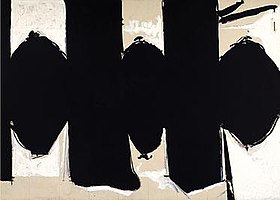
Elegy to the Spanish Republic No. 110, Robert Motherwell 1971 
Jack Flam, currently working on a catalogue raisonné of Robert Motherwell talks about the backwards incentives by members of the public and scholars when it comes to authenticating art. Highly recommended, it puts all the discussion of fakes and forgeries in the context of what experts and the market are not doing to prevent fakes from polluting the pool of art in private collections and in the public trust:

These market circumstances have unfortunately coincided with a situation in which scholars and foundations that make decisions about authenticity feel increasingly constrained by legal threats from people who own or are selling fakes. So while the number of fakes in the marketplace is dramatically increasing, an important means for assuring the veracity of artists’ works has been disappearing. Several scholars and foundations are ceasing to authenticate works because they are afraid of lawsuits, and such fears have even constrained the way scholars communicate with each other.
Back in 2008, after the Motherwell catalogue raisonné project suspected that a number of “Spanish Elegy” paintings were forgeries, I had ample occasion to observe how pressure can be effectively put on scholars who believe a painting is inauthentic in order to constrain them from saying so publicly. When I contacted scholars who were engaged in research on some of the other artists whose works were supposed to be in Rosales’s collection, many declined to discuss their opinions about those works; and the ones who did so usually insisted on speaking off the record.
It was not until injured parties came forward—that is, people who had spent significant amounts of money on works that did not pass the scrutiny of either connoisseurship or forensic testing—and the press picked up the story that scholars became (cautiously) more open about what they thought of those works.
  1. Jack Flam, Break the silence over fakes, The Art Newspaper, April 12, 2012, http://www.theartnewspaper.com/articles/Break-the-silence-over-fakes/26124 .

Nov 9, 2011

France Seizes Painting Stolen in 1818

Christ Carrying the Cross, Nicolas Tournier
The owner of Weiss Gallery in London is in "complete shock" after officials from the French ministry of culture have refused to allow The Carrying of the Cross, by Nicolas Tournier to be taken from France back to England. The gallery purchased the painting at a Maastricht art fair last year for 400,000 Euros. The gallery took it to a small old master art fair in Paris called Paris Tableau, but France has now detained the work of art.

Mark Weiss, the owner of the gallery stated "I've been in communication with the director of the Toulouse museum since I acquired the painting in 2010, and at no stage has he ever stated that the picture was a stolen painting." The work originally hung in a chapel in Toulouse, but during the French Revolution the work was confiscated and moved to a museum. It was then apparently stolen from a museum in 1818. It would be interesting to know more about what those conversations were like between Weiss and the Toulouse museum.

France has argued this is the rediscovery of a long-lost work, yet it was stolen nearly two centuries ago. Have there been persistent claims for its return? I'm not sure. It is difficult to envision the French have the legal right to seize the painting so long after its theft. They do have the de facto power perhaps to temporarily detain the work, and make life very difficult for the gallery owner. Any experts in the area of French law care to offer any opinions? The newspaper accounts have merely focused on the seizure, without diving into the merits.
  1. AFP: British gallery rejects France’s claim to painting, (2011) (last visited Nov 9, 2011).

Jan 19, 2011

What's the Difference Between a Pawnshop and antique shop?

The pawnshop is most likely subject to more regulation. Book and antique shops are criticizing a potential lapse in Utah law which would require all buyers of rare books and antiques to be fingerprinted, and a catalog entered of all the objects. At least part of the renewed calls for more regulation stem from a murder in November. Sherry Black, a prominent member of the community—mother-in-law to the owner of the Utah Jazz. She was a rare book dealer who bought $20,000 worth of books stolen from the Church of the Latter Day saints. The seller may have been a gang member who beat and stabbed the woman to death.

Given that kind of violence, a sensible increase in regulation seems warranted. It seems as if a running catalog of objects sold would be very helpful. Fingerprinting may be a step too far, but a simple photocopy of a drivers license perhaps would not seem out of the qustion, particularly if an objects value exceeds a sensible amount, $5,000 perhaps.

I was struck then by Ethan Trex's discussion of pawnshops:

Meanwhile, European pawnbroking began to flourish during the Middle Ages. The Norman Conquest introduced the practice to England, and the Lombardy region of northern Italy was another hotbed of pawnbroking. In fact, pawnbroking became so strongly identified with Lombardy throughout Europe that the term “Lombard” gradually became synonymous with “pawn shop” and “Lombard banking” was a widespread term for pawnbroking.
Anyone who turns to a pawnbroker to scare up some quick cash is in good historical company. Pope Leo X, a notoriously free spender, once had to pawn his own palace furniture and silver to cover his luxurious lifestyle and patronage of the arts. (It’s no surprise, then, that Leo X was at the helm of the Church when it gave the practice of pawnbroking the official thumbs-up in 1515.) In 1338 King Edward III hocked his jewels to raise funds for the English military at the dawn of what would become the Hundred Years’ War.


  1. Derek P. Jensen, Utah’s used-book, antique shops fear crackdown, The Salt Lake Tribune, January 13, 2011, http://www.sltrib.com/sltrib/home/51045760-76/says-law-antique-lawmakers.html.csp (last visited Jan 18, 2011).

Oct 25, 2010

From Medici to Deutsche Bank

Why do banks buy so much art?  To earn prestige apparently. Yet that prestige may come at a cost as banks do not want to be seen spending extravagantly in the wake of the mortgage crisis and bailouts.


Few banks collect art to make money. A liquidation auction of art from collapsed investment bank Lehman Brothers in London on Sept. 29, for example, raised $2.6 million. Not bad, but it won't make a dent in the $613 billion in liabilities the bank had run up when it folded.
Art confers respectability and respect, according to Joan Jeffri, director of the arts-administration program at Columbia University's Teachers College, and banks need those more than ever. From the mighty Medici banking dynasty in Renaissance Florence to the giants of the 19th century, like John Pierpont Morgan, art has been used to project status and power.
You could argue that the banks have done a better job of acquiring art than they have of acquiring financial assets. What's more valuable: a Richard Diebenkorn painting or a toxic collateralized debt obligation? "The people responsible for managing these corporate collections have professionalized," Jeffri says. "Whereas it was once the wife of the CEO or some personal friend managing the CEO's interest in art, now banks have art departments and on-staff curators."


  1. Eben Harrell & Frances Perraudin, Cultural Assets: Banks Stock Up on Art, TIME,  http://www.time.com/time/magazine/article/0,9171,2024218,00.html?artId=2024218?contType=article?chn=bizTech (last visited Oct 25, 2010).

May 24, 2010

"[S]ome in the art world desire a market that is neither open nor honest."

So notes federal district court Judge William H. Pauley III in an opinion denying the request by Craig Robins to prevent the sale of three works which he was not allowed to buy.  Robins alleged that art dealer David Zwirner had effectively blacklisted him from buying other works by Marlene Dumas.  From Randy Kennedy's summary:

The collector, Craig Robins, asserts in a lawsuit that he sold a painting by Ms. Dumas through the David Zwirner Gallery in Chelsea in 2004 with an agreement that the sale remain confidential. But the gallery, which took over representation of Ms. Dumas in 2008, told her about it, Mr. Robins asserts, causing her to add his name to the blacklist, even though he has an extensive collection of her works, 29 in all, according to the suit. In court testimony, Ms. Dumas’s former dealer confirmed that the artist maintains a blacklist of collectors and dealers whom she believes to be speculating in her works or simply selling them too quickly after buying them. Mr. Robins says that the Zwirner gallery promised to help get him off the blacklist and to sell him new paintings but that the gallery failed to do so. The gallery has denied the claims.

Ed Winkleman argues this might have all been avoided with the introduction of droit de suite in New York:

In situations such as the one that led to the Robins-Zwirner lawsuit, droit de suite would work well for galleries too. If the law required collectors to share the profits from any resale, the gallery would not get caught between the furtive goals of the collector and the wishes of their artist. Indeed, in most resale arrangements all three parties (collector, gallery and artist) could be motivated to work together to ensure each makes the most money possible. 
  1. Randy Kennedy, Collector’s Motion for Court Order Against Gallery Is Denied - ArtsBeat Blog - NYTimes.com, http://artsbeat.blogs.nytimes.com/2010/05/21/art-collector-fails-to-get-court-order-against-gallery/?ref=design (last visited May 24, 2010).
  2. Helen Stoilas & Marisa Mazria Katz, Judge denies collector's injunction against dealer The Art Newspaper, http://www.theartnewspaper.com/articles/Judge-denies-collector-s-injunction-against-dealer/20893 (last visited May 24, 2010).
  3. Edward Winkelman, The case for droit de suite in New York | The Art Newspaper, http://www.theartnewspaper.com/articles/The-case-for-droit-de-suite-in-New-York/20673 (last visited May 24, 2010).

Dec 8, 2009

Update on the Drouot Arrests

The AP reported yesterday that charges have been filed against nine employees of the Drouot auction house. French authorities last week found a stolen work by Gustave Courbet.

An auctioneer and eight commission agents were given preliminary charges, including ''organized theft,'' the prosecutor's office said.
Three others detained last week in the police raids on Drouot, its warehouses and homes of employees were released with no charges filed against them.
When the bust was announced last week, there was initial confusion about which Courbet work had been recovered. The painting -- stolen several years ago from a collection whose owner had recently died -- was not clearly identified, and the heir had confused it with another work, an official close to the inquiry said. He spoke on condition of anonymity because the case is ongoing.
Police initially identified the recovered Courbet work as ''La Vague'' (The Wave), worth euro900,000 ($1.3 million), but officials said Monday it was actually ''Paysage marin sous un ciel d'orage'' (Marine Landscape Under a Stormy Sky), worth about euro100,000.
The stolen Courbet -- one of several paintings by the convention-smashing realist master with a stormy ocean theme -- was found at the home of one of the commission agents being investigated. Other pieces recovered in the sweep included artworks, frames and furniture.
Under French law, preliminary charges give the judge more time to investigate and determine whether to send the case to trial. Three commission agents were jailed in the case, with the prosecutor's office accusing them of deep involvement in thefts dating back to 2001.
The auctioneer was released pending the investigation with the stipulation that he stop hosting sales.

  1. The Associated Press, Preliminary Charges vs 9 in Paris Auction Sweep, The New York Times, December 7, 2009.

Nov 30, 2009

A Profile of the Art Market

The Economist discusses the current state of the art market:


The current downturn in the art market is the worst since the Japanese stopped buying Impressionists at the end of 1989, a move that started the most serious contraction in the market since the second world war. This time experts reckon that prices are about 40% down on their peak on average, though some have been far more volatile. But Edward Dolman, Christie’s chief executive, says: “I’m pretty confident we’re at the bottom.”
What makes this slump different from the last, he says, is that there are still buyers in the market, whereas in the early 1990s, when interest rates were high, there was no demand even though many collectors wanted to sell. Christie’s revenues in the first half of 2009 were still higher than in the first half of 2006. Almost everyone who was interviewed for this special report said that the biggest problem at the moment is not a lack of demand but a lack of good work to sell. The three Ds—death, debt and divorce—still deliver works of art to the market. But anyone who does not have to sell is keeping away, waiting for confidence to return.
Good thing then that other buyers have appeared in Russia, the Middle East, and China.  In fact China has increasingly used the art market to seek repatriation:


The sensitivity of the subject was shown up in February this year when the collection built up by the late Yves St Laurent, a French fashion designer, and his partner Pierre Berge was put up for sale. The auction included bronze heads of a rat and a rabbit, two pieces that had been looted from the imperial palace of Yuanmingyuan by French and British soldiers in the opium wars in 1860. The heads, part of a series of 12 figures which dominated a zodiac fountain in the palace garden, had not even been designed by a Chinese artist but by a Jesuit priest from Venice who lived in the imperial capital. All the same, their provenance and history made their sale controversial.
The government let it be known that it did not approve of a public sale of the precious bronze heads in the West and did not want its citizens to take part. Even so, both the winning bidder and several underbidders turned out to be Chinese. One, a London-based businessman, had been planning to present the bronzes to the Chinese government as a gift. The buyer, Cai Mingchao, who secured the two pieces for EURO 31m ($46m), turned out to be an adviser to a Chinese foundation which seeks to retrieve plundered treasures. He announced very publicly soon afterwards that he would not pay up. The heads were quietly returned to Mr Berge. The government has since announced that it wants to catalogue all the pieces looted from Yuanmingyuan, which some believe is the first step in a campaign to reclaim them.

Oct 27, 2009

Banks as Art Museums?

Interesting piece from the New York Times on banks and their art collections:


Deutsche Bank is believed to own the largest corporate collection in the world, with some 60,000 pieces of contemporary art. UBS owns 40,000 pieces, and JPMorgan Chase 30,000. Combined, that approaches the Museum of Modern Art’s trove. Banks have various explanations for their hoarding instincts: lots of walls to cover, clients to impress, corporate identities to build. Or perhaps just some past director was a devoted patron.
If banks were temples of culture rather than lucre, the collections would be easy to justify. As a financial asset, however, much of the art is of dubious value. Some 400 works owned by Lehman Brothers, including ones by Roy Lichtenstein, are expected to fetch only about $1 million at a coming auction. And it’s hard to believe Andy Warhol or Damien Hirst ever helped get an initial public offering off the ground.
At least some banks take care of their treasures. JPMorgan, whose collection was started a half-century ago by David Rockefeller at Chase Manhattan, has a well-regarded curator. But many banks don’t even know what’s boxed up in the basement, having inherited artwork in takeovers.
Some do make an effort to share their artistic wealth. Monte dei Paschi di Siena of Italy invites the public to see some of its impressive collection, which stretches back to the Renaissance. The Swiss bank UBS lets the Tate Museum of Britain select from its collection. But these efforts don’t often come to much. The Tate currently has only three of UBS’s pieces on display.

The authors tie these large collections to the financial bailout.  I'm more interested in comparing these banks to art museums.   It make When banks purchase massive amounts of art, it becomes harder for museums to compete with the economic clout of banks.  Though the piece is critical of this ownership of works of art, I suspect one main reason these works of art are held is to wait until their value escalates and banks can trade them for tax exemptions.

  1. Jeffrey Goldfarb & Lauren Silva Laughlin, Banks Hoard Troves of Art, The New York Times, October 26, 2009.

Labels

"Bronze Statue of a Victorious Youth" (17) 1954 Hague Convention (12) 1972 World Heritage Convention (1) Aboriginal Heritage (1) Aboriginal Heritage Act 1988 (SA) (2) act of state doctrine (1) Admiralty Law (11) Afghanistan (10) Africa (4) Albright-Knox Gallery (3) Aleppo (2) Alfred Stieglitz (2) Alternative Dispute Resolution (1) Angkor (1) Anti-Seizure Legislation (1) antiquites (3) antiquities (337) Antiquities Act 1906 (2) Antiquities leasing (10) antiquities looting (4) antiquities smuggling (3) antiquities theft (6) ARCA (8) ARCA Annual Conference (10) ARCA MA Program (6) Archaeological Resources Protection Act (5) Archival Recovery Team (ART) (3) Archives (1) Armed Conflict (22) Arrests (79) Art and Cultural Heritage Law (1) Art Beat Constables (9) Art Crime Statistics (1) art fraud (9) art history (1) Art Institute Chicago (3) art law (1) Art Loans (9) Art Loss Register (19) Art Market (10) Art Theft (263) Artist Resale Right (1) arts funding (1) Association of Art Museum Directors (AAMD) (8) Athens (3) Auction (99) austerity (2) Australia (7) Austria (3) Authentication (3) Babylon (3) Banksy (1) Big Bend National Park (1) bilateral agreements (2) Black Hills (1) Bolton Forgers (4) Book Theft (3) Brazil (5) British Museum (13) Bronze (5) Bronze Statue of a Victorious Youth (1) Brueghel (1) Bruno Lohse (3) Brussels (1) Bührle Collection Theft (4) Bulgaria (4) Burke and Wills (2) Burns Mummies (1) Byzantine Artifacts (4) Cairo (1) Cairo art theft (2) California Raids (6) Caligula (1) Cambodia (11) Camille Pissarro (7) Carabinieri (6) Caravaggio (1) catalogue raisonné (1) Cellini Salt Cellar (2) Central Park (1) Cerveteri (1) Chance Finds (3) Charles Goldie (1) Chihuly Glass (1) China (16) Christie's (14) Church Thefts (6) Civil War (2) Claude Monet (4) Claudia Seger-Thomschitz (3) Cleveland Bronze Apollo (2) Cleveland Museum of Art (CMA) (5) Coins (7) Colonial Art (1) Columbia (1) Conferences (7) Conservation (1) Conventions (1) Copyright (5) Corot (1) Corrections (1) cosmpoplitanism (4) Costa Rica (2) CPIA (10) criminal charges (5) criminology (1) Crystal Bridges Museum (5) Cultral Property Advisory Committee (9) Cultural First Aid (2) cultural heritage (6) cultural heritage careers (2) Cultural Heritage Moot Court Competition (2) Cultural heritage movement (1) cultural justice (3) cultural policy (18) cultural property (4) Cultural Resource Management (1) cultural security (1) culture funding (1) curatorial theft (2) Cycladic Figurines (1) Cyprus (9) Dahshour (1) Dallas Museum of Art (DMA) (2) Database (5) Databases (4) DCMS (2) Deaccessioning (24) Dead Sea Scrolls (1) Dealing in Cultural Objects (Offences) Act 2003 (4) Declaratory Suits (4) Demand and Refusal (2) Design and Artists Copyright Society (1) Detroit Institute of Art (1) development (1) Dick Ellis (2) Diplomatic Bags (1) Doctrine of Discovery (3) Donald Trump (3) Donny George Youkhanna (2) Dr. No (6) Droite de Suite (2) Dubai (1) due diligence (5) eBay (5) Economics (1) Ecuador (1) Edgar Degas (2) Edinburgh (1) Edoardo Almagia (1) Edvard Munch (2) Egon Schiele (4) Egypt (55) El-Hibeh (2) Elgin Marbles (5) empirical studies (1) England (4) environmental justice (4) Environmental law (2) Erik Nemeth (1) Etruscans (2) Euphronios Krater (4) European Court of Human Rights (1) Export Restrictions (19) Fakes (6) FBI (16) FBI Art Crime Team (16) Festivus (1) Fifth Circuit (1) fire (1) Fisk University (3) Footnotes (59) force multiplier (1) Foreign Sovereign Immunities Act (FSIA) (6) forfeiture (13) Forgery (27) fossils (2) Four Corners Antiquities Investigation (11) fractional ownership (2) Francavilla Marittima (1) France (30) Francesco Rutelli (15) Frans van Mieris (2) Frederick Schultz (3) freedman's town (2) Gaza (1) George Grosz (1) Georgia (1) Georgia O'Keeffe (2) Germanicus (2) Germany (16) Getty (1) Ghent Altarpiece (1) Giacomo Medici (6) Gianfranco Becchina (1) Golf (3) good faith (3) Goya (3) Goya theft (4) graffiti (1) Greece (38) Grosz (1) Henri Matisse (1) Henry Moore (1) Heritage at Risk (1) heritage crime (1) Heritage Crime in Art (1) Hermitage (2) High Court in London (4) historic documents (1) Historic Landmark (1) historic preservation (1) historic weapons (1) Holocaust (Return of Cultural Objects) Act (2) Hopi (1) House of Commons Illicit Trade Advisory Panel (ITAP) (1) Houston (2) Howard Spiegler (2) Human Remains (5) Human Rights (1) Hungary (1) Identification (1) illicit excavation (1) Immigration and Customs Enforcement (16) Immunity (6) Immunity from Seizure Act (ISA) (3) import restrictions (3) in the media (7) Indemnity (1) Indianapolis Museum of Art (5) indictments (5) Indigenous Rights (2) Indonesia (1) injunctions (1) Insider Theft (2) Institute d'Egypte (1) Institute of Art and Law (1) Institutional theft (1) Intellectual Property (4) Intentional Destruction (6) International Criminal Court (ICC) (1) International Journal of Cultural Property (1) internationalism (4) INTERPOL (1) Interview (2) Interviews (2) Iran (8) Iran v. Barakat Galleries Ltd. (6) Iran v. Berend (3) Iraq (46) Isabella Stuart Gardner Museum (7) Islamic art (2) Israel (4) Istanbul (2) Italian Art Squad (5) Italian Culture Ministry (6) Italy (122) Jacques Goudstikker (4) James Ossuary (1) Jan Breugel the elder (2) Jan van Eyck (1) Japan (3) Jeanneret v. Vichy (1) Jeff Tweedy (1) Jenack v. Rabizadeh (1) JMW Turner (2) John Constable (1) Jonah Marbles (1) Jonathan Tokeley-Parry (1) Jordan (2) Joseph Farquharson (2) Journal Articles (1) Journal of Art Crime (1) Ka-Nefer-Nefer (9) Kansas (2) Kansas City (1) Kazimir Malevich (3) Kenya (1) Kingsland (3) Klimt (3) Koh Ker (6) Konowaloff v. Metropolitan Museum of Art (1) Kunsthal Museum Theft (2) La Dea Di Morgantina (6) Lawrence Kaye (1) Lebanon (1) Leonardo Da Vinci (9) Leopold Museum (1) Lewis Chessmen (5) lex originis (3) lex situs (5) Libya (2) Lincoln's Inn theft (1) Lithographs (1) loans (5) London (6) London Art and Antiques Unit (7) London Metropolitan Police (2) loot (1) looting (30) Los Angeles County Museum of Art (LACMA) (2) Los Angeles Museum of Contemporary Art (MOCA) (1) LS Lowry (3) Lucas Cranach (1) Lucas Cranach the Elder (3) Lucian Freud (1) Macedonia (1) Machu Picchu (12) Madonna of the Yarnwinder (recovery) (9) Mali (4) Malta (1) Manchester (2) manuscript (1) Maori (2) maps (2) Marc Chagall (1) Marion True (25) Mark Landis (1) market overt (1) Mausoleum at Helicarnassus (1) Max Stern (3) Maxwell Anderson (3) metal detecting (6) Metropolitan Museum of Art (the Met) (29) Mexico (9) Meyer de Haan (1) MFA Boston (6) Michael Brand (3) Michael C. Carlos Museum (1) Michael Steinhardt (2) Middle Eastern Geodatabase for Antiquities (MEGA) (1) Minneapolis Institue of Arts (MIA) (1) Moctezuma's Headdress (1) Modigliani (2) MoMA (4) Mondrian (1) Monet (3) Montreal Museum of Fine Art (2) Monument Men (5) Monuments Men (1) Moral Rights (3) Morgantina (2) Morgantina Aphrodite (9) Morgantina Treasure (1) Moscow (2) Musée d'Art Moderne theft (1) Museum Acquisitions (1) Museum Governance (1) Museum of Anatolian Civilizations (1) Museum of Fine Arts in Boston (6) museum security (2) museum theft (2) Museums Libraries and Archives Council (MLA) (1) Music (2) Myth (1) Napoleon III (1) National Academy (2) National Archaeological Museum in Naples (1) National Archives (3) National Gallery (Washington) (1) National Historic Preservation Act (2) National Stolen Property Act (8) nations of origin (5) Native American Graves Protection and Repatriation Act (8) Native Americans (17) native cultures (2) Nazi Spoliation (74) Neglect (1) Neil Brodie (1) Nelson-Atkins' Bloch Building (1) Netherlands (10) New Acropolis Museum (3) New Orleans (4) New York (6) New Zealand (7) Nigeria (1) nighthawking (3) Noah Charney (1) Norbert Schimmel (1) Norman Palmer (1) Norman Rockwell (2) Norway (4) NSPA (1) Nuclear Analytical Techniques (1) Odyssey Marine Exploration (23) Olympics (2) Omaha Nebraska (1) Organized Crime (1) Orphaned Works (2) Oskar Kokoschka (2) Oslo (1) Pablo Picasso (16) Pakistan (2) Palestine (3) Panama (1) Paolo Ferri (2) Paris (10) partage (1) Parthenon Marbles (17) Patents (1) Patty Gerstenblith (1) Paul Bator (2) Paul Cezanne (5) Paul Gauguin (4) Pazardzhik Byzantine Silver Hoard (1) Penn Museum (1) Pentagon (1) Pere Lachaise (1) Persepolis (3) Peru (24) Peru Headdress (1) Peter Watson (1) Philadelphia (7) Phillipines (1) Picasso (9) Pierre Le Guennec (1) Pierre Valentin (1) piracy (1) Pollock (1) Pompeii (3) Popular Culture (1) Portable Antiquities Scheme (25) Portrait of Wally (11) Poussin (1) pre-Columbian antiquities (2) pre-emptive archaeology (1) Prince Claus Fund (1) Princeton (4) Private Collectors (2) Private International Law (5) Proceeds of Crime Act 2002 (UK) (1) Prosecutions (7) provenance (13) Prussia (1) Public Art Theft (5) Public Trust (1) Publications (2) Quran (1) Radio (2) Ransom (2) realkulturpolitik (1) recovery (45) Rembrandt (2) Rene Magritte (2) Renoir (2) Renvoi (3) repatriation (121) Restitution (40) reward (1) Rhodes (1) Robert Hecht (8) Robin Symes (1) Rodin (2) Roger Atwood (1) Roman Objects (2) Rome (3) Rothko (1) Royal Academy (1) Rubens (3) Rubin v. Islamic Republic of Iran (2) Russia (11) Sale of "The Cello Player" (1) Sale of the "Gross Clinic" (11) Sale of the Stieglitz Collection (4) Salvage (1) Sao Paulo (2) Sao Paulo Museum of Art (3) Scheduled Ancient Monuments (1) Scholarship - Articles and Essays (57) Scholarship - Book Reviews (3) Scholarship - Books (12) Scholarship - Case Notes (1) Scholarship - Events and Conferences (55) Scholarship - Journal Articles (12) Scholarship - Student Papers (16) Scotland (7) Scotland Yard's Arts and Antiques Squad (1) scrap metal (1) Sculpture (2) security (4) seizure (16) Selling stolen art (1) seminars (1) semiotics (1) Sentencing (2) Serbia (1) settlement (1) Sevso Treasure (6) Shelby White (3) shipwreck (1) Sicily (4) Simon Mackenzie (2) Sisley (4) Slovakia (1) Smithsonian (4) Solomon R. Guggenheim (1) Sonic Fingerprints (1) Sotheby's (13) Sotheby's Paris (1) South Africa (1) South America (1) Spain (21) Spoliation (2) Spoliation Advisory Panel (8) St. Louis Art Museum (8) St. Ninian's Isle Treasure (3) Stair Gallery (2) State Department (2) Statue of a Victorious Youth (1) statute of frauds (1) Statutes of Limitations (10) Stephane Breitwieser (1) Stephen Colbert (1) Steven Spielberg (1) stewardship (2) Stolen Art (11) Stone Age (1) street art (1) study collections (1) Summer Palace Bronzes (7) Sweden (2) Switzerland (13) Syria (7) Taliban (1) Tennessee (3) The Art Fund (1) The Bowers Museum (1) The Discovery Rule (4) the fourth ward (1) The Getty (58) The Gross Clinic (1) The Guggenheim (2) The Holocauset (stolen art) restitution bill (2) the Louvre (2) The Menil (4) The National Gallery (1) The National Gallery (London) (2) the Pirate Party (1) The Scream (1) theft (2) Thomas Eakins (9) Thomas Jefferson (1) Timbuktu (2) Titian (1) Toledo Museum of Art (4) tombaroli (2) tourism (1) transparency (1) Traprain Law (1) Traveling Exhibitions (2) Treasure Act (4) treasure trove (3) Turkey (11) UCC (1) Ukraine (2) UN (2) Underground Salt Museum (1) Underwater Cultural Heritage (32) Underwater Sites - "Black Swan" (3) Underwater Sites - "Blue Baron" (1) Underwater Sites - HMS Victory (3) UNESCO (23) UNESCO Convention (24) UNESCO Convention on the Protection of Underwater Cultural Heritage (9) UNIDROIT Convention (2) United Kingdom (24) United States (12) University College London (1) University of Chicago (1) University of Guelph (1) University of Virginia (3) urban development (1) Van Gogh (7) Vandalism (4) Vatican (1) Vermeer (2) Victoria And Albert Museum (3) Vigango (3) viking (1) Villa Giulia (3) Vineberg v. Bissonnette (4) Visual Artists Rights Act (2) voluntary returns (1) Von Saher v. Norton Simon Museum of Art at Pasadena (3) Watts Towers (1) Waverley Criteria (10) Week in Review (3) West Bank (1) wikiloot (1) Wilco (1) William S. Burroughs (1) Windsor Antiquities Indictment (1) World Heritage Sites (1) World War II (11) Yale University (13) year in review (2) Zahi Hawass (9)

LinkWithin

Related Posts Plugin for WordPress, Blogger...