Showing posts with label seizure. Show all posts

Mar 4, 2013

Increasing the Use of Forfeiture in Policing Heritage

The NYT's Tom Mashberg reports that Sharon Cohen Levin and Alexander Wilson (two Assistant U.S. Attorney's) have traveled to Cambodia to examine the site where the 10th Century Koh Ker statue was likely looted in Cambodia. I have no way of knowing whether a trip like this is unusual or not. It seems to me to be a good idea to get some context for the original looting. For those who don't know, Assistant U.S. attorneys are the Federal government's prosecutors. And when these folks take on a case, they do so selectively, and generally only if they are confident in a win. These offices across the country have a very high winning percentage in the cases they take on. So it is not much of a surprise that these AUSA's have decided to make a trip to Cambodia to examine the site itself:

The NYT image of the feet at the temple
where the Koh Ker statue was likely looted
A Cambodian government spokesman, Ek Tha, said the delegation that visited the temple included Cambodian and foreign archaeologists. A federal judge is scheduled to rule in weeks on whether the government’s case to seize the statue can proceed to trial. In earlier arguments District Judge George B. Daniels has pressed prosecutors on what proof they had that the statue, called the Duryodhana, was taken in the 1970s. Sotheby’s has been trying to sell the statue, valued at as much as $3 million, on behalf of its Belgian owner since 2011. The United States government says the auction house had reason to suspect that the statue had been stolen, and that it is the rightful property of Cambodia, citing laws governing antiquities adopted when the country was a colony of France. Sotheby’s has said the statue was legally purchased in good faith from a reputable London auction house in 1975 by the owner’s husband, now deceased, who had no reason to suspect that such a sale could be bound by laws set by a government that had long passed from power. In a statement the auction house said the trip by the lawyers “will not change critical weaknesses in the government’s case — most importantly, its reliance on hopelessly ambiguous French colonial decrees.”

Those French decrees aren't all that ambiguous when considered in light of these two feet without the rest of the statue.

I thought the comments of Rick St. Hilaire were interesting, he argued that this trip was a kind of show of force by the AUSA's. Not sure if that is true or not, or even if these folks even need to be concerned with a  show of force, but it does highlight I think how even remote areas like this temple complex are more closely connected than before, and that makes a forfeiture proceeding like this more likely to proceed.


  1. Tom Mashberg, United States Officials Travel to Cambodia in Statue Case, The New York Times, March 1, 2013, http://www.nytimes.com/2013/03/02/arts/design/united-states-officials-travel-to-cambodia-in-statue-case.html (last visited Mar 4, 2013).


Oct 26, 2012

U.S. Repatriates 4,000 Looted Antiquities to Mexico

Yesterday U.S. law enforcement officials returned 4,000 object to Mexico. They are the fruit of 11 different investigations in cities like El Paso, San Antonio, Fort Stockton, Phoenix, San Diego, Chicago and Montana. These kinds of 'art on the table' news conferences are quite common. But I admit to feeling conflicted about them. On the one hand they certainly speak to the degree of seriousness with which ICE agents and the Federal Government take these crimes. But as with any crime that becomes federalized like this, the incentives are I think primarily geared towards rewarding these big investigations and successful returns. Yet the underlying problems endemic to the antiquities trade itself are not treated or targeted. It is an important step, but also the more of these returns I see (and there are a lot of them) the more frustrating it becomes as well. Because these investigations target the objects. There is no mention of arrests, prosecutions or of much of anything which would produced sustained compliance on the part of the art trade.

In fact after reading the news release I feel more pessimistic about the mass of objects which are being smuggled up from the south. Consider that three statues were smuggled in by a migrant worker on a bus; another clay statue was hidden in luggage in El Paso; another statue was hidden in the dash of a vehicle; a grinding stone was found in another vehicle; another millstone was found in the back of a truck; and the list goes on. These are straightforward and low-cost means to smuggle the objects into the country. We cannot I think expect ICE agents to catch every smuggled object found in luggage, trucks or cars. The trade itself and art buyers need to step up at some point and correct a market which routinely accepts these looted and stolen objects. But that kind of sober reflection on these recoveries is not to be found in the statements of U.S. and Mexican officials. From the ICE news release:

"The plundering of cultural property is one of the oldest forms of organized cross-border crime and has become a worldwide phenomenon that transcends frontiers," said HSI Assistant Director Janice Ayala. "The teamwork and cooperation that exists between ICE's Homeland Security Investigations and our Mexican law enforcement counterparts, as well as with U.S. federal, local and state law enforcement agencies made it possible for us to secure these cultural artifacts and to ensure that they are returned to the government of Mexico. HSI will remain committed to combating the looting and trafficking of Mexico's cultural treasures."
Consul General of Mexico Jacob Prado stated, "The restitution to Mexico of more than 4,000 archaeological pieces, which were seized by ICE's Homeland Security Investigations special agents, is proof of the excellent collaboration that exists between Mexico and the United States, and attests to the relevance of the institutions and legal framework that our authorities have developed to successfully address the many different issues of our bilateral agenda." Consul General Prado also expressed the gratitude of the government and the people of Mexico to the six HSI offices involved in recovering the artifacts, "for their support to ensure the restitution of these archaeological pieces, which are part of the cultural heritage and the historical memory of the people of Mexico."

May 5, 2012

Italian Court Confirms Seizure of "Getty Bronze"

The Getty received some very bad news Thursday.

Jason Felch reports on a ruling by an Italian regional magistrate in Pesaro upholding an earlier ruling to seize the bronze statue.

The ruling Thursday by a regional magistrate in Pesaro will likely prolong the legal battle over the statue, a signature piece of the Getty's embattled antiquities collection whose return Italian authorities have sought for years. "This was the news we were waiting for," said Gian Mario Spacca, president of the Marche region where the statue was hauled ashore in 1964, in an interview with Italian reporters. "Now we will resume contacts made with the Getty Museum to build a positive working relationship." Spacca visited the Getty last year hoping to negotiate an agreement to share the statue. But the Getty has made clear it will fight in court to keep the piece and is expected to appeal the ruling to Italy's highest court.

Using a domestic court to seek the seizure of an illegally exported object from another country has not been attempted before. But Italy has been at the forefront of repatriation strategies. This novel approach could lead to a new legal tool for nations of origin to pursue, if it can convince the Attorney General and a U.S. District Court to enforce this seizure order. The Getty appealed the earlier ruling, and they did so for a reason, this case could set a precedent which would open up museums to seizure suits in the nation of origin.

It should be interesting to watch this dispute continue. For background on this dispute, see here.
  1. Jason Felch, Italian court upholds claim on Getty bronze, L.A. Times, May 4, 2012, http://www.latimes.com/entertainment/arts/culture/la-et-getty-bronze-ruling-20120504,0,2759444.story (last visited May 5, 2012).

Nov 9, 2011

France Seizes Painting Stolen in 1818

Christ Carrying the Cross, Nicolas Tournier
The owner of Weiss Gallery in London is in "complete shock" after officials from the French ministry of culture have refused to allow The Carrying of the Cross, by Nicolas Tournier to be taken from France back to England. The gallery purchased the painting at a Maastricht art fair last year for 400,000 Euros. The gallery took it to a small old master art fair in Paris called Paris Tableau, but France has now detained the work of art.

Mark Weiss, the owner of the gallery stated "I've been in communication with the director of the Toulouse museum since I acquired the painting in 2010, and at no stage has he ever stated that the picture was a stolen painting." The work originally hung in a chapel in Toulouse, but during the French Revolution the work was confiscated and moved to a museum. It was then apparently stolen from a museum in 1818. It would be interesting to know more about what those conversations were like between Weiss and the Toulouse museum.

France has argued this is the rediscovery of a long-lost work, yet it was stolen nearly two centuries ago. Have there been persistent claims for its return? I'm not sure. It is difficult to envision the French have the legal right to seize the painting so long after its theft. They do have the de facto power perhaps to temporarily detain the work, and make life very difficult for the gallery owner. Any experts in the area of French law care to offer any opinions? The newspaper accounts have merely focused on the seizure, without diving into the merits.
  1. AFP: British gallery rejects France’s claim to painting, (2011) (last visited Nov 9, 2011).

Jan 18, 2011

Looted Statute (maybe Caligula) Seized Near Rome

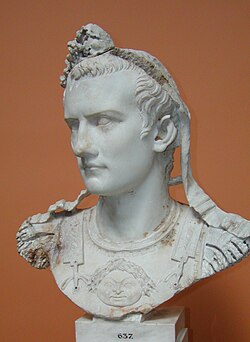
A Bust of Caligula at the Ny Carlsberg Glyptotek
Italian police have arrested a tombarolo with an 8-foot ancient statue not far from Rome. The statue may be worth €1 million. They believe the statue may be of Caligula, and may even have been looted from Caligula's tomb, which has not been discovered. We surely won't know if this tomb or the site was the actual tomb, but if looting is destroying the archaeological record, we are losing information.

Might the record have given us information on Caligula, who may have received a bad rap from the sources which have survived antiquity? Contemporaries describe the emperor as insane, saying he appointed a horse as consul, slept with his sisters, and killed often. But these might have been claims made by his political enemies in the senate and elsewhere—perhaps not too different from today's politics. After all, how could the son of Germanicus (my favorite Roman) have been such a bad guy. Caligula only ruled from AD 37-41, before he was assassinated.

I wonder where this statue was going to be sold? The United States, the middle-East, Asia? Excavations will start to reveal the archaeology of the site where the tomb raider unearthed the massive statue.

  1. Tom Kington, Caligula's tomb found after police arrest man trying to smuggle statue, The Guardian, January 17, 2011, http://www.guardian.co.uk/world/2011/jan/17/caligula-tomb-found-police-statue (last visited Jan 18, 2011).

Apr 15, 2010

Italian Seizures, the Bronze Athelete, and the Getty

The Getty has decided to appeal the February decision in which an Italian court ordered the seizure of this statue, Bronze Statue of a Victorious Youth.  An Italian appeals court judged ordered the work returned to Italy.  This was a new legal approach as nations as far as I'm aware have not attempted to bring forfeiture proceedings domestically, with an expectation that a foreign government or court would uphold the order.  Perhaps the Italian courts could seize other assets the Getty has in Italy in lieu of recovery, but my initial conclusions are shared by Patty Gerstenblith in Martha Lufkin's excellent summary of the current disposition of the dispute.  Gerstenblith notes two problems.  First, illegal export does not give Italy a tenable claim in U.S. courts.  It may in conjunction with a law like the Cultural Property Implementation Act and bilateral agreements, but those were all enacted after the bronze was brought to California.  Second, an awful lot of time has elapsed, and it is likely that an American court will take a dim view of the length of time Italy has taken before this action.  Indeed, charges were brought in Italy against the fisherman who brought the bronze up in their nets in the 1960's, but the defendants were acquitted. 

There is an extralegal dimension to the appeal as well, in that Italy continues to put pressure on the Getty, and its means of acquisition of the statue. 

We may question the Getty's acquisition of the bronze, question where it currently belongs, and even debate the merits of restitution of these objects.  However, there is no evidence that this bronze was "looted" in the same way the Euphronios Krater was for example.  All reports I'm aware of indicate the fishermen fortuitously brought this up in the Adriatic, in international waters, in 1964.  They may have later passed it on to others who smuggled it out of the country, but this is not a looted object.

For noteworthy previous posts on the bronze, see here.


  1. Martha Lufkin, Greek bronze will stay in the Getty Villa, The Art Newspaper, April 14, 2010.

Jan 5, 2010

Portable Antiquities Seized in Iraq


Iraqi police announced today the seizure of 39 antiquities discovered hidden near a shrine outside Nasiriyah in Southern Iraq.  These included clay tablets and statues, some of which may date from the 4,000 year-old Sumerian civilization. Are these objects from one of Iraq's museums?  Were these objects looted from nearby archaeological sites?  If I could speculate on why the objects were hidden near a shrine: it may have been a convenient place to hide these looted objects for sale to visitors to the shrine. 

  1. Katherine Houreld, Iraqi police seize artifacts amid smuggling fears - Washington Times, Associated Press, January 5, 2009.

Oct 8, 2009

Free Wally!

 The 10-year battle over the rights to this work may soon be nearing the beginning of the end:


A federal judge in Manhattan ruled that the U.S. government and the Leopold Museum in Vienna have enough evidence to possibly lay claim to the "Portrait of Wally."  The painting by Austrian expressionist Schiele in 1912 depicts his mistress and primary model.    The U.S. government confiscated the painting when it was on loan from the Leopold, claiming the museum knew the painting had been stolen by a Nazi in 1939 from its Jewish owner, Lea Bondi.   The Leopold sent more than 100 works by Schiele to New York's Museum of Modern Art in 1997.  Acting on information that two paintings had been looted in Austria during World War II, Manhattan District Attorney Robert Morgenthau seized "Portrait of Wally" and "Dead City" from the museum.


And the work has been in storage ever since.


Jonathan Perlow, Dispute Over Schiele Painting Heads to Trial [Courthouse News Service, Oct. 7, 2009]

Jun 2, 2009

Stolen Antiquities Recovered With the Help of the Art Loss Register

The Art Loss Register—though not a cure-all for what ails the antiquities trade—is an invaluable tool for the recovery of stolen objects so long as they have been documented and reported.  I have received a couple of press releases from the ALR highlighting recent recoveries of antiquities.  Though it cannot help aid the recovery of antiquities which have never been documented, it can help in the recovery of stolen antiquities which have been documented and reported missing, underscoring the need I think for museums and nations of origin to do a better job documenting and reporting the stores of objects which they currently have.  A couple recent seizures by Immigration and Customs Enforcement (ICE) highlight this.

Yesterday ICE announced a wall panel fresco which had been stolen in 1997 was recovered.  I found the history of the site interesting:


The panel, rectangular with a white background depicting a female minister, white wash on plaster with a modern wooden frame, was previously located at the excavation office in Pompeii and was reported stolen with five other fresco panels on June 26, 1997.

The investigation revealed that, between 1903 and 1904, the Italian government authorized a farmer, Giuseppe De Martino, to restore his farmhouse, which was located on an archeological site in Boscoreale, province of Naples. During the restoration, six important frescos, originating from Pompeii were found.

On July 12, 1957, the Government of Italy purchased the frescos. On June 26, 1997, after the completion of work to the excavation site, the Italian government observed that the six frescos were missing and subsequently reported the theft.


 This follows soon after the recovery of seven Egyptian antiquities which had been stolen from the Bijbels Museum in Amsterdam in 2007:


The investigation received significant help from the Art Loss Register (ALR) of New York, an organization that maintains a database of stolen works of art. The ALR discovered the artifacts at the Manhattan auction house, which turned the artifacts over to the Register and ICE agents.

One of the pieces recovered is a 7-inch-high depiction of a mummy with arms folded over the chest and hoes in each hand. It dates to between 1307 and 1070 B.C. The other recovered artifacts were an bronze figure of Imhotep, artchitect of the first pyramid, and one of Hapokrates, and an Egyptian painted Wood Osiris, all dating as far back as 712 B.C.

"The recovery of these artifacts sends a strong message to thieves that the market to sell stolen antiquities in the United States is freezing up." said Peter J. Smith, special agent in charge of the ICE Office of Investigations in New York. "ICE is committed to working closely with foreign governments and organizations like the ALR to recover priceless works of art and antiquities so they can be returned to their rightful owners."

Sep 24, 2008

Antiquities Seized in Macedonia

The AP is reporting on a seizure of "dozens" of antiquities yesterday in Macedonia:

SKOPJE, Macedonia (AP) — Authorities have seized dozens of stolen ancient artifacts after raiding the homes of two suspected antiquities smugglers in southern Macedonia.

Police confiscated about 70 archaeological items, including coins, terracotta figurines, pieces of silver and bronze jewelry and amphora dating from the Hellenistic and Roman periods in the 4th and 3rd centuries B.C., police spokesman Ivo Kotevski said Wednesday.

They are believed to have been stolen from Isar, one of Macedonia's largest archaeological sites in the south...

Macedonia has some 6,000 registered archaeological sites. Experts warn that since the country gained independence from Yugoslavia 17 years ago, the antiquities have become increasingly vulnerable to looters who use sophisticated navigation and excavating equipment.


I think the interesting aspect may be the difficulty the new Macedonian republic has had policing its archaeological sites. These former Yugoslav republics have had to dramatically ramp up their heritage protection after their independence. One wonders perhaps if they might begin to make calls for repatriation of objects?

Sep 12, 2008

Antiquities Seized in Peru


Authorities in Peru have seized 740 pre-Columbian antiquities which were being sold in a souvenir shop in Cuzco. The antiquities shop was located across the street from Cuzco's Incan Museum. This would seem to be the kind of thing Peruvian officials should be monitoring, and perhaps they were. However it seems it was actually an international news agency which reportedly spotted a promotional video, and the Peruvian Foreign Affairs Ministry was notified about the objects.

May 22, 2008

Iraqi Museum Objects Seized in Syria

The AP is reporting (via Syria's official news agency) that Syrian customs officials have seized 40 objects stolen from the National Museum in Baghdad.

The report quotes the chief of the customs department, Nabil al-Sayyouri, as saying the pieces were seized at al-Tanaf crossing on the Syrian-Iraqi border. They were hidden in a bag in an Iraqi crossing into Syria. The artifacts include different-sized glassware and clay tools.

Al-Sayyouri said the seized pieces were "rare and would be handed back to Iraq."

This is the third smuggling attempt aborted in less than two months by Syrian customs officials. Last month, the Syrian Cultural Ministry handed Iraq back some 700 pieces of looted priceless antiquities seized inside Syria.

Syria really seems to be taking the lead on policing its borders, with a number of important seizures in recent months.

May 8, 2008

South American Antiquities Seized in Europe


There have been two major seizures of South American pre-Columbian antiquities in recent days.

On Tuesday, Spanish police announced they had seized more than 700 objects (pictured here), which included gold objects, masks, vessels, pendants, and maces. The objects may have been taken from Peru, Ecuador and Columbia. The objects were in the possession of a Spanish man and his Columbian wife, who it seems has been selling them mainly in France for many years, according to the Spanish Interior Ministry.

This follows on the major unrelated recovery in Germany of over 1,000 objects, including masks, necklaces and statues which may be worth as much as $100 million USD. This collection had been exhibited in 1997 in Santiago de Compostela, Spain and were taken out of Spain in violation of Spain's export restrictions. This group of objects may be more difficult to ascertain ownership, as Mexico, Peru, Colombia, Panama, Costa Rica, Guatemala and El Salvador all may have claim to them. This may be the classic case of an orphaned object, stripped of its provenience (the place where it was unearthed).

It's worth noting perhaps that this German seizure was made possible because of the EU regulations, which require one Member State enforce the export restrictions of other member states. In this way, objects have to pass multiple checks ideally before they can be sold. However this collection of objects has been missing for 11 years, since 1997.

These massive seizures seem to occur with more regularity now than they have in the past, which is certainly a good thing. We may perhaps speculate about how many objects escape regulation.

Apr 24, 2008

700 Antiquities Returned to Iraq


Syria returned 700 antiquities to Iraq on Wednesday, undoing in some small measure the theft and looting which has taken place since the invasion of Iraq in 2003. Here's an excerpt of the AP story:

The head of the Syrian Antiquities Department, Bassam Jamous, said some of the objects were from the Bronze Age and early Islamic era.

The treasures were returned during a ceremony at the Syrian National Museum attended by senior Syrian officials and the Iraqi state minister for tourism and antiquities affairs, Mohammad Abbas al-Oraibi.

Jamous did not specify the value of the artifacts or single out the most important pieces, but clay jars, coins, daggers and what appeared to be a large trunk were displayed at the ceremony.

Syrian Culture Minister Riyadh Nassan Agha also said a "priceless Iraqi piece" of important historical value had been seized two weeks ago by Syrian customs officers. He gave no details, saying only that it would be returned to Iraq later after experts examined it.

AFP has a wire story as well, estimating that 32,000 objects were looted from 12,000 archaeological sites. Those numbers, though they are just estimates, speak for themselves. Given that Syria has returned 700 objects, this begs the question: how many more objects have been transported out of Iraq and have not been seized or recovered. I imagine many objects, especially the most valuable ones, are being hidden in anticipation of sales in the distant future, much as art seized or confiscated by the Nazis is still appearing.

As an indication of how serious the Iraq government considers those who are convicted of smuggling antiquities, despite overcrowding in Iraqi prisons, individuals detained for antiquities-related offenses were not released along with a number of other detainees under a law passed in February by the Iraqi government to ease prison populations. Many may remember that last month Marine Col. Matthew Bogdanos argued insurgents may be using the antiquities trade to fund their activities.

Mar 20, 2008

Italian Police Seize 1,000 Artifacts... last year

The AP is reporting that Italian police have announced the raid of a wealthy Roman's country home and the seizure 1,000 artifacts. It seems the objects had been stolen years ago in 2002 from one of Emperor Trajan's villas. The suspect is not in custody, "The prosecutors declined to identify the suspect since authorities were still probing the theft, but said he was an affluent engineer who used the stolen artifacts to decorate his country home, inserting pieces of ancient Roman mosaics in his basement floor and decorating his fireplace and bathroom with other pieces."

This is a depressing announcement for a number of reasons. First, why did it take so long for the announcement. Second, the thefts appear have been taken from a known site, which is only partially excavated. By all accounts this is an extremely important archaeological site. What kind of site security was in place in 2002? If the known sites cannot even be protected, how can unknown tombs and undiscovered sites be adequately policed. This highlights that though the antiquities trade is international, not every buyer of looted Italian antiquities comes from outside Italy, and in fact the looters are most often Italian. Finally, will there be no criminal charges filed? The wheels of the Italian justice system seem particularly slow.

Mar 10, 2008

Should Cultural Property be used to satisfy judgments?


There has been increasing attention paid lately to the use of art and antiquities to satisfy unrelated judgments against nations. In 2005, Russia had a $1 billion shipment of 54 paintings from Moscow's Pushkin Fine Arts Museum seized at the Swiss border to satisfy Russian debts owed to Noga.

Similarly, in 2003 a group of American plaintiffs won a $90 million judgment against the Islamic Republic of Iran for a suicide bombing which took place in Jerusalem in 1997. James Wawrzniak Jr., a recent Harvard Law graduate has posted an excellent working paper on bepress titled Rubin v. The Islamic Republic of Iran: A Struggle for control of Persian Antiquities in America. It is likely to be published next fall.

Hamas claimed responsibility for the bombing in question, and the Rubin plaintiffs brought civil actions against Hamas, and also to Iran for providing material support and finance for the bombing. Experts testified that Iran provided both economic assistance from between $20 and $50 million dollars, and also terrorist training. Now I'm sure many readers would be quick to point out the US has given similar aid to similar groups, perhaps even during this Sunni awakening in Iraq, in which the US is essentially paying Sunnis to stop attacking coalition forces. I imagine Iran would have had a vigorous potential defense, however a default judgment was entered, whereby Iran essentially ignored the suit. Iran has since changed their stance after the Rubin plaintiffs decided to execute the $90 million judgment by claiming Persian antiquities in museum collections across the country. I'll defer to Wawrzniak's analysis as to what has transpired, but this litigation seems destined to last a number of more years.

One one level I can sympathize with plaintiffs who attempt to satisfy their judgments in this way. However, such a strategy, if taken to its logical conclusion would have troubling consequences for the cross-border movement of works of art. This was an issue in the recent dispute over the Royal Academy display of "From Russia: French and Russian Master Paintings 1870-1925 From Moscow and St. Petersburg". Russia nearly backed out of the deal, eager to avoid a replay of the Portriat of Wally litigation.

The display required an act of Parliament to grant special immunity to prevent the works from being claimed by descendants of the original owners from whom many of the works were summarily seized during the Bolshevik revolution.

The question is, are the cultural benefits Great Britain and Russia share by viewing these masterworks, many never seen in London before? I think there is, and this cross-border movement of art is an important ideal which should be preserved, the recent string of nazi spoliation, and terrorist and other claims are important, and those victims deserve their day in court. However it should not be at the expense of our collective cultural heritage.

(Photo: Wassily Kandinsky Composition VII, 1913 on loan to the Royal Academy)

Labels

"Bronze Statue of a Victorious Youth" (17) 1954 Hague Convention (12) 1972 World Heritage Convention (1) Aboriginal Heritage (1) Aboriginal Heritage Act 1988 (SA) (2) act of state doctrine (1) Admiralty Law (11) Afghanistan (10) Africa (4) Albright-Knox Gallery (3) Aleppo (2) Alfred Stieglitz (2) Alternative Dispute Resolution (1) Angkor (1) Anti-Seizure Legislation (1) antiquites (3) antiquities (337) Antiquities Act 1906 (2) Antiquities leasing (10) antiquities looting (4) antiquities smuggling (3) antiquities theft (6) ARCA (8) ARCA Annual Conference (10) ARCA MA Program (6) Archaeological Resources Protection Act (5) Archival Recovery Team (ART) (3) Archives (1) Armed Conflict (22) Arrests (79) Art and Cultural Heritage Law (1) Art Beat Constables (9) Art Crime Statistics (1) art fraud (9) art history (1) Art Institute Chicago (3) art law (1) Art Loans (9) Art Loss Register (19) Art Market (10) Art Theft (263) Artist Resale Right (1) arts funding (1) Association of Art Museum Directors (AAMD) (8) Athens (3) Auction (99) austerity (2) Australia (7) Austria (3) Authentication (3) Babylon (3) Banksy (1) Big Bend National Park (1) bilateral agreements (2) Black Hills (1) Bolton Forgers (4) Book Theft (3) Brazil (5) British Museum (13) Bronze (5) Bronze Statue of a Victorious Youth (1) Brueghel (1) Bruno Lohse (3) Brussels (1) Bührle Collection Theft (4) Bulgaria (4) Burke and Wills (2) Burns Mummies (1) Byzantine Artifacts (4) Cairo (1) Cairo art theft (2) California Raids (6) Caligula (1) Cambodia (11) Camille Pissarro (7) Carabinieri (6) Caravaggio (1) catalogue raisonné (1) Cellini Salt Cellar (2) Central Park (1) Cerveteri (1) Chance Finds (3) Charles Goldie (1) Chihuly Glass (1) China (16) Christie's (14) Church Thefts (6) Civil War (2) Claude Monet (4) Claudia Seger-Thomschitz (3) Cleveland Bronze Apollo (2) Cleveland Museum of Art (CMA) (5) Coins (7) Colonial Art (1) Columbia (1) Conferences (7) Conservation (1) Conventions (1) Copyright (5) Corot (1) Corrections (1) cosmpoplitanism (4) Costa Rica (2) CPIA (10) criminal charges (5) criminology (1) Crystal Bridges Museum (5) Cultral Property Advisory Committee (9) Cultural First Aid (2) cultural heritage (6) cultural heritage careers (2) Cultural Heritage Moot Court Competition (2) Cultural heritage movement (1) cultural justice (3) cultural policy (18) cultural property (4) Cultural Resource Management (1) cultural security (1) culture funding (1) curatorial theft (2) Cycladic Figurines (1) Cyprus (9) Dahshour (1) Dallas Museum of Art (DMA) (2) Database (5) Databases (4) DCMS (2) Deaccessioning (24) Dead Sea Scrolls (1) Dealing in Cultural Objects (Offences) Act 2003 (4) Declaratory Suits (4) Demand and Refusal (2) Design and Artists Copyright Society (1) Detroit Institute of Art (1) development (1) Dick Ellis (2) Diplomatic Bags (1) Doctrine of Discovery (3) Donald Trump (3) Donny George Youkhanna (2) Dr. No (6) Droite de Suite (2) Dubai (1) due diligence (5) eBay (5) Economics (1) Ecuador (1) Edgar Degas (2) Edinburgh (1) Edoardo Almagia (1) Edvard Munch (2) Egon Schiele (4) Egypt (55) El-Hibeh (2) Elgin Marbles (5) empirical studies (1) England (4) environmental justice (4) Environmental law (2) Erik Nemeth (1) Etruscans (2) Euphronios Krater (4) European Court of Human Rights (1) Export Restrictions (19) Fakes (6) FBI (16) FBI Art Crime Team (16) Festivus (1) Fifth Circuit (1) fire (1) Fisk University (3) Footnotes (59) force multiplier (1) Foreign Sovereign Immunities Act (FSIA) (6) forfeiture (13) Forgery (27) fossils (2) Four Corners Antiquities Investigation (11) fractional ownership (2) Francavilla Marittima (1) France (30) Francesco Rutelli (15) Frans van Mieris (2) Frederick Schultz (3) freedman's town (2) Gaza (1) George Grosz (1) Georgia (1) Georgia O'Keeffe (2) Germanicus (2) Germany (16) Getty (1) Ghent Altarpiece (1) Giacomo Medici (6) Gianfranco Becchina (1) Golf (3) good faith (3) Goya (3) Goya theft (4) graffiti (1) Greece (38) Grosz (1) Henri Matisse (1) Henry Moore (1) Heritage at Risk (1) heritage crime (1) Heritage Crime in Art (1) Hermitage (2) High Court in London (4) historic documents (1) Historic Landmark (1) historic preservation (1) historic weapons (1) Holocaust (Return of Cultural Objects) Act (2) Hopi (1) House of Commons Illicit Trade Advisory Panel (ITAP) (1) Houston (2) Howard Spiegler (2) Human Remains (5) Human Rights (1) Hungary (1) Identification (1) illicit excavation (1) Immigration and Customs Enforcement (16) Immunity (6) Immunity from Seizure Act (ISA) (3) import restrictions (3) in the media (7) Indemnity (1) Indianapolis Museum of Art (5) indictments (5) Indigenous Rights (2) Indonesia (1) injunctions (1) Insider Theft (2) Institute d'Egypte (1) Institute of Art and Law (1) Institutional theft (1) Intellectual Property (4) Intentional Destruction (6) International Criminal Court (ICC) (1) International Journal of Cultural Property (1) internationalism (4) INTERPOL (1) Interview (2) Interviews (2) Iran (8) Iran v. Barakat Galleries Ltd. (6) Iran v. Berend (3) Iraq (46) Isabella Stuart Gardner Museum (7) Islamic art (2) Israel (4) Istanbul (2) Italian Art Squad (5) Italian Culture Ministry (6) Italy (122) Jacques Goudstikker (4) James Ossuary (1) Jan Breugel the elder (2) Jan van Eyck (1) Japan (3) Jeanneret v. Vichy (1) Jeff Tweedy (1) Jenack v. Rabizadeh (1) JMW Turner (2) John Constable (1) Jonah Marbles (1) Jonathan Tokeley-Parry (1) Jordan (2) Joseph Farquharson (2) Journal Articles (1) Journal of Art Crime (1) Ka-Nefer-Nefer (9) Kansas (2) Kansas City (1) Kazimir Malevich (3) Kenya (1) Kingsland (3) Klimt (3) Koh Ker (6) Konowaloff v. Metropolitan Museum of Art (1) Kunsthal Museum Theft (2) La Dea Di Morgantina (6) Lawrence Kaye (1) Lebanon (1) Leonardo Da Vinci (9) Leopold Museum (1) Lewis Chessmen (5) lex originis (3) lex situs (5) Libya (2) Lincoln's Inn theft (1) Lithographs (1) loans (5) London (6) London Art and Antiques Unit (7) London Metropolitan Police (2) loot (1) looting (30) Los Angeles County Museum of Art (LACMA) (2) Los Angeles Museum of Contemporary Art (MOCA) (1) LS Lowry (3) Lucas Cranach (1) Lucas Cranach the Elder (3) Lucian Freud (1) Macedonia (1) Machu Picchu (12) Madonna of the Yarnwinder (recovery) (9) Mali (4) Malta (1) Manchester (2) manuscript (1) Maori (2) maps (2) Marc Chagall (1) Marion True (25) Mark Landis (1) market overt (1) Mausoleum at Helicarnassus (1) Max Stern (3) Maxwell Anderson (3) metal detecting (6) Metropolitan Museum of Art (the Met) (29) Mexico (9) Meyer de Haan (1) MFA Boston (6) Michael Brand (3) Michael C. Carlos Museum (1) Michael Steinhardt (2) Middle Eastern Geodatabase for Antiquities (MEGA) (1) Minneapolis Institue of Arts (MIA) (1) Moctezuma's Headdress (1) Modigliani (2) MoMA (4) Mondrian (1) Monet (3) Montreal Museum of Fine Art (2) Monument Men (5) Monuments Men (1) Moral Rights (3) Morgantina (2) Morgantina Aphrodite (9) Morgantina Treasure (1) Moscow (2) Musée d'Art Moderne theft (1) Museum Acquisitions (1) Museum Governance (1) Museum of Anatolian Civilizations (1) Museum of Fine Arts in Boston (6) museum security (2) museum theft (2) Museums Libraries and Archives Council (MLA) (1) Music (2) Myth (1) Napoleon III (1) National Academy (2) National Archaeological Museum in Naples (1) National Archives (3) National Gallery (Washington) (1) National Historic Preservation Act (2) National Stolen Property Act (8) nations of origin (5) Native American Graves Protection and Repatriation Act (8) Native Americans (17) native cultures (2) Nazi Spoliation (74) Neglect (1) Neil Brodie (1) Nelson-Atkins' Bloch Building (1) Netherlands (10) New Acropolis Museum (3) New Orleans (4) New York (6) New Zealand (7) Nigeria (1) nighthawking (3) Noah Charney (1) Norbert Schimmel (1) Norman Palmer (1) Norman Rockwell (2) Norway (4) NSPA (1) Nuclear Analytical Techniques (1) Odyssey Marine Exploration (23) Olympics (2) Omaha Nebraska (1) Organized Crime (1) Orphaned Works (2) Oskar Kokoschka (2) Oslo (1) Pablo Picasso (16) Pakistan (2) Palestine (3) Panama (1) Paolo Ferri (2) Paris (10) partage (1) Parthenon Marbles (17) Patents (1) Patty Gerstenblith (1) Paul Bator (2) Paul Cezanne (5) Paul Gauguin (4) Pazardzhik Byzantine Silver Hoard (1) Penn Museum (1) Pentagon (1) Pere Lachaise (1) Persepolis (3) Peru (24) Peru Headdress (1) Peter Watson (1) Philadelphia (7) Phillipines (1) Picasso (9) Pierre Le Guennec (1) Pierre Valentin (1) piracy (1) Pollock (1) Pompeii (3) Popular Culture (1) Portable Antiquities Scheme (25) Portrait of Wally (11) Poussin (1) pre-Columbian antiquities (2) pre-emptive archaeology (1) Prince Claus Fund (1) Princeton (4) Private Collectors (2) Private International Law (5) Proceeds of Crime Act 2002 (UK) (1) Prosecutions (7) provenance (13) Prussia (1) Public Art Theft (5) Public Trust (1) Publications (2) Quran (1) Radio (2) Ransom (2) realkulturpolitik (1) recovery (45) Rembrandt (2) Rene Magritte (2) Renoir (2) Renvoi (3) repatriation (121) Restitution (40) reward (1) Rhodes (1) Robert Hecht (8) Robin Symes (1) Rodin (2) Roger Atwood (1) Roman Objects (2) Rome (3) Rothko (1) Royal Academy (1) Rubens (3) Rubin v. Islamic Republic of Iran (2) Russia (11) Sale of "The Cello Player" (1) Sale of the "Gross Clinic" (11) Sale of the Stieglitz Collection (4) Salvage (1) Sao Paulo (2) Sao Paulo Museum of Art (3) Scheduled Ancient Monuments (1) Scholarship - Articles and Essays (57) Scholarship - Book Reviews (3) Scholarship - Books (12) Scholarship - Case Notes (1) Scholarship - Events and Conferences (55) Scholarship - Journal Articles (12) Scholarship - Student Papers (16) Scotland (7) Scotland Yard's Arts and Antiques Squad (1) scrap metal (1) Sculpture (2) security (4) seizure (16) Selling stolen art (1) seminars (1) semiotics (1) Sentencing (2) Serbia (1) settlement (1) Sevso Treasure (6) Shelby White (3) shipwreck (1) Sicily (4) Simon Mackenzie (2) Sisley (4) Slovakia (1) Smithsonian (4) Solomon R. Guggenheim (1) Sonic Fingerprints (1) Sotheby's (13) Sotheby's Paris (1) South Africa (1) South America (1) Spain (21) Spoliation (2) Spoliation Advisory Panel (8) St. Louis Art Museum (8) St. Ninian's Isle Treasure (3) Stair Gallery (2) State Department (2) Statue of a Victorious Youth (1) statute of frauds (1) Statutes of Limitations (10) Stephane Breitwieser (1) Stephen Colbert (1) Steven Spielberg (1) stewardship (2) Stolen Art (11) Stone Age (1) street art (1) study collections (1) Summer Palace Bronzes (7) Sweden (2) Switzerland (13) Syria (7) Taliban (1) Tennessee (3) The Art Fund (1) The Bowers Museum (1) The Discovery Rule (4) the fourth ward (1) The Getty (58) The Gross Clinic (1) The Guggenheim (2) The Holocauset (stolen art) restitution bill (2) the Louvre (2) The Menil (4) The National Gallery (1) The National Gallery (London) (2) the Pirate Party (1) The Scream (1) theft (2) Thomas Eakins (9) Thomas Jefferson (1) Timbuktu (2) Titian (1) Toledo Museum of Art (4) tombaroli (2) tourism (1) transparency (1) Traprain Law (1) Traveling Exhibitions (2) Treasure Act (4) treasure trove (3) Turkey (11) UCC (1) Ukraine (2) UN (2) Underground Salt Museum (1) Underwater Cultural Heritage (32) Underwater Sites - "Black Swan" (3) Underwater Sites - "Blue Baron" (1) Underwater Sites - HMS Victory (3) UNESCO (23) UNESCO Convention (24) UNESCO Convention on the Protection of Underwater Cultural Heritage (9) UNIDROIT Convention (2) United Kingdom (24) United States (12) University College London (1) University of Chicago (1) University of Guelph (1) University of Virginia (3) urban development (1) Van Gogh (7) Vandalism (4) Vatican (1) Vermeer (2) Victoria And Albert Museum (3) Vigango (3) viking (1) Villa Giulia (3) Vineberg v. Bissonnette (4) Visual Artists Rights Act (2) voluntary returns (1) Von Saher v. Norton Simon Museum of Art at Pasadena (3) Watts Towers (1) Waverley Criteria (10) Week in Review (3) West Bank (1) wikiloot (1) Wilco (1) William S. Burroughs (1) Windsor Antiquities Indictment (1) World Heritage Sites (1) World War II (11) Yale University (13) year in review (2) Zahi Hawass (9)

LinkWithin

Related Posts Plugin for WordPress, Blogger...