Showing posts with label The Getty. Show all posts

Jan 24, 2013

About those 45,000 antiquities...

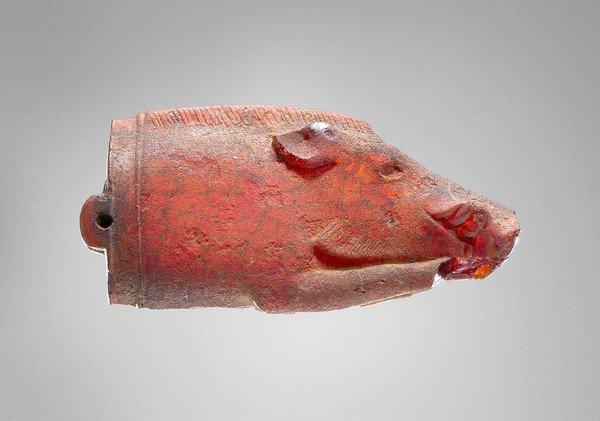
The Getty's amber collection includes this object circa 525-480 B.C.
A problematic Amber piggie?
Jason Felch reported for the LA Times on Saturday on an effort by the Getty to verify the histories of some 45,000 antiquities in its collection, and publish these results in its online database.

The review is likely to reveal that problems in the Getty's collection go far deeper than the nearly 50 looted objects returned since 2007 , according to Getty records and interviews with antiquity dealers and former museum officials. Hundreds of objects still in the collection were acquired with false ownership histories aimed at disguising their origins in the illicit antiquities trade, records and interviews show. The depth of its problem was underscored in November, when the Getty published a catalog of 56 carved ambers, objects that the ancient Greeks and Etruscans used in amulets for the magical properties they were believed to possess. At first look, "Ancient Carved Ambers in the J. Paul Getty Museum" represents the museum at its finest -- decades of scholarship published online in an illustrated catalog that engages the public in a rarely studied artifact of the ancient world. But records -- including internal Getty files -- show that the ambers were almost certainly looted from tombs in northern Italy.

This will be a fascinating effort to track in the coming months. The Getty is conducting this retroactive history search, and is a very good effort. The point to note though is how deep this examination goes into the objects, and whether it will trigger continued returns. Will the nations of origin even want the return of all of this study material? Will these nations have the capacity to store and study these objects in the same way the Getty can? Is this a contradiction the Getty hopes to make? All interesting questions.
  1. Jason Felch, Getty studies its antiquities, Los Angeles Times, January 19, 2013, http://articles.latimes.com/2013/jan/19/entertainment/la-et-getty-ambers-20130119.

Jan 10, 2013

Getty Announces Return of Morgantina Terracotta Head

The head of Hades, likely looted from
Morgantina, to return to Aidone in 2014
I've received a press release from the Getty announcing it will voluntarily return this terracotta head to Italy, specifically Sicily. It depicts the god Hades, and may date to 400-300 B.C.

The Getty press release is slim on details of the acquisition and on what circumstances led to the decision to make a voluntary return. The release states that "joint research" with colleagues in Sicily since 2010 has brought new information to light "suggesting that it was appropriate to return the object". The evidence is the discovery of four other terracotta fragments near Morgantina which must match this head in some way. The only mention of wrongdoing in the release states that these four fragments were uncovered at "the site of a sanctuary of Demeter, which was clandestinely excavated in the late 1970s."

The language of the release is careful and I guess serves its purpose. I wonder if there is room here for an analysis of the shape and form that these press releases. I think so. Think about how it differs and resists the words we often use to describe this activity. The words 'repatriation', 'Italy', 'looting', and even 'crime',  are not mentioned. But despite the problem I have with the language, it appears from the release as if the Getty is doing cultural justice here. The object was looted and it is returning home soon. But I'm left wondering how many other objects from sites like Morgantina does the Getty retain. The release ties the return to the discovery of physical evidence at the site, and connects this with the object. But what about the contemporary evidence like who bought the object from who and what questions were asked when an object was acquired. We know from investigative reporting like Chasing Aphrodite how little inquiry was made. But this would be so much more direct, cheaper and useful than elaborate scientific tests. My rule of thumb when visiting a museum is, if they don't tell you about the history of an object, there is very good chance it was looted.

This head will be transferred over to the Archaeological Museum in Aidone, where it will likely be displayed near "la dea di Aidone" previously known as the Getty goddess, returned in 2010. The head first will be a part of a Getty-organized traveling exhibition titled "Sicily: Art and Invention between Greece and Rome" which will start at the Getty, stop off at the Clevelend Museum of Art, and culminate in Palermo in June 2014.


May 5, 2012

Italian Court Confirms Seizure of "Getty Bronze"

The Getty received some very bad news Thursday.

Jason Felch reports on a ruling by an Italian regional magistrate in Pesaro upholding an earlier ruling to seize the bronze statue.

The ruling Thursday by a regional magistrate in Pesaro will likely prolong the legal battle over the statue, a signature piece of the Getty's embattled antiquities collection whose return Italian authorities have sought for years. "This was the news we were waiting for," said Gian Mario Spacca, president of the Marche region where the statue was hauled ashore in 1964, in an interview with Italian reporters. "Now we will resume contacts made with the Getty Museum to build a positive working relationship." Spacca visited the Getty last year hoping to negotiate an agreement to share the statue. But the Getty has made clear it will fight in court to keep the piece and is expected to appeal the ruling to Italy's highest court.

Using a domestic court to seek the seizure of an illegally exported object from another country has not been attempted before. But Italy has been at the forefront of repatriation strategies. This novel approach could lead to a new legal tool for nations of origin to pursue, if it can convince the Attorney General and a U.S. District Court to enforce this seizure order. The Getty appealed the earlier ruling, and they did so for a reason, this case could set a precedent which would open up museums to seizure suits in the nation of origin.

It should be interesting to watch this dispute continue. For background on this dispute, see here.
  1. Jason Felch, Italian court upholds claim on Getty bronze, L.A. Times, May 4, 2012, http://www.latimes.com/entertainment/arts/culture/la-et-getty-bronze-ruling-20120504,0,2759444.story (last visited May 5, 2012).

Feb 20, 2012

Antiquities and the New Leadership at the Getty

Jason Felch reports for the LA Times on the new director of the Getty Museum, Timothy Potts, who has opposed reforms of the antiquities trade. He will join James Cuno, the Getty Trust CEO, who has also been critical of efforts to restrict the flow of looted antiquities. The Getty has a very strict acquisitions policy, so I'm not sure how much their criticism of the reform will lead to the actual acquisition of objects. They will be subject to a great deal of scrutiny like this report where Felch details a previous controversy involving a Roman torso:


 In late 2000, Potts approved the acquisition of a rare Sumerian statuette for $2.7 million. The 15-inch alabaster figure was an ancient masterpiece from the cradle of civilization, the region Potts had specialized in while studying at Oxford. It was to be an important contribution to the Kimbell's small but highly regarded collection. 
But shortly after the statue arrived at the museum, court records show that Potts took the unusual step of returning it to the dealer and asking for a full refund. 
Publicly, Potts said that he wanted to free up money for other acquisitions. But he later testified that he had learned the dealer — Hicham Aboutaam, owner of the New York City antiquities gallery Phoenix Ancient Art — was under investigation by the IRS, and decided against buying from him. 
Soon, though, Potts changed his mind about doing business with Aboutaam. After receiving repayment for the Sumerian statuette in November 2001, Potts moved to acquire a $4-million Roman torso he had admired on an earlier visit to Aboutaam's gallery on East 66th Street in Manhattan.
  1. Jason Felch, Antiquities issue rears head with Getty leaders Potts, Cuno in place, Los Angeles Times Articles, February 17, 2012, http://articles.latimes.com/2012/feb/17/entertainment/la-et-getty-antiquities-20120217 (last visited Feb 20, 2012).

Oct 21, 2011

A postscript to "Chasing Aphrodite"

la dea di Morgantina
Ralph Frammolino, one of the co-author's of "Chasing Aphrodite" has a cover story in the November issue of Smithsonian Magazine. It recounts his unsuccessful attempt to interview Renzo Canavesi, a man identified as the previous owner of the statue formerly known as the "Getty Goddess" but now called "la dea di Morgantina". He wasn't willing to talk, but we are reminded again of the great reporting done on the statue and the Getty:

While Jason [Felch, his coauthor,] was reporting in Sicily, I went to Switzerland to interview Renzo Canavesi, who used to run a tobacco shop and cambia, or money-changing house, near Chiasso, just north of the Italian border. For decades the border region had been known for money-laundering and smuggling, mostly in cigarettes but also drugs, guns, diamonds, passports, credit cards—and art. It was there in March 1986 that the goddess statue first surfaced in the market, when Canavesi sold it for $400,000 to the London dealer who would offer it to the Getty. 
The transaction had generated a receipt, a hand-printed note on Canavesi’s cambia stationery—the statue’s only shred of provenance. “I am the sole owner of this statue,” it read, “which has belonged to my family since 1939.” After the London dealer turned the receipt over to authorities in 1992, an Italian art squad investigator said he thought Canavesi’s statement was dubious: 1939 was the year Italy passed its patrimony law, making all artifacts discovered from then on property of the state. After a second lengthy investigation in Italy, Canavesi was convicted in absentia in 2001 of trafficking in looted art. But the conviction was overturned because the statute of limitations had expired.

It's a good summary of a very fine book. And as I'm reading the story again, I'm reminded of Marion True and the Getty and the cover up and the duplicitous nature of her public comments in favor of protection, all while she was acquiring objects. There must be, I'm sure, a story like this for the repatriations from the other museums. But that reporting has not been done yet.
  1. Ralph Frammolino, The Goddess Goes Home, Smithsonian, Nov. 2011, http://www.smithsonianmag.com/history-archaeology/The-Goddess-Goes-Home.html?c=y&story=fullstory (last visited Oct 21, 2011).

Sep 13, 2011

Was Jiri Frel a Spy?

Jason Felch and Ralph Frammolino undertook a Freedom of Information Act request for the FBI's file on former Getty Curator Jiri Frel, and posted the FBI file. The FBI was very interested in Frel, sparking rumors over whether Arthur Houghton was tasked with keeping "an eye on" Frel.


A spy?
Espionage allegations aside, the Frel file is a fascinating study of a complicated personality. It hints at Frel’s famously chaotic love life. More importantly, it demonstrates how adept the charismatic polymath, connoisseur and political shape-shifter was at manipulating situations and spinning answers for his own survival. Colleagues at the Getty knew Frel as an Old World snob who constantly complained about America, its broken education system, its obsession with pop culture, its hot dogs and unpalatable mustard. Indeed, years later, when he was caught conducting a massive tax fraud scheme and falsifying provenance for million-dollar fakes at the Getty, Frel left America and never looked back. Yet during his 1971 FBI interview, the reporting agent noted how Frel gushed that “he considers the United States to be in his words ‘a great and good country.

Aug 22, 2011

Did Marion True Ever Catch a Looter or Dealer?

One of the stolen Mosaics at issue in the case
Some folks on the internet are not too pleased about the letter I collaborated on with Noah Charney re-examining Hugh Eakin's review of Chasing Aphrodite. A pointed response by David Gill here, and another critic wonders "whether anything done by Marion True herself actually led to the capture and conviction of a single looter of archaeological sites, or advanced any "Research into Crimes against Art"?

Yes, she certainly did, according to the Seventh Circuit Court of Appeals. As anyone should know who claims to study looting of archaeology and heritage, Marion True was the hero of one of the most prominent antiquities cases of the last thirty years, AUTOCEPHALOUS GREEK-ORTHODOX CHURCH OF CYPRUS vs.GOLDBERG, 917 F. 2d 278 (7th Cir., 1990) (available here). The case involved an antiquities dealer, Peg Goldberg, as well as Michel van Rijn. A helpful summary of the case is available here from IFAR.  I discuss the case at some length in  an article where I argue the nation of origin's law should be applied more often in cross-border trafficking in pieces of cultural heritage.

But with respect to Marion True, she is the unabashed hero of the case. From the opinion by Chief Judge Alex Bauer:

Peg Goldberg’s efforts soon turned to just that: the resale of these valuable mosaics. She worked up sales brochures about them, and contacted several other dealers to help her find a buyer. Two of these dealers’ searches led them both to Dr. Marion True of the Getty Museum in California. When told of these mosaics and their likely origin, the aptly-named Dr. True explained to the dealers that she had a working relationship with the Republic of Cyprus and that she was duty-bound to contact Cypriot officials about them. Dr. True called Dr. Vassos Karageorghis, the Director of the Republic’s Department of Antiquities and one of the primary Cypriot officials involved in the worldwide search for the mosaics. Dr. Karageorghis verified that the Republic was in fact hunting for the mosaics that had been described to Dr. True, and he set in motion the investigative and legal machinery that ultimately resulted in the Republic learning that they were in Goldberg’s possession in Indianapolis.
(emphasis added)

The opinion is also widely cited because of a concurring opinion by Judge Cudahy embedding the 1954 Hague Convention and the 1970 UNESCO Convention into cultural heritage law, a precedent which has had a number of important effects.

Marion True is no saint, nobody would argue she is, but her story is more complicated than merely painting her as the endpoint for looted antiquities. She did so much more, as Jason Felch and Ralph Frammolino explain in their book. Italian officials will tell you if asked that the case was brought against her because they had the evidence, not necessarily because she was the worst offender. And yes, she was instrumental in returning at least one looted object.  group of looted objects.

Aug 17, 2011

What did go wrong at the Getty (and elsewhere)?

La dea di Morgantina, as she was displayed at the Getty
The New York Review of Books has published a mostly polite back-and-forth between Hugh Eakin and the authors of Chasing Aphrodite, Jason Felch and Ralph Frammolino. In June Eakin offered a rather tepid review of the book (Felch and Frammolino deemed it "begrudgingly complimentary"). Noah Charney also took note of the review and he and I collaborated on a letter to the Editors of the NYRB, which was not published. I reprint the text of our letter here:


We would like to revisit Hugh Eakin's review of Chasing Aphrodite: The Hunt for Looted Antiquities at the World’s Richest Museums (“What Went Wrong at the Getty” July 13, 2011). As Mr. Eakin points out, the central antagonist, the former Getty curator Marion True, stands for many as a symbol representing the heart of the larger problem of museums purchasing illicit antiquities. And yet she was the museum-world’s most outspoken critic of the acquisition of looted antiquities. Chasing Aphrodite tells the story of the scandals at the Getty Museum, related to their purchase of looted antiquities and the use of fraudulent appraisals to secure grossly-exaggerated tax benefits. The authors admirably demonstrate that key officials at the Getty new full-well that the treasures they were purchasing were illicit, yet they bought them anyway. Pressure from the Italian government, particularly on the part of the former Minister of Culture, Francesco Rutelli, and the brilliant lawyers, Maurizio Fiorilli and Paolo Giorgio Ferri, has led to the return of numerous looted artifacts purchased by major American museums, including the Met and the MFA, but most of all, the Getty.

Mr. Eakin does well to note that Dr. True, while certainly guilty of serious wrongdoing, is not the central villain in the story of looted art, nor is she even the most culpable individual featured in Chasing Aphrodite, a point mentioned by Paolo Giorgio Ferri as well as others such as Fiorilli and Rutelli, who have collaborated with our our organization, ARCA (Association for Research into Crimes against Art), an international non-profit research group on art crime. When one compares the number of returned objects acquired under the direction of Philippe de Montebello at the Met, one should perhaps wonder why he received accolades and a grand retirement while Dr. True was made an example of. Italian officials had a case against her and in order to prevent further illicit acquisitions they chose to frighten and deter other curators, officials, and museums and drag them into cooperation with the cultural heritage laws of nations like Italy. She was selected because the Italian legal team had a vast array of damning evidence against her, much more so than they had against others who were equally guilty, at the Getty and other museums. As Chasing Aphrodite notes, the Getty in many ways “threw her under the bus” when this came to light, in an effort to distance the institution from the person.

Since long before her trial in Rome began, Dr. True has tried to preach against other curators and museums making the mistake of violating heritage laws. The cynic would say that her only regret was having been caught, but there seems to be a genuine passion in her call for resisting the temptation of a beautiful but looted object, and working to end the purchase by museums of illicit antiquities. Indeed, few have spoken out against the perpetuation of the illicit trade in antiquities with greater fervor.

Becchina sold the Getty this Kouros, which may be fake
The 2011 ARCA Award for Art Policing and Recovery was given this July 9 and 10 in Amelia, Italy at ARCA’s annual Conference on the Study of Art Crime to Paolo Giorgio Ferri, the lawyer who spearheaded the case against the Getty. As he made clear in his remarks at the ARCA conference, an array of prominent officials at the Getty were lured into buying looted art by three renowned leaders of large-scale organized looting rings, Robert Hecht, Giacomo Medici and Gianfranco Becchina, who are truly to blame, and would shame even the villains of a Greek tragedy. While Dr. True is no saint, she does not represent the core of the problem. And in fact she played a part in setting in motion a sea-change in the way in which museums acquire antiquities. For those efforts she should be applauded, and perhaps even put before the ARCA Trustees and Board of Editors of the Journal of Art Crime for an annual award to recognize the good work she did, even while she found herself unable to resist the pressure to acquire some beautiful but looted objects.

Noah Charney
Adjunct Professor of Art History, American University of Rome & Founder and President, Association for Research into Crimes against Art (ARCA)

Derek Fincham
Asst. Prof. South Texas College of Law & Academic Director, Association for Research into Crimes against Art (ARCA)

Jun 6, 2011

"Rarely have lawyers been paid so much to lose so much."

Hugh Eakin Reviews 'Chasing Aphrodite'. An excerpt:

I recently reviewed tax filings by the Getty Trust showing that it paid $16 million for outside legal services between mid-2005 and mid-2007 alone—a period during which it had handed its Italian dealings to a team of lawyers from a high-end Los Angeles firm. (This does not include the $750,000 that, according to Felch and Frammolino, the Getty paid to a “crisis management” firm, also in Los Angeles, for “largely unheeded advice.”) A truer estimate, though, would also have to take account of the hundreds of millions dollars’ worth of art—far more than the Italians would have been contented with in 2002—that was finally turned over to Rome and Athens, leaving the Getty Villa a pallid shadow of its former self. Rarely have lawyers been paid so much to lose so much.
  1. Hugh Eakin, “What Went Wrong at the Getty,” New York Review of Books, June 23, 2011, http://www.nybooks.com/articles/archives/2011/jun/23/what-went-wrong-getty/?pagination=false.

May 30, 2011

La Dea di Aidone

An Aerial View of Morgantina
Jason Felch reports from Aidone, Italy on the goddess formerly known as the "Getty Aphrodite" returned to Italy:

Since the Getty's controversial purchase of the statue in 1988 for $18 million, painstaking investigations by police, curators, academics, journalists, attorneys and private investigators have pieced together the statue's journey from an illicit excavation in Morgantina in the late 1970s to the Getty Museum. 
The Getty returned the goddess to Italy this spring, and a new exhibition showing the statue and other repatriated antiquities from a private American collector and the Metropolitan Museum of Art in New York was inaugurated here last week. 
The goddess' new home is a 17th century Capuchin monastery that now serves as the archaeological museum in Aidone, a hilltop village of about 6,000 residents. The cozy museum, which holds up to 150 visitors at a time, contains the most important objects discovered in the nearby ruins of Morgantina.

Someone wrote to me this morning and said that we could offer an apt byline for this story by calling it 'what comes around goes around'. That may be right, and the law leaves it up to Italy to decide where and how this object should be displayed. One hopes that the original looters will come forward in the coming months to reveal where they unearthed the object in the late 1970's.

One also wonders whether such attention have been lavished on the statue had the statue remained at the Aidone museum after it was unearthed by archaeologists? Do we need to reconfigure how the public thinks about antiquities, encouraging them to visit them much nearer their original context? Does it matter how many will appreciate and can enjoy repatriated works if they are where they 'belong'? How important is viewing the goddess in her context, even if far fewer people may seek her out?

In much the same way works of art like Munch's The Scream, or even the Mona Lisa became widely known after their theft it seems likely that more visitors will visit the small Aidone museum; and one hopes help buttress the local economy in a more lasting way which will forge connections encouraging the locals to act as good stewards to other objects and information Morgantina may hold. The Getty certainly will not be acquiring any recently looted antiquities from Morgantina any time soon and one doubts very much of that $18 million purchase price made its way to the actual looters—those profits seemingly went to the dealers closer to the Getty.

  1. Jason Felch, “Goddess statue: Once a Getty prize, Italy’s goddess statue remains a mystery,” L.A. Times, May 29, 2011, http://www.latimes.com/entertainment/news/la-ca-culture-exchange-20110529,0,6748034.story.

May 29, 2011

" In effect the goddess has been returned to those who looted her. . ."

La dea di Morgantina
Catherine Schofield Sezgin interviews Jason Felch, co-author of "Chasing Aphrodite". An excerpt:

ARCA Blog: When you were in Italy, did you wonder if anyone in the crowd had made money from selling "Aphrodite" to the Getty? How well were you able to explain this transaction in your book? 
Jason: Yes, there is plenty of irony here. In effect, the goddess has been returned to those who looted her, broke her into pieces and smuggled her out of the country for profit. Aidone is a very small town, and I was told that several of the locals who attended the ceremonies used to be clandestini -- the Sicilian term for looters.

Read the full interview here.

May 25, 2011

Chasing Aphrodite Reviewed

 "Chasing Aphrodite: The Hunt for Looted Antiquities at the World's Richest Museum" (Houghton Mifflin Harcourt: 375 pp).

Jason Felch &
Ralph Frammolino

Disputes over works of art and antiquities take many forms. Nations and individuals with claims to cultural objects pursue their claims in a number of areas; only seldom are these battles seen in courts of law. As a consequence many of the precedents set for party’s actions are seen outside the public view. This underscores the terrific resource which Jason Felch and Ralph Frammolino have created with their new book, officially released yesterday.

Their terrific series of investigative reports for the Los Angeles Times served as the jumping off point for the work. That series of articles was a finalist for the 2006 Pulitzer Prize and helped me crystallize much of my thinking about the antiquities trade and the role of art museums. Those reports, though terrific, were limited by the length of a newspaper article, and the authors continued their reporting in the form of this work to allow the space to explore these issues. In so doing they have created what will stand as the definitive account of the troubled times at the Getty from its creation in the 1970s through 2007. The book takes the form of a straightforward and rigorous account of the events which led to first the creation of the wealthiest art-acquiring institution in the world, its unfortunate choices, and its painful public shaming.

The authors maintain their reporters tone, which serves the material well. I think partisans on both sides of the heritage debates will find much to admire in the consistent and accurate depiction of characters and events. One point for which the authors deserve high marks is their description of the laws at issue—they swiftly and accurately describe the complex network of U.S., Italian and International laws without letting it overwhelm the story they are telling. There are also references and notes for further readings. The book maintains a lively and direct style throughout. I was provided an electronic copy of the work, which had no page numbers, so I am unable to reference the quotations below.

The sources for the book are impressive. They include the personal records of Arthur Houghton, who emerges as an early attempted reformer, Getty records, private correspondence, court records in Rome, and interviews with over three-hundred key individuals. The authors note the only important figures they were not able to interview were J. Paul Getty; Jiri Frel, the first antiquities curator at the Getty, who emerges as an early villain; and Marion True, a complicated figure who because of her unwise acquisitions at the Getty all while championing reform leave me feeling more baffled as to her motivations than ever.
From Left: Barbara Whitney, Deborah Gribbon, John Walsh and
Marion True in happier days

One really does wonder at times with the benefit of hindsight what True was thinking. She earned the contempt of her colleagues in the Museum community for aggressively implementing stringent acquisition standards at the Getty and criticizing the acquisitions by other museums, all while directly purchasing objects which were surely looted. The authors really do well in juxtaposing her actions at the Getty with her public rhetoric about the antiquities trade. Their description of her testimony at a 1999 Cultural Property Advisory Committee meeting evaluating an Italian request for import restrictions into the United States really highlights the hypocrisy:

. . . True strongly defended the Italian request. She deemed “improper” the suggestions of some that it was better to have illicit antiquities on well-tended American shelves than to let the careless Italians keep them in dusty exhibits. American museums were just as careless with their objects, True said. Many still didn’t have updated inventories or pictures of their own items . . . True noted that Italy was becoming more generous with loans of ancient art. Policies that expected Italy to be able to document objects that had been looted, like the one the Getty used to rely on, were irretrievably flawed.

Such comments surely did not endear True to her colleagues. In fact, the Getty had violated many legal and ethical rules to acquire their objects, and once they had a renowned collection had declared, under True’s direction, that the rules of the trade had changed, and other institutions must follow the Getty’s lead. This may perhaps explain why the Getty helped support True by paying her legal fees in her criminal trial in Rome, but had distanced itself publicly.

The "Getty Bronze", one of the
few disputed objects
which has not been returned
Anyone who has followed the Getty and cultural heritage issues in recent years knows well how this story ends, so the most fascinating parts of the book emerge at the beginning, with an account of the chance discovery and smuggling of the “Getty Bronze” from the Adriatic and the town of Fano, and the early days of the Getty.

Those early days set the Getty on what seems to have been a course which could not have avoided trouble. Particulary in chapter four, titled “Worth the Price”. Perhaps because he seems to have offered a great deal of assistance to the authors, Arthur Houghton emerges as an important early figure who attempted to check some of Jiri Frel’s unethical and illegal conduct, particularly in . Early on Houghton recommended that the Getty adopt what he called “optical due diligence” which meant “[t]he Getty should create the appearance that the objects it was acquiring had been carefully vetted, but at the same time avoid ‘certain knowledge’ of where they were actually coming from.” This concept of optical due diligence will likely strike a familiar chord with many observers, but a phrase which I have not seen expressed with such simplicity before.

As the authors note, Houghton was far more concerned with tax fraud that Frel was committing on a grand scale. He would routinely accept donations from wealthy donors, vastly increasing the appraised value of the objects. As the authors note the optical due diligence “was a surprisingly cynical position for Houghton to take, given his moral outrage at Frel’s transgressions. But in his mind, tax fraud and forgery were entirely different from breaking the export laws of a neglectful foreign country, especially when the goal was to educate and enlighten Americans.” In fact, Houghton’s actions were probably consistent with the vast majority of American curators at the time. And given the culture in the early 1980’s, Houghton was probably right that the Getty would likely earn a lot of trouble for itself fast if the IRS discovered the endemic tax fraud.
Aphrodite (or Persephone)
 has been returned to Aidone

Though the Getty now boasts an impressive legacy of research and vast works of art, the early days of the institution are less-than-stellar. One wonders if J. Paul Getty was really the dour, humorless penny-pincher he is depicted to be. The Getty originated not as part of some grand passion for the arts but as a passing hobby of a fantastically rich oil man. As such, those early founders of the Getty trust emerge as important trend-setters who would struggle initially with vast sums of money, and a desire to create one of the world’s foremost cultural institutions. That they succeeded is a testament to the vast wealth they were provided, and also the passion that these objects instill. But the question we must ask is at what cost?

A major theme I see emerging from the book are the incentives which helped fuel this looting. More attention has been directed at recently-acquired objects certainly, but Marion True was an early star in her field because she created galleries and exhibitions of objects with skill in such a way that made the public take notice. The public likes to look at these beautiful objects, and advocates need to continue to do the hard work to essentially train them to be ‘context connoisseurs’, meaning just because an object is beautiful, does nto mean that it should belong in a museum. The path these objects take matters. Had the Getty played by the rules, and not acquired many of these dubious objects, would it have emerged as such an important cultural institution? I’m not sure it would have. We see many poor choices by Marion True in the work, but she also emerges as one of a number of individuals at the Getty, yet she is the only one to have been shamed in such a public way and put on trial. In a perfect world many more probably should have taken blame for these acquisitions.

And the reason for that likely lies in the special esteem that the looted objects instill in us. The Italian government wanted to do everything it could to secure the return of these objects while also ensuring that future illicit activity would not take place, but to secure those returns took many years of hard investigation, and time-consuming and expensive legal negotiation. The Italian team which worked to pressure the Getty and other institutions into returning objects—Maurizio Fiorilli, Paolo Ferri, Francesco Rutelli and others—all emerge as sympathetic figures. Yet they would have had grave difficulty securing the returns had they employed a more direct strategy of prosecution of individuals at the Getty. Their efforts to focus charges on Robert Hecht, Giacomo Medici and Marion True appear to have been an effort to pressure the Getty into returning objects.

The work focuses on the Getty and Marion True and the direct line which can be drawn to looters in Italy. The limestone Aphrodite (which may in fact be Persephone) serves as an apt metaphor for the antiquities trade as a whole. When you heap such esteem on objects, without respecting its past, you risk distorting the object into something it never was. The limestone statue and its marble head, with its stunning depiction of billowing fabric was likely looted from Morgantina in Sicily. The authors introduce the objects at issue well I think, describing their composition, what we know of their history, and also noting what has been destroyed by looters. One feels outrage at the way this statue, perhaps the finest example of classical Greek sculpture outside of London or Greece was smuggled to Switzerland in a carot truck:

Some had seen the body of the statue—without the head—in three pieces at the house of a looter in Gela . . . The huge statue had been toppled over onto a blunt object, breaking it cleanly into three pieces that would be easier to hide during transport. The clean breaks also would make the statue easier to reassemble. The pieces were then driven to Milan, buried under a load of carrots in the back of a Fiat truck, and transported north across the border to Chiasso [Switzerland].

They note as well that Morgantina “proved a bonanza for local looters. After the excavators returned home from a summer of digging, the site fell prey to looters from the nearby hill town of Aidone. [Malcolm] Bell did what he could to fend them off, hiring guards to watch the site during the winter months. But the tombaroli . . . proved tenacious competitors for the relics of the ancient city. Bell once returned to the ruins after Sunday supper and stumbled upon a group hastily emptying a tomb of some 350 objects.” These accounts are disturbing, and it was the Getty’s purchase of objects which, though beautiful and rare, had destroyed context.

Many will likely point to the illegal and unethical conduct of the Getty in the work, and they are right to do so. Yet the archaeological community and nations of origin have much to answer for as well. When these ancient cities are studied, concern needs to be directed at the source to how the locals will react. What good is a trained archaeologist who painstakingly unearths parts of an ancient city, only to have her work undone at night by looters. That really is the legacy of the dispute between Italy and the Getty which the authors skillfully detail. Moving forward how can we envision a collaborative network which follows the law, but also protects sites, allows for professional excavation, and allows us to steward these precious resources for future generations.
May 12, 2011

Cuno on the Getty's New Acquisition Policy

"I have argued against the laws, but I haven't broken the laws."

So says James Cuno in Jason Felch's report on the new Getty president and chief executive:


Cuno's awkward embrace of a point of view he has long criticized creates a potential stumbling block for the Getty, which today relies heavily on cooperative relationships with Italy and other nations Cuno has openly criticized.
As director of the Chicago Art Institute since 2004, Cuno has rarely had to wrestle with claims by other countries that certain antiquities belong to them and not the museum that acquired them. The position Cuno staked out is largely a philosophical one, embracing the concept of "cosmopolitanism" — that antiquities are the common heritage of mankind and not the property of one nation.
He has denounced what he considers politicized claims by modern nations like Italy that, in his view, have only weak ties to the ancient civilizations that once occupied the same land.
Cuno's arguments are perhaps the clearest articulation of a view that American museum officials used for decades to justify the acquisition of antiquities with no clear ownership record. That practice has largely ended as direct evidence of looting forced leading museums, collectors and dealers to return hundreds of objects to Italy and Greece in recent years.
Yet while many museums moderated their stances during that controversy, Cuno became more outspoken.
"Cultural property is a modern political construct," he said in a 2006 debate at the New School hosted by the New York Times. In March of this year, he described laws that give foreign governments ownership over ancient art found within their borders as "not only wrong, it is dangerous."
You can read the Getty's acquisition policy here: http://www.getty.edu/about/governance/pdfs/acquisitions_policy.pdf


  1. Jason Felch, James Cuno’s history of acquiring ancient art - latimes.com, L.A. Times, May 12, 2011, http://www.latimes.com/entertainment/news/la-et-cuno-antiquities-20110512,0,7395453,full.story (last visited May 12, 2011).

May 9, 2011

James Cuno to head the Getty

Dr. James Cuno, a noted writer on cultural policy and a firm supporter of universal art museums and the movement of art has been named the next President and CEO of the Getty Trust:


LOS ANGELES—The Board of Trustees of the J. Paul Getty Trust announced today that James Cuno, recognized both nationally and internationally as a noted museum leader and scholar and an accomplished leader in the field of the visual arts, has been named president and CEO of the J. Paul Getty Trust. Dr. Cuno, who comes to the Getty after serving as president and Eloise W. Martin Director of the Art Institute of Chicago since 2004, will assume his position August 1.

Prior to directing the Art Institute of Chicago, one of the world's leading encyclopedic art museums, where in 2009 he presided over the opening of the museum's Modern Wing, Dr. Cuno was the director and professor of the Courtauld Institute of Art, University of London, from 2003-2004; the Elizabeth and John Moors Cabot Director of the Harvard University Art Museums and professor of the history of art and architecture at Harvard from 1991 to 2003; director of the Hood Museum of Art, Dartmouth College, from 1989-1991; director of the Grunwald Center for the Graphic Arts, UCLA, from 1986-1989; and assistant professor of art, Vassar College, from 1983-1986.
There are many tasks involved in this new position of course, but the one I'll be closely watching will be how this will impact the Getty's ongoing dispute with Italy over this ancient bronze.

  1. PRESS RELEASE: James Cuno , PRESIDENT AND ELOISE W. MARTIN DIRECTOR OF THE ART INSTITUTE OF CHICAGO, NAMED PRESIDENT AND CEO OF THE J. PAUL GETTY TRUST, (2011), http://getty.edu/news/press/center/james_cuno.html (last visited May 9, 2011).
(via)

Mar 29, 2011

Asking (politely) for the Fano Athlete

The Bronze Athlete
Governor Gian Mario Spacca, president of the region of Marche where this bronze athelete was brought ashore in 1964, visited Los Angeles to seek the return of the object. Catherine Sezgin reports on the visit for ARCA here and here.

The context for the visit is an ongoing seizure action in Italy which the Getty is appealing. Even if the appeals process runs its course, and the object is ordered returned, it appears unlikely that a U.S. court will enforce the seizure order.

And so into that context comes a friendly visit from Spacca saying, as reported by Jason Felch in the L.A. Times:


"We are not here to declare war on the Getty," Spacca said in a statement to The Times. "We are here to resolve the dispute in a way that will benefit the museum, the people of Italy, and most important, art lovers around the world." 
Getty spokesman Ron Hartwig described the meeting as "a good discussion" but said serious talks would be possible only after the court case ends and would need to involve the Italian Ministry of Culture. 
"We were clear at the start of our conversation that the statue of a "Victorious Youth," known as the "Getty Bronze," was not a matter for discussion since legal issues regarding this object are ongoing in Italy."

  1. Jason Felch, Antiquities: Italian official seeks return of 'Getty Bronze', L.A. Times, March 27, 2011, http://www.latimes.com/entertainment/news/la-et-getty-bronze-20110328,0,7566636.story (last visited Mar 29, 2011).

Mar 23, 2011

The Morgantina Goddess Returns to Aidone

Greeted by the Carabinieri, townspeople and a brass band:


Jason Felch reports for the LA Times:

When the Getty bought the Aphrodite for $18 million in 1988, the statue's importance outweighed the signs of its illicit origins. "The proposed statue of Aphrodite would not only become the single greatest piece of ancient art in our collection; it would be the greatest piece of Classical sculpture in this country and any country outside of Greece and Great Britain," wrote former antiquities curator Marion True in proposing the acquisition. 
For years, the museum clung to the implausible story that the statue had been in the family of a former Swiss policeman, Renzo Canavesi, for more than 50 years after being purchased by his father in Paris in the 1930s. 
It took dramatic evidence of the statue's illicit origins — and an alleged link to organized crime — to destroy the credibility of that cover story and persuade the Getty's board to return the statue.
In 2006, private detectives hired by the Getty uncovered more than a dozen photos of the statue. One shows fragments of the goddess scattered in a pile of dirt on a brown tile floor. In another, pieces of varying sizes were lined up in rows on a large, thick plastic sheet. Another photo showed the statue's marble face still encrusted with grime. 
It is not clear who took the photos or where they were taken. But the fact that the statue had been in fragments and covered in dirt as recently as the early 1980s — the date on the photographs — was seen as clear evidence that it had been illegally excavated not long before the Getty bought it. 
The investigators' discovery of the photos is described in a forthcoming book about the dispute. "Chasing Aphrodite: The Hunt for Looted Antiquities at the World's Richest Museum" was written by this reporter and former Times staff writer Ralph Frammolino, and will be published May 24 by Houghton Mifflin Harcourt.

Should be a fascinating work.


  1. Jason Felch, Getty's Aphrodite is returned to Sicily, L.A. Times, March 23, 2011, http://www.latimes.com/entertainment/news/la-et-return-of-aphrodite-20110323,0,6998689.story (last visited Mar 23, 2011).

Feb 4, 2011

Getty Secures Export License for "Modern Rome—Campo Vaccino"

JMW Turner "Modern Rome—Campo Vaccino", soon on display at the Getty

This landscape by JMW Turner has been granted an export license from the UK Culture Ministry. The painting had been on display for the last thirty years at the National Galleries in Scotland, on loan from the Primrose family. For me, the work fit well in Edinburgh, echoing nicely that city's neoclassical architecture. It was always one of my favorites, a reason to stop in to Scotland's national gallery. Turner's depictions of classical ruins and renaissance buildings echoed Edinburgh's own neoclassical features. Now the work is on its way to Los Angeles.

Calton Hill, Edinburgh
The UK has a limited export restriction scheme, which temporarily halts the export of a work if it falls under one of the three Waverley Criteria:

  1. Is it so closely connected with our history and national life that its departure would be a misfortune?
  2. Is it of outstanding aesthetic importance?
  3. Is it of outstanding significance for the study of some particular branch of art, learning or history?

If a work can fall under any one of these three categories, export will be temporarily restricted by the Department of Culture, Media and Sport (DCMS) so a UK buyer can raise enough money to keep the work in the UK. This work was purchased for $44.9 million at an auction in Sotheby's last year. Will there be calls to amend the limited export regime as more works of art leave? In the past the UK had been more willing to continue to delay export, and even to offer more funding to help domestic buyers match foreign prices and ensure works of art remain in the. But austerity may be changing that. As Mike Boehm speculates

But “Modern Rome” is coming, perhaps a sign that at a time of austerity in Great Britain, a domestic arts economy that's far more reliant on government funding than in the United States could not muster the wherewithal to take the painting away from the privately and lavishly endowed Getty. In 2004, according to a BBC report, the British government anted up more than half the money to match the Getty's bid for "Madonna of the Pinks," tapping a fund from lottery receipts that's earmarked for cultural purposes.
  1. Mike Boehm, Getty Museum's $44.9-million purchase of J.M.W. Turner masterpiece is final as sale clears U.K. export hurdle, LA Times Culture Monster, February 3, 2011, http://latimesblogs.latimes.com/culturemonster/2011/02/getty-jmw-turner-masterpiece.html (last visited Feb 4, 2011).

Dec 7, 2010

The Morgantina Treasure Returns to Sicily

"Here they are not orphans."

So says Enrico Caruso, the director of the Archaeological park in Morgantina upon the installation of the Morgantina Silver in Aidone, Sicily. The 16 ancient Greek silver objects had been partially returned to Italy as a part of a 2006 agreement between Italy and the Met, and will now be on display near the site where they were likely looted nearly 30 years ago. Both Italy and the Met will share joint custody of these objects, and the objects will rotate between Aidone and the Met every four years. In this way visitors to both the Met and Aidone will be able to decide for themselves where they prefer to view and appreciate this collection of objects.

One of the tireless campaigners for the return of the silver objects has been Malcolm Bell III who is quoted in the New York Times:

“'The silver can perhaps shed light on the brutal, dramatic circumstances of the final years of the Second Punic War and, seen within the framework of the house, we get a sense of the art and the material culture of Hellenistic Sicily,' said Malcolm Bell III, professor emeritus of art history and archaeology at the University of Virginia and the director of excavations at Morgantina. 'They have truly been recontextualized, and that is really important.'”
The Morgantina Objects, as displayed at the Met

And yet I think the reason this recontextualization is important can be tied to the experience of viewing the landscape, the situs of the objects, and the current culture in the region.

Next year the Getty will return the statue of Aphrodite to Aidone, and residents there surely hope visitors will seek out the repatriated objects and boos the local economy. One of the striking themes which emerged from Elisabetta Povoledo's reporting of the story are the economic benefits which will accrue to the city and territory when visitors flock to see the ancient objects. There appears to be a shift in culture, away from tolerating the looting of sites and the clandestine sales of these objects and a move towards responsibly managing these pieces of heritage.

And yet I wonder as well whether much would be made of this collection of silver, or the Aphrodite had these objects not been displayed in Los Angeles and New York, and then sent back in a very public way.
  1. Elisabetta Povoledo, Morgantina Silver Returns to Italy in Aidone Museum, The New York Times, December 5, 2010, http://www.nytimes.com/2010/12/06/arts/design/06silver.html?_r=2&sq=Morgantina&st=cse&adxnnl=1&scp=1&adxnnlx=1291737663-LJxPa3Cb/2lTVd2f0CM/fg (last visited Dec 7, 2010).

Oct 18, 2010

Marion True Interview

The Chimera d'arezzo, on loan at the Getty from the Museo archeologico di Firenze 
Hugh Eakin has an interview with Marion True in the online version of the New Yorker. She seems relieved her trial is over, but also a little angry that she was the sacrificial curator:


There is the remarkable fact that without ever reaching a verdict, the trial had an enormous effect on American museums.
My greatest sadness is that the Italians were able to intimidate the entire American art world, and especially museums, without having to produce any evidence at all. Why didn’t museums band together and say, “How are we going to deal with this?” They ran off instead to make their own deals—deals which may not exactly be very good in the long run. Why did we hand over all this stuff without asking for more documents? The trial was a gigantic threat that everyone reacted to. The message was, “You could be next.”

Another irony is that precisely some of the changes in museum standards you were calling for in the nineteen-nineties have now come to pass. There is much more talk now of using major loans from archaeological countries in lieu of purchases—something that you had been advocating for many years.
That’s right. But I haven’t seen a genuine opening about loans. There are plenty of things that could be done in loans, possibilities for collaborations. Italy has lent the Chiamera of Arezzo to the Getty, a kind of trophy piece. In truth, there are hundreds of objects sitting in the basements of Italian museums, at Pompeii, everywhere, that need to be conserved. Why not lend them to American museums for conservation work, and so they can be seen?

Has the Getty made any effort to reconcile with you?
No. And I have nothing but the greatest contempt for them in the world. They acted like I ran the place. Above me I had a chief curator who was deputy director, a director, an in-house counsel, a president, a board of trustees to whom the president reported, and a chairman of the board. What about the lawyers who drafted the acquisition policy, who were supposed to be vetting all documents? They were perfectly happy to assure all that [the alleged acquisition of illegal art] was my work. Never once have [former Getty director] John Walsh or [his successor] Deborah Gribbon stepped forward to say one word about their responsibility.


Read more 
http://www.newyorker.com/online/blogs/newsdesk/2010/10/marion-true.html#ixzz12j9eQuDR

Oct 13, 2010

Five-year Trial of Marion True Ends

The Italian case against former Getty Museum antiquities curator Marion True, seen at the Los Angeles museum in 1998, has abruptly ended.
Marion True, while still at the Getty
Jason Felch reports today that the trial of ex-Getty Museum curator Marion True concluded with a "whimper" today.  That seems exactly right.  No verdict was reached, no dramatic finish, only the mundane operation of an Italian legal technicality which ended the trial because too much time had elapsed. 

Italy's renewed focus in recent years on the flow of antiquities into American Museums has resulted in a number of embarrassing returns by American institutions, and no one exemplified that shaming more than Marion True, who would be photographed every time she entered the court.  This trial has been proceeding along in fits and starts for the last five years.  When she was charged, it was the first time an American Museum official was charged by a foreign government, but it has not been the last.  The trial was a lightening rod of sorts, channeling opinions about the antiquities trade and the American Museum community, all to one very high profile, but also very slow legal proceeding.  As Felch points out, during the 5 year legal proceeding we have seen the return of more than 100 looted or stolen antiquities from American museums to Italy.   
  1. Jason Felch, Charges dismissed against ex-Getty curator Marion True by Italian judge [updated] LA Times Culture Monster, http://latimesblogs.latimes.com/culturemonster/2010/10/charges-dismissed-against-getty-curator-marion-true-by-italian-judge.html (last visited Oct 13, 2010).
  2. Nadja Brandt, Italy Drops Conspiracy Charges Against Ex-Curator Marion True, Getty Says, Bloomberg, October 13, 2010, http://www.bloomberg.com/news/2010-10-13/italy-drops-charges-against-ex-curator-marion-true-getty-says.html (last visited Oct 13, 2010).
  3. Elisabetta Povoledo, Case Involving Former Curator Marion True Ends, Arts Beat, New York Times, http://artsbeat.blogs.nytimes.com/2010/10/13/case-involving-former-curator-marion-true-ends/ (last visited Oct 13, 2010).

Labels

"Bronze Statue of a Victorious Youth" (17) 1954 Hague Convention (12) 1972 World Heritage Convention (1) Aboriginal Heritage (1) Aboriginal Heritage Act 1988 (SA) (2) act of state doctrine (1) Admiralty Law (11) Afghanistan (10) Africa (4) Albright-Knox Gallery (3) Aleppo (2) Alfred Stieglitz (2) Alternative Dispute Resolution (1) Angkor (1) Anti-Seizure Legislation (1) antiquites (3) antiquities (337) Antiquities Act 1906 (2) Antiquities leasing (10) antiquities looting (4) antiquities smuggling (3) antiquities theft (6) ARCA (8) ARCA Annual Conference (10) ARCA MA Program (6) Archaeological Resources Protection Act (5) Archival Recovery Team (ART) (3) Archives (1) Armed Conflict (22) Arrests (79) Art and Cultural Heritage Law (1) Art Beat Constables (9) Art Crime Statistics (1) art fraud (9) art history (1) Art Institute Chicago (3) art law (1) Art Loans (9) Art Loss Register (19) Art Market (10) Art Theft (263) Artist Resale Right (1) arts funding (1) Association of Art Museum Directors (AAMD) (8) Athens (3) Auction (99) austerity (2) Australia (7) Austria (3) Authentication (3) Babylon (3) Banksy (1) Big Bend National Park (1) bilateral agreements (2) Black Hills (1) Bolton Forgers (4) Book Theft (3) Brazil (5) British Museum (13) Bronze (5) Bronze Statue of a Victorious Youth (1) Brueghel (1) Bruno Lohse (3) Brussels (1) Bührle Collection Theft (4) Bulgaria (4) Burke and Wills (2) Burns Mummies (1) Byzantine Artifacts (4) Cairo (1) Cairo art theft (2) California Raids (6) Caligula (1) Cambodia (11) Camille Pissarro (7) Carabinieri (6) Caravaggio (1) catalogue raisonné (1) Cellini Salt Cellar (2) Central Park (1) Cerveteri (1) Chance Finds (3) Charles Goldie (1) Chihuly Glass (1) China (16) Christie's (14) Church Thefts (6) Civil War (2) Claude Monet (4) Claudia Seger-Thomschitz (3) Cleveland Bronze Apollo (2) Cleveland Museum of Art (CMA) (5) Coins (7) Colonial Art (1) Columbia (1) Conferences (7) Conservation (1) Conventions (1) Copyright (5) Corot (1) Corrections (1) cosmpoplitanism (4) Costa Rica (2) CPIA (10) criminal charges (5) criminology (1) Crystal Bridges Museum (5) Cultral Property Advisory Committee (9) Cultural First Aid (2) cultural heritage (6) cultural heritage careers (2) Cultural Heritage Moot Court Competition (2) Cultural heritage movement (1) cultural justice (3) cultural policy (18) cultural property (4) Cultural Resource Management (1) cultural security (1) culture funding (1) curatorial theft (2) Cycladic Figurines (1) Cyprus (9) Dahshour (1) Dallas Museum of Art (DMA) (2) Database (5) Databases (4) DCMS (2) Deaccessioning (24) Dead Sea Scrolls (1) Dealing in Cultural Objects (Offences) Act 2003 (4) Declaratory Suits (4) Demand and Refusal (2) Design and Artists Copyright Society (1) Detroit Institute of Art (1) development (1) Dick Ellis (2) Diplomatic Bags (1) Doctrine of Discovery (3) Donald Trump (3) Donny George Youkhanna (2) Dr. No (6) Droite de Suite (2) Dubai (1) due diligence (5) eBay (5) Economics (1) Ecuador (1) Edgar Degas (2) Edinburgh (1) Edoardo Almagia (1) Edvard Munch (2) Egon Schiele (4) Egypt (55) El-Hibeh (2) Elgin Marbles (5) empirical studies (1) England (4) environmental justice (4) Environmental law (2) Erik Nemeth (1) Etruscans (2) Euphronios Krater (4) European Court of Human Rights (1) Export Restrictions (19) Fakes (6) FBI (16) FBI Art Crime Team (16) Festivus (1) Fifth Circuit (1) fire (1) Fisk University (3) Footnotes (59) force multiplier (1) Foreign Sovereign Immunities Act (FSIA) (6) forfeiture (13) Forgery (27) fossils (2) Four Corners Antiquities Investigation (11) fractional ownership (2) Francavilla Marittima (1) France (30) Francesco Rutelli (15) Frans van Mieris (2) Frederick Schultz (3) freedman's town (2) Gaza (1) George Grosz (1) Georgia (1) Georgia O'Keeffe (2) Germanicus (2) Germany (16) Getty (1) Ghent Altarpiece (1) Giacomo Medici (6) Gianfranco Becchina (1) Golf (3) good faith (3) Goya (3) Goya theft (4) graffiti (1) Greece (38) Grosz (1) Henri Matisse (1) Henry Moore (1) Heritage at Risk (1) heritage crime (1) Heritage Crime in Art (1) Hermitage (2) High Court in London (4) historic documents (1) Historic Landmark (1) historic preservation (1) historic weapons (1) Holocaust (Return of Cultural Objects) Act (2) Hopi (1) House of Commons Illicit Trade Advisory Panel (ITAP) (1) Houston (2) Howard Spiegler (2) Human Remains (5) Human Rights (1) Hungary (1) Identification (1) illicit excavation (1) Immigration and Customs Enforcement (16) Immunity (6) Immunity from Seizure Act (ISA) (3) import restrictions (3) in the media (7) Indemnity (1) Indianapolis Museum of Art (5) indictments (5) Indigenous Rights (2) Indonesia (1) injunctions (1) Insider Theft (2) Institute d'Egypte (1) Institute of Art and Law (1) Institutional theft (1) Intellectual Property (4) Intentional Destruction (6) International Criminal Court (ICC) (1) International Journal of Cultural Property (1) internationalism (4) INTERPOL (1) Interview (2) Interviews (2) Iran (8) Iran v. Barakat Galleries Ltd. (6) Iran v. Berend (3) Iraq (46) Isabella Stuart Gardner Museum (7) Islamic art (2) Israel (4) Istanbul (2) Italian Art Squad (5) Italian Culture Ministry (6) Italy (122) Jacques Goudstikker (4) James Ossuary (1) Jan Breugel the elder (2) Jan van Eyck (1) Japan (3) Jeanneret v. Vichy (1) Jeff Tweedy (1) Jenack v. Rabizadeh (1) JMW Turner (2) John Constable (1) Jonah Marbles (1) Jonathan Tokeley-Parry (1) Jordan (2) Joseph Farquharson (2) Journal Articles (1) Journal of Art Crime (1) Ka-Nefer-Nefer (9) Kansas (2) Kansas City (1) Kazimir Malevich (3) Kenya (1) Kingsland (3) Klimt (3) Koh Ker (6) Konowaloff v. Metropolitan Museum of Art (1) Kunsthal Museum Theft (2) La Dea Di Morgantina (6) Lawrence Kaye (1) Lebanon (1) Leonardo Da Vinci (9) Leopold Museum (1) Lewis Chessmen (5) lex originis (3) lex situs (5) Libya (2) Lincoln's Inn theft (1) Lithographs (1) loans (5) London (6) London Art and Antiques Unit (7) London Metropolitan Police (2) loot (1) looting (30) Los Angeles County Museum of Art (LACMA) (2) Los Angeles Museum of Contemporary Art (MOCA) (1) LS Lowry (3) Lucas Cranach (1) Lucas Cranach the Elder (3) Lucian Freud (1) Macedonia (1) Machu Picchu (12) Madonna of the Yarnwinder (recovery) (9) Mali (4) Malta (1) Manchester (2) manuscript (1) Maori (2) maps (2) Marc Chagall (1) Marion True (25) Mark Landis (1) market overt (1) Mausoleum at Helicarnassus (1) Max Stern (3) Maxwell Anderson (3) metal detecting (6) Metropolitan Museum of Art (the Met) (29) Mexico (9) Meyer de Haan (1) MFA Boston (6) Michael Brand (3) Michael C. Carlos Museum (1) Michael Steinhardt (2) Middle Eastern Geodatabase for Antiquities (MEGA) (1) Minneapolis Institue of Arts (MIA) (1) Moctezuma's Headdress (1) Modigliani (2) MoMA (4) Mondrian (1) Monet (3) Montreal Museum of Fine Art (2) Monument Men (5) Monuments Men (1) Moral Rights (3) Morgantina (2) Morgantina Aphrodite (9) Morgantina Treasure (1) Moscow (2) Musée d'Art Moderne theft (1) Museum Acquisitions (1) Museum Governance (1) Museum of Anatolian Civilizations (1) Museum of Fine Arts in Boston (6) museum security (2) museum theft (2) Museums Libraries and Archives Council (MLA) (1) Music (2) Myth (1) Napoleon III (1) National Academy (2) National Archaeological Museum in Naples (1) National Archives (3) National Gallery (Washington) (1) National Historic Preservation Act (2) National Stolen Property Act (8) nations of origin (5) Native American Graves Protection and Repatriation Act (8) Native Americans (17) native cultures (2) Nazi Spoliation (74) Neglect (1) Neil Brodie (1) Nelson-Atkins' Bloch Building (1) Netherlands (10) New Acropolis Museum (3) New Orleans (4) New York (6) New Zealand (7) Nigeria (1) nighthawking (3) Noah Charney (1) Norbert Schimmel (1) Norman Palmer (1) Norman Rockwell (2) Norway (4) NSPA (1) Nuclear Analytical Techniques (1) Odyssey Marine Exploration (23) Olympics (2) Omaha Nebraska (1) Organized Crime (1) Orphaned Works (2) Oskar Kokoschka (2) Oslo (1) Pablo Picasso (16) Pakistan (2) Palestine (3) Panama (1) Paolo Ferri (2) Paris (10) partage (1) Parthenon Marbles (17) Patents (1) Patty Gerstenblith (1) Paul Bator (2) Paul Cezanne (5) Paul Gauguin (4) Pazardzhik Byzantine Silver Hoard (1) Penn Museum (1) Pentagon (1) Pere Lachaise (1) Persepolis (3) Peru (24) Peru Headdress (1) Peter Watson (1) Philadelphia (7) Phillipines (1) Picasso (9) Pierre Le Guennec (1) Pierre Valentin (1) piracy (1) Pollock (1) Pompeii (3) Popular Culture (1) Portable Antiquities Scheme (25) Portrait of Wally (11) Poussin (1) pre-Columbian antiquities (2) pre-emptive archaeology (1) Prince Claus Fund (1) Princeton (4) Private Collectors (2) Private International Law (5) Proceeds of Crime Act 2002 (UK) (1) Prosecutions (7) provenance (13) Prussia (1) Public Art Theft (5) Public Trust (1) Publications (2) Quran (1) Radio (2) Ransom (2) realkulturpolitik (1) recovery (45) Rembrandt (2) Rene Magritte (2) Renoir (2) Renvoi (3) repatriation (121) Restitution (40) reward (1) Rhodes (1) Robert Hecht (8) Robin Symes (1) Rodin (2) Roger Atwood (1) Roman Objects (2) Rome (3) Rothko (1) Royal Academy (1) Rubens (3) Rubin v. Islamic Republic of Iran (2) Russia (11) Sale of "The Cello Player" (1) Sale of the "Gross Clinic" (11) Sale of the Stieglitz Collection (4) Salvage (1) Sao Paulo (2) Sao Paulo Museum of Art (3) Scheduled Ancient Monuments (1) Scholarship - Articles and Essays (57) Scholarship - Book Reviews (3) Scholarship - Books (12) Scholarship - Case Notes (1) Scholarship - Events and Conferences (55) Scholarship - Journal Articles (12) Scholarship - Student Papers (16) Scotland (7) Scotland Yard's Arts and Antiques Squad (1) scrap metal (1) Sculpture (2) security (4) seizure (16) Selling stolen art (1) seminars (1) semiotics (1) Sentencing (2) Serbia (1) settlement (1) Sevso Treasure (6) Shelby White (3) shipwreck (1) Sicily (4) Simon Mackenzie (2) Sisley (4) Slovakia (1) Smithsonian (4) Solomon R. Guggenheim (1) Sonic Fingerprints (1) Sotheby's (13) Sotheby's Paris (1) South Africa (1) South America (1) Spain (21) Spoliation (2) Spoliation Advisory Panel (8) St. Louis Art Museum (8) St. Ninian's Isle Treasure (3) Stair Gallery (2) State Department (2) Statue of a Victorious Youth (1) statute of frauds (1) Statutes of Limitations (10) Stephane Breitwieser (1) Stephen Colbert (1) Steven Spielberg (1) stewardship (2) Stolen Art (11) Stone Age (1) street art (1) study collections (1) Summer Palace Bronzes (7) Sweden (2) Switzerland (13) Syria (7) Taliban (1) Tennessee (3) The Art Fund (1) The Bowers Museum (1) The Discovery Rule (4) the fourth ward (1) The Getty (58) The Gross Clinic (1) The Guggenheim (2) The Holocauset (stolen art) restitution bill (2) the Louvre (2) The Menil (4) The National Gallery (1) The National Gallery (London) (2) the Pirate Party (1) The Scream (1) theft (2) Thomas Eakins (9) Thomas Jefferson (1) Timbuktu (2) Titian (1) Toledo Museum of Art (4) tombaroli (2) tourism (1) transparency (1) Traprain Law (1) Traveling Exhibitions (2) Treasure Act (4) treasure trove (3) Turkey (11) UCC (1) Ukraine (2) UN (2) Underground Salt Museum (1) Underwater Cultural Heritage (32) Underwater Sites - "Black Swan" (3) Underwater Sites - "Blue Baron" (1) Underwater Sites - HMS Victory (3) UNESCO (23) UNESCO Convention (24) UNESCO Convention on the Protection of Underwater Cultural Heritage (9) UNIDROIT Convention (2) United Kingdom (24) United States (12) University College London (1) University of Chicago (1) University of Guelph (1) University of Virginia (3) urban development (1) Van Gogh (7) Vandalism (4) Vatican (1) Vermeer (2) Victoria And Albert Museum (3) Vigango (3) viking (1) Villa Giulia (3) Vineberg v. Bissonnette (4) Visual Artists Rights Act (2) voluntary returns (1) Von Saher v. Norton Simon Museum of Art at Pasadena (3) Watts Towers (1) Waverley Criteria (10) Week in Review (3) West Bank (1) wikiloot (1) Wilco (1) William S. Burroughs (1) Windsor Antiquities Indictment (1) World Heritage Sites (1) World War II (11) Yale University (13) year in review (2) Zahi Hawass (9)

LinkWithin

Related Posts Plugin for WordPress, Blogger...