Showing posts with label Parthenon Marbles. Show all posts

Aug 20, 2012

My New Work on the Parthenon/Elgin Marbles Dispute

The New Acropolis Museum and the Parthenon
Apologies for the lack of posting in recent weeks. I've been furiously finishing up some writing before the new semester really gets into full swing. If you, gentle reader, will forgive the shameless self-promotion, I'll post a link to the work-in-progress titled "The Parthenon Sculptures and Cultural Justice". Here's the abstract:

From government and philosophy to art drama and culture, the ancient Athenians, as most everyone knows, gave future generations so much. Yet the pinnacle of their artistic achievement, the Parthenon, remains a damaged and incomplete work of art. 2012 marks the two-hundredth anniversary of the last removal of works of art from the Parthenon. That taking was ordered by an English diplomat known to history as Lord Elgin, and it reminds us that cultures create lasting monuments. But not equally. Cultures which remove the artistic achievements of other nations have increasingly been confronted with uncomfortable questions about how these objects were acquired. Nations of origin are increasingly deciding to press claims for repatriation of works taken long ago. They proceed through history mindful of the irresistible genius of their forebears have created and are unwilling to cease their calls for return. The majority of the surviving sculptures from the Parthenon in Greece now are currently on display in the British Museum in London. The Greek government and cultural heritage advocates, have been asking for reunification of these sculptures in the New Acropolis Museum in Athens. Greece has offered a number of concessions, but the British Museum and the British Government have repeatedly refused to seriously discuss reunification. Mounting pressure on the British Museum, and the inescapable fact that the Parthenon was an ancient unified work of art both mean that the Parthenon marbles will either eventually be returned to Greece or subject to an endless repatriation debate. Here I offer a series of principles which the Greeks and the British Museum can take to jointly create a just return. Because the way the British Museum and Greece resolve this argument will have much to say for the future of the management of our collective cultural heritage.

I hope to find a good placement for the piece this fall submission cycle. As always, I'd be very grateful for any comments, criticisms or suggestions (derek.fincham@gmail.com).


May 6, 2010

Kimmelman on Drawing the Borders of Culture

Michael Kimmelman has a piece discussing the Parthenon sculptures and how it has influenced other repatriation debates.  He seems to favor a cosmopolitan approach, and borrows a good deal from James Cuno without mentioning him by name.  After all the mention of Cuno in some circles often shuts off any reasoned discourse.  And though he seems to be frustrated with his conclusion—that the Parthenon sculptures taken by Elgin should remain in London—he manages to make some thoughtful observations.  His best argument may be comparing the Euphronios Krater to the Parthenon sculptures:


And in the end patrimony is about ownership, often of objects that as in the marbles’ case, come from bygone civilizations. What, in this context, does it really mean to own culture?
Italy recently celebrated the return of a national treasure after the Metropolitan Museum gave back a sixth-century B.C. Greek krater by the painter Euphronius that tomb robbers dug up outside Rome during the 1970s. Stolen property is stolen property. But how curious that an ancient Greek vase, which centuries after it was made came into the possession of an Etruscan collector (a kind of ancient Elgin) living on what is now the outskirts of Rome, and then ended up buried for thousands of years below what became modern Italy, is today Italian cultural patrimony. By that definition, Elgin’s loot is arguably British patrimony.
Thought-provoking stuff, well worth a read. 
  1. Michael Kimmelman, Who Draws the Borders of Culture?, The New York Times, May 4, 2010, http://www.nytimes.com/2010/05/09/arts/09abroad.html?partner=rss&emc=rss&pagewanted=all (last visited May 6, 2010).

Oct 19, 2009

Poggioli on the New Acropolis Museum

The Parthenon Gallery in the new Acropolis Museum

"Everyone understands what is missing".

So says Naya Charmalia, a member of the New Acropolis Museum exhibition team, in a piece today for All Things Considered by Sylvia Poggioli:

Acropolis Museum director Dimitrios Pandermalis says his aim is to reunify the entire composition close to its original setting.
"We have from the same figure, half of the body in Athens, half of the body in London. We have a body in London and a head in Athens. We have horses in London, and the tails of the horses are in Athens. It is a moral problem in art of divided monuments," he says.
British Museum officials concede that it could loan some of the sculptures, as long as Greece recognizes its ownership of the artifacts. It's a proposal Pandermalis rejects.
"They don't belong to the British, they don't belong to us. They belong to history. They are not pieces of trade," he says.
The campaign for the return of the sculptures is part of the international debate over ownership of cultural property.
For Greeks, the return of the Parthenon Marbles is an issue of national and cultural pride.
Maro Kakridi-Ferrari, professor in the philosophy department of Athens University, says the Parthenon — and what it symbolizes — were traumatized by the sculptures' removal.
"They are the material proof of what democracy has built in Athens of the Classical period," she says. "They are identified with the glory of ancient Greece, and they are part of the national identity."


Poggioli Sylvia, Greece Unveils Museum Meant For 'Stolen' Sculptures, NPR.

Jun 24, 2009

More Thoughts on the Parthenon Marbles

"[T]he collection is a miracle". So writes Michael Kimmelman on the opening of the New Acropolis Museum in the NY Times. He notes:


Ownership remains the main stumbling block. When Britain offered a three-month loan of the marbles to the Acropolis Museum last week on condition that Greece recognizes Britain’s ownership, Mr. Samaras swiftly countered that Britain could borrow any masterpiece it wished from Greece if it relinquished ownership of the Parthenon sculptures. But a loan was out.
Pity. Asked whether the two sides might ever negotiate a way to share the marbles, Mr. Samaras shook his head. “No Greek can sign up for that,” he said.
Elsewhere, museums have begun collaborating, pooling resources, bending old rules. The British Museum, the [Met], the Louvre and other great public collectors of antiquity have good reason to fear a slippery slope if the marbles ever do go back, never mind what the Greeks say.

Pity indeed. Lee Rosenbaum argues today that such a loan would be difficult, "More daunting than logistics of shuttling this monumental work back and forth is the issue of trust: The British Museum would need ironclad assurances that once the marbles were in Athens, they would be allowed to leave when the time came for their long-term London sojourn. I keep envisioning Elgin Marble Riots, with distraught Greeks hurling themselves in the path of transport trucks."  
However one comes down on this issue, it really is true I think that we are all the poorer for the inability of both the Greeks and the British Museum to work together, because somehow and in some form the sculptures should be viewed together, as one unified work of monumental art.
Here is David Gill's terrific video post on the Parthenon Marbles dispute:


Jun 18, 2009

Hitchens on the Parthenon Marbles

A close-up of a Parthenon frieze.
Christopher Hitchens was interviewed this morning on NPR's morning edition, arguing the Parthenon Marbles should be returned to Athens:


"If you can picture cutting the panel of the Mona Lisa in two and having half of it in Sweden and half of it in Portugal," he says, "I think a demand would arise to have a look at what they look like if they were put together."

Hitchens points out that other pieces of the Parthenon have been returned by the Vatican Museum, the Italian government and the University of Heidelberg in Germany. 

So far, officials at the British Museum have refused. 

According to a statement on its Web site, "The current division allows different and complementary stories to be told about the surviving sculptures, highlighting their significance for world culture and affirming the universal legacy of Ancient Greece."

Jun 16, 2009

More on the Parthenon Marbles

Det nye AkropolismuseumWith the opening of the Parthenon Museum coming soon, there was bound to be a great deal of discussion of the proper place for the sculptures, which always seems to return to the question of whether Lord Elgin's taking of the sculptures 200 years ago was rightful, wrongful, illegal, unethical, or a combination of the above.  Part of this has taken the form of a back and forth over whether some kind of loan arrangement could be arranged between the Greeks and the British Museum.  The Guardian reports that the dispute has "indirectly dragged in the Queen, the Greek-born Duke of Edinburgh, and Gordon Brown."  It also quotes Antonis Samaras, who rejected the very tentative loan proposals because they would somehow legitimize Elgin's taking of the marbles. That is unfortunate I think, because focusing on the circumstances surrounding the taking are almost certainly going to prevent any kind of resolution to the dispute.

Three months won't be enough to take them out of their boxes . . . .  As a time frame, it's bizarre. And agreeing to the condition [of ownership] would be like sanctifying Elgin's deeds and legitimising the theft of the marbles and the break-up of the monument 207 years ago. No Greek government could accept that.  For the first time, they are opening a window. They see they have to do something, now that the new museum is here.

Hannah Boulton, the British Museum spokeswoman clarified her earlie comments and responded to Samaras saying "It's not the case that an offer to lend the Parthenon Sculptures was specifically made ... It is clear from Mr Samaras's statement that he does not recognise the British Museum's legal ownership of the sculptures in our collection, which makes any meaningful discussion on loans virtually impossible."

I inadvertently caused a minor stir among some commenters earlier this week, including Kwame Opoku when I argued that Greece has no tenable legal claim to the marbles.  By that I mean, if Greece were to bring suit againt the British Museum, its trustees, or even the Government, it would have absolutely no chance of succeeding in court, because far too much time has elapsed, and it is not clear I don't think that the taking of the marbles was illegal under early 19th century legal principles.  I do not think any court would recognize the takign of the objects as theft, nor am I aware of any international agreements that would consider the removal of the sculptures as theft.  If they were taken today, sure, of course they would be theft because they would be owned by the Greek government; but that was not the legal situation 200 years ago.  As Damjan Krsmanovic points out at the Assemblage, such an examination leads to one obvious conclusion—that the ethics of the time were wrongheaded when viewed from today's perspective, but that merely critcizing those actions does not get us any closer to where the marbles belong now. 

[I]n order to remove the marbles, Elgin needed to obtain a firman (a permit) from the Ottoman authority, which permitted him to remove any sculptures, inscriptions and the like as he saw fit. Because of the unwieldy size of some pieces, a number were sawn into sections for easier transportation. The use of contemporary ethics, which are a product of a particular context and time, is merely going to result in a biased perspective that nullifies the Ottoman law and Elgin’s actions, which are a product of a different social, cultural, and political context.
 We are left with a very heated, very emotional argument which seems unlikely to be resolved so long as both teh Greeks and the British Museum insist on a kind of public battle for popular opinion.  I think—and perhaps it is naive—that a better solution could be reached far sooner by a collaborative relationship, in which some or all of the marbles or even some other objects of antiquity are shared back and forth among the two nations. 

Jun 12, 2009

Greece Not Interested in Sharing the Marbles

Parthenon Marbles at the British Museum
Greek Culture Minister Antonis Samaras has said his nation is not interested in working out a loan arrangement for the Parthenon Marbles. 

I can certainly understand that point of view, but at some point don't we need to move beyond the question of whether that taking in 1801-2 was wrongful; and start asking what is best for the marbles and those who want to learn from them today?  I don't want to belabor the point, but isn't the fact that the marbles are still on display at the British Museum a pretty strong indication that their removal was legal, or if not, not subject to current judicial scrutiny?  We can argue about whether their continued display in London is ethical, but not I do not think a legal question any longer. 

From the BBC:

The government, as any other Greek government would have done in its place, is obliged to turn down the offer," Mr Samaras said, in a statement. 
"This is because accepting it would legalise the snatching of the Marbles and the monument's carving-up 207 years ago." 
He added that he was prepared to discuss lending Greek antiquities to the British Museum "to fill the gap left when the (Parthenon) Marbles finally return to the place they belong". 
Mr Samaras was responding to comments made by British Museum spokeswoman, Hannah Boulton, on Greek radio. 
She said under existing British Museum policy the museum would consider loan requests by any foreign government, including Greece. 
But all requests would be considered on a case-to-case basis, taking many factors into consideration, including fitness of the item or items to travel. 
Greece would also have to recognise the museum's ownership rights to the sculptures, which is a loan condition.

Ms Boulton told the BBC that the British Museum had not received a request from Greece, nor had it offered the marbles for loan.

May 25, 2009

"a powerful broadside aimed at Britain"

That's how Frank Partride describes the New Acropolis Museum in the Independent:


At the museum entrance, a signboard describes the Parthenon Gallery as a "dress rehearsal for a permanent exhibition of the entire frieze". For the Greeks, it's no longer a matter of if the marbles are returned, but when. Bernard Tschumi, the museum's Swiss-born architect, signed off his €130m creation with the words: "I'm convinced the marbles will come back. Their return will make sense straight away." 
Professor Dimitrios Pandermalis, the academic who has overseen the six-year project, speaks with the quiet certainty of someone who knows his big moment is at hand, after a very Athenian sequence of delays that have postponed the opening by nearly a year. Building anything in Athens is bound to turn up a treasure or two in the subsoil, and as the holes were being sunk to house the museum's load-bearing piles, a 5,000-year-old urban settlement was discovered, which had to be carefully excavated and incorporated into the design. They've achieved this triumphantly, turning part of the ground floor into a glass walkway directly above the ruins, giving the impression that the museum is suspended in mid-air.

Apr 1, 2009

Trading Stonehenge for the Parthenon (UPDATE)

Over at Elginism there is an interesting April 1st post on the recent discovery of what might be missing stones from Stone Henge.

The recent discovery of what are thought to be some of the missing megaliths from Stone Henge has been covered extensively in the Greek media during the last week. The stones were found at a site (the location of which is being kept secret whilst a full archaeological study is being carried out) in the Peloponnese. It is thought that they were taken from Britain during Roman times, whilst Greece was also part of the Roman Empire.

What has caused particular controversy in the UK, is the Greeks current refusal to consider returning these stones which are believed to have been an integral part of Britain’s most important historic monument.

Would the UK government's stance on the Parthenon Marbles be different if Greece held a corresponding piece of heritage which 'belongs' in its original context? The 'discovery' has prompted an Early Day Motion today from Andrew George MP.

The Return of the Stonehenge Megaliths from Greece

That this House is euphoric about the news of the discovery of many of the missing megaliths from Stonehenge in a remote and mountainous area of the Peloponnese Peninsula in Greece to where they were taken to build an amphitheatre; considers this to be the single most important discovery in British archaeology for more than a century; yet is astounded at the brazen effrontery of the Greek authorities who have scandalously refused their return to Britain where they rightly belong; believes the Greeks have attempted to defend their decision with the kind of shameless and preposterous poppycock of an ancient colonial power; calls on the Greeks to put right the wrongs of their forefathers during that shameful period of ancient Greek imperial history; and asks HM Government on the day of the announcement of this find, April 1st 2009, to answer the extraordinary Greek claim that there is no difference between this and the holding by the British Museum of the Parthenon Marbles.

Early day motions are formal motions submitted for debate in the House of Commons, though they are primarily a vehicle to publicize individual views of MPs or draw attention to a specific issue. April 1st EDM's maybe especially poignant.

UPDATE:

Yes indeed this was of course a prank, but a clever one, and I thought I gave away that this was a bit of April 1st silliness. Andrew George has been a proponent of returning the marbles. It seems the EDM was not even tabled, as it wasn't sufficiently based in fact. It's a nice little hypothetical though, what if the best-known piece of British heritage was possessed abroad; might that make the Parthenon dispute look differently?

Mar 30, 2009

UK May Revise Nazi-looted Art Policies

The UK is considering new legislation that would revise the restitution process to more easily allow national museums to return works of art looted during World War II.  The Holocaust (stolen art) restitution bill would allow these institutions to return objects from their collections.  Andrew Dismore, the Labour MP for Hendon is quoted in the Guardian:  "I hope it will close another chapter from the Holocaust . . .  It means recognising a right that has been denied for decades. I suspect many people would be prepared to allow their artwork to stay in public collections but it's their right to decide what happens to it."

The change is needed because of cases like this one:


When the Germans invaded Czechoslovakia in 1939, the Feldmanns were evicted from their home, leaving a collection of Old Master drawings in Gestapo hands. Arthur died after being tortured by the Nazis in the Spilberk Castle prison in his home city of Brno. Gisela died in Auschwitz.

With the help of the London-based Commission for Looted Art in Europe, Feldmann's descendants proved that four of his drawings had ended up in the British Museum. The museum was prepared to return them to the family but was blocked by a high court judge. Instead the family negotiated a deal, including an ex-gratia payment of £175,000, that allows the drawings to remain in London. 

Feldmann's grandson Uri Peled, 66, who lives in Israel, said that although he did not wish to have the items returned, the principle of the bill - allowing the rightful owner to make the decision about what to do with their art - was important.
 The change will open speculation for claims for other works in UK institutions that may have been taken under less-than-appropriate circumstances—like the Parthenon marbles, the Benin bronzes, the Rosetta stone, or the Lewis chessmen.  As such the legislation is limited to "objects stolen between 1933 and 1945 by the Nazi regime".  Though the legislation is sharply focused on a narrow historical period, one wonders why only those objects are left open for restitutions when the others are not.  The Second World War was a special circumstance perhaps, but its not clear how that historical period is different from other conflicts. 

Dec 3, 2008

"Architecture as Propaganda"

So notes Peter Aspden in a long discussion of the New Acropolis Museum in the Financial Times:


Next spring, visitors will set foot inside Swiss architect Bernard Tschumi’s glass-and-concrete edifice, all sharp edges and skewed angles, and address for themselves one of the the most intractable cultural disputes of modern times. When they travel to the museum’s top floor, they will see marble panels from the famous frieze that used to encircle the Parthenon, the symbol of Athenian democracy that stands like a staid, elderly relative, looking wearily across at the upstart building from its incomparable vantage point on top of the Acropolis a few hundred metres away. 

Only about half of the original panels will be on view, of course. The remainder famously, or infamously, line the walls of the Duveen gallery in London’s British Museum, to which they were transported in the early 19th century by the Scottish aristocrat Thomas Bruce, seventh earl of Elgin. 

The Greeks have long wanted their Marbles back, but the building of the new Acropolis Museum finally gives them the physical authority to buttress an argument that has too often relied on shrill sentimentalism and unsubtle jingoism. The museum is a provocation, an enticement, a tease. Tschumi has done everything other than daub slogans on the exterior walls to say to the world at large: “The Parthenon Marbles belong here, next to the building from which they were taken.”

The glass rectangle on top of the building is designed in the same proportions and at the same angle to the Acropolis as the Parthenon itself. It is flooded with natural light, and supported by concrete columns that, again, echo the architectural features of the ancient monument. The frieze looks proudly outward, as it did for centuries on its parent building, rather than brooding inwardly as it does in Bloomsbury. This, be sure of it, is architecture as propaganda. 
It's no accident I think that the entrance and exit of the museum feature archaeological excavations. Setting aside questions of ownership and historical taking, which space seems more appropriate for the display of the objects?  Which space would be more enjoyable or enlightening for the visitor?  Will it only be a matter of time before the Greeks build the necessary consensus for the return of the sculptures?


Greece held a ceremony on Tuesday to mark the voluntary return of a fragment from the Parthenon taken by a German soldier in 1943.  Greek Culture Minister Michalis Liapis noted "The request for the return of the Parthenon Marbles has exceeded the borders of our country. It has become the request and the vision of the global cultural community". 

Mar 18, 2008

The Long Shadow of the Parthenon


Michael Liapis, Greek Minister of Culture, gave the opening remarks at the conference on "Return of Cultural Property to its Country of Origin". He managed to get a good deal of press coverage, including a Reuters story.

Unfortunately I found his comments unhelpful, as did David Gill. He attempts to link the Greek quest for the return of the Parthenon marbles from the British Museum and elsewhere with the decisions by the Getty, the Met, and the MFA in Boston to return relatively recent and looted antiquities. The two claims could not be more different. One can be characterized as a historical dispute, while the others are examples of clear wrongful conduct, many of which involved criminal wrongdoing.

Liapis argues "More and more museums are adopting tighter ethics codes and governments promote bilateral and international cooperation (for the return of ancient objects)... So an ideal momentum is being created ... for clear solutions on this issue."

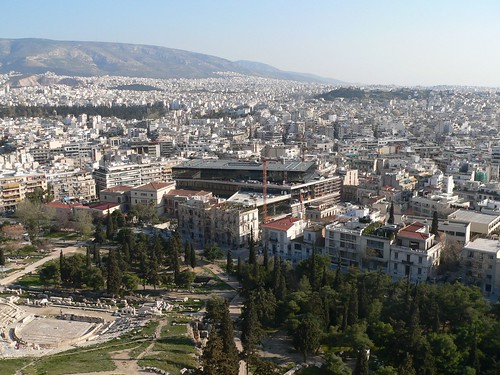
Gill responds, quite rightly, that the major difference between these two claims is context. We know where the Parthenon Marbles came from, we have their context. In fact one can see the context from the new Parthenon Museum, pictured here. However we don't know for sure where many of the looted antiquities which were returned in recent years came from. Their context is lost to us. He follows this up by asking a pointed question in return, will Greece take steps to return Bulgarian silver from the Pazardzhik Byzantine Silver Hoard?

Others have perhaps said this more persuasively than I, but I think cultural policymakers only make the situation worse when they link historical events such as Lord Elgin's removal of the marbles with recent criminal activity on a widespread scale. There may be a persuasive claim for the return of the marbles to Athens, however such a claim is not likely to succeed by making such unhelpful comparisons.

The closer link is with the Bulgarian silver, which it seems Greek's legal system is unable to adequately return to Bulgaria.

On an unrelated note, the Acropolis museum, where this event is being held was reviewed by Richard Lacayo.

Sep 15, 2007

More on Antiquities Leasing


Can antiquities leasing form a good compromise between strict regulation, which can be counterproductive, and the cultural property trade? Tim Harford has an interesting article in Slate today, Rent-A-Treasure: How to Eliminate the Black Market in Stolen Antiquities. He talks more about the working paper Antiquities: Long-Term Leases as an Alternative to Export Bans, co-authored by Michael Kremer and Tom Wilkening. Kremer and Wilkening take an economic perspective and argue antiquities leasing is a better alternative to the current rigid regulation which ends up fostering a black market.

Leasing is an exciting idea as I've argued before; but not in every case. The Slate article does a good job of painting the problem in broad strokes, and traces the idea to the antiquities controversy which is probably the most widely known, the Parthenon Marbles. Some kind of sharing agreement between the British Museum and Greece might work in theory, but neither side would be willing to undergo such a compromise in my view. A better use of leasing would be in developing source nations in response to the illicit trade of today, not long-standing repatriation disputes. Source nation antiquities leasing could produce revenue, foster international appreciation, all while objects are still under the control of the source nation

The first mention of the idea, that I am aware, came in 1993 by Nusin Asgari. The former head of the Antiquities Museum in Istanbul, Turkey, argued that ten-year loan agreements between major museums might reduce the temptation to acquire antiquities illicitly. (Suna Erdem, New Trojan War Highlights Pillage of Turkey's Past, Reuters, Oct. 13, 1993, available in LEXIS, News Library, Curnws File).

There are a few versions of this idea in practice, including the blockbuster King Tut exhibition, which I would venture to say was more about showing off the gold than anything else, and that seemed to be Tyler Cowen's take as well.

But a far better example is the Menil Collection Byzantine Fresco Chapel Museum in Houston, pictured here. The frescoes were stolen during the Turkish occupation of Cyprus in the 1980's. With the permission of the Church of Cyprus, the Menil Foundation agreed to a long-term lease and restoration. This is a far better example than the King Tut exhibition, which seemed far more concerned with earning revenue than education or conisseurship. I haven't seen the chapel in Houston, but the final product looks stunning. It's an example of what the antiquities market can and should produce, and everyone wins.

There was also a great deal of uproar over Lynne Munson's criticism over the National Geographic Society's deal with Afghanistan to display the Bactrian gold, which I talked about here. Are folks aware of other good, or bad antiquities leasing schemes? I'd be very interested to know, if you would care to share them in the comments section.

Jul 27, 2007

The "Ghost Marbles"


The New Acropolis Museum is nearing completion (it may open in 2008), and it is attempting to make a powerful statement about where the parthenon/elgin marbles belong. The museum was due to be finished in time for the summer olympics in 2004, but a number of delays have pushed back completion. It seems some of the sculptures will be displayed, while the missing pieces will have plaster copies displayed behind a gray screen. Sharon Waxman visited the new museum this week and included some pictures, including this one. Here's an excerpt:

[Dimitris] Pandermalis, [President of the new museum] intends to exhibit the frieze of the Parthenon, with the actual sculptures at the height shown here, and with plaster casts of the many friezes still at the British Museum behind a grey scrim. You can't help thinking of that as another deliberate gesture, and as the scrim as a kind of shroud. Pandermalis, however, is anything but emotional. "It's the pride of the nation," he says quietly. "But I prefer to be silent on the issue."


Interesting stuff, and I have no doubt the image of the parthenon in the distance, along with the shrouded missing pieces will act as a powerful symbol. Lee Rosenbaum also talks about a recent presentation Pandermalis gave in New York:

But during a recent slide presentation in New York---showing the current appearance of the new museum, as well as renderings of what it will look like when it opens (possibly in late 2008)---Dimitris Pandermalis...revealed a new approach to the problem of the missing marbles. Instead of an empty space, the slide showed an image of one of the Greek-owned marbles chockablock with a copy of the British-owned slab that would have originally been beside it on the façade of the Parthenon. Together, they completed the relief of a horse. So that there would be no confusion between the original and the copy, the latter was veiled by a scrim, making it appear like a "ghost," as Pandermalis put it.


Whether this shifts the position of the British Museum will be interesting to see. I wonder if all of the missing pieces will be "Ghosted" or if its just the pieces held by the British Museum. After all, bits and pieces of the Acropolis are scattered all over Europe. Also, what is the rationale for only shading the marbles in the hands of others, what about the destruction when the Acropolis basically exploded when the Venetians landed a direct hit on the powder magazine in the 17th Century?

Apr 2, 2007

Recent Repatriations and the Parthenon Marbles


The TimesOnline had an article last week by Ben Macintyre tying in the recent repatriations and criminal trials in Italy and Greece to the Parthenon Marbles (or the Elgin Marbles as they are often referred to). Here's an excerpt:

The return to Greece of a spectacular Macedonian gold wreath from the 4th century BC may lead to the repatriation of several looted artefacts worth millions of pounds.

Court cases in Italy and Greece are increasing the pressure on museums around the world and could lead to widespread changes in the handling of ancient treasures.

The campaign to return stolen work to its country of origin has emboldened Costas Karamanlis, the Prime Minister of Greece, to predict that Britain will soon be forced to surrender the Elgin Marbles. Also at stake are hundreds of statues, bronzes, engravings and other artworks from museums in Europe, the US and Japan.

At the heart of this revolution is the landmark case of the funerary wreath, one of the most beautiful surviving examples of ancient craftsmanship, which was looted from Greece more than ten years ago. A delicate spray of gold leaves interwoven with coloured glass paste, the wreath was probably designed as a funeral gift and made soon after the death of Alexander the Great.

It was put on display in Greece for the first time this week after a long campaign to persuade the J. Paul Getty Museum, in California, to return it to its homeland.

Mr Karamanlis welcomed its return as evidence that Britain would soon be forced to relinquish the Elgin Marbles, which were acquired by the British diplomat Lord Elgin between 1801 and 1810 and are currently housed in the British Museum. Britain has argued that they are better preserved in London (continue reading).

These repatriations are an important step, and are an example of stronger action by both Greece and Italy. However, the Vatican is expected to announce that it will refuse to return some fragments of the Parthenon. Parts of the Parthenon are spread all over Europe, including London, Rome, Copenhagen, Berlin.

I was at the British Museum a few weeks ago, and I was reminded how impressive the sculptures still are, even though they are broken and decontextualized. It would be very exciting to see all of the sculptures collected in Athens for display. However, people all over Europe can view parts of them at present, and there is a value in that as well I suppose. In the end, I seriously doubt whether the British Museum will ever relinquish the marbles.

The case for their return seems much different from the gold wreath which the Getty just returned and from the trial of Marion True. The argument for their return is only ethical or moral, there is no legal claim to them which Greece could hope to assert.

Dec 19, 2006

Greek Archbishop asks Pope Benedict for a piece of the Acropolis

I missed this last week, but Greek Archbishop Christodoulos, in his first official visit to the Vatican, asked Pope Benedict XVI to return a piece of the Parthenon currently housed in the Vatican Museums. Benedict was initially confused by the request, perhaps because he was not aware of the piece. The Pope said he would consider the request. The push is part of an ongoing Greek effort to seek the return of the various pieces of the Parthenon. A comment on this blog last week suggested that Greece is trying to work slowly, and regain the smaller pieces first, from sources which might be more inclined to Greece's requests. The idea makes sense, and is probably the best strategy for Greece to pursue. If they can gather momentum from all of these smaller bits and pieces, perhaps pressure will mount on the British Museum to return their Parthenon sculptures. It's an interesting strategy, but I'm not sure anything can be done to persuade the British Museum to relinquish the marbles.

Dec 8, 2006

UN General Assembly Adopts a Greek Cultural Property Resolution


Earlier this week, the UN General Assembly unanimously adopted a resolution tabled by Greece on "The Return or Restitution of Cultural Property to their Countries of Origin". The resolution lacks any real bite, as most resolutions of the General Assembly are symbolic in nature. However, it does indicate continued pressure by the Greeks on foreign nations to seek the return of Greece's cultural property. Most notably, the Parthenon sculptures, or Elgin marbles as they are often referred to in the UK.

The Greek culture minister, George Voulgarakis hailed the initiative as "an exceptionally important event". Discussing the Parthenon Marbles, he said "The adoption of this resolution in itself signals and guides the countries to help so that the antiquities from all over the world will return to their homes. Greece will always seek and strive, in that direction, for the return of the Parthenon Marbles to their rightful place".

A great deal has been written about the Parthenon Marbles, and whether they should remain in the UK, or return to Greece. One noted scholar in this field, John Merryman, has argued that the sculptures should stay in the British Museum, because they have been resting there peacefully for nearly 200 years. The debate is an emblematic one in many ways for the two primary schools of thought on cultural policy, the cultural nationalists and internationalists. This discussion by the Greek minister of culture seems an effort to try to continue to pressure the UK into returning the sculptures. Perhaps he is learning some lessons from the Italians and their aggressive recent efforts at repatriation, though I think forcing the British Museum to share some or all of the sculptures will truly be a herculean task.

Labels

"Bronze Statue of a Victorious Youth" (17) 1954 Hague Convention (12) 1972 World Heritage Convention (1) Aboriginal Heritage (1) Aboriginal Heritage Act 1988 (SA) (2) act of state doctrine (1) Admiralty Law (11) Afghanistan (10) Africa (4) Albright-Knox Gallery (3) Aleppo (2) Alfred Stieglitz (2) Alternative Dispute Resolution (1) Angkor (1) Anti-Seizure Legislation (1) antiquites (3) antiquities (337) Antiquities Act 1906 (2) Antiquities leasing (10) antiquities looting (4) antiquities smuggling (3) antiquities theft (6) ARCA (8) ARCA Annual Conference (10) ARCA MA Program (6) Archaeological Resources Protection Act (5) Archival Recovery Team (ART) (3) Archives (1) Armed Conflict (22) Arrests (79) Art and Cultural Heritage Law (1) Art Beat Constables (9) Art Crime Statistics (1) art fraud (9) art history (1) Art Institute Chicago (3) art law (1) Art Loans (9) Art Loss Register (19) Art Market (10) Art Theft (263) Artist Resale Right (1) arts funding (1) Association of Art Museum Directors (AAMD) (8) Athens (3) Auction (99) austerity (2) Australia (7) Austria (3) Authentication (3) Babylon (3) Banksy (1) Big Bend National Park (1) bilateral agreements (2) Black Hills (1) Bolton Forgers (4) Book Theft (3) Brazil (5) British Museum (13) Bronze (5) Bronze Statue of a Victorious Youth (1) Brueghel (1) Bruno Lohse (3) Brussels (1) Bührle Collection Theft (4) Bulgaria (4) Burke and Wills (2) Burns Mummies (1) Byzantine Artifacts (4) Cairo (1) Cairo art theft (2) California Raids (6) Caligula (1) Cambodia (11) Camille Pissarro (7) Carabinieri (6) Caravaggio (1) catalogue raisonné (1) Cellini Salt Cellar (2) Central Park (1) Cerveteri (1) Chance Finds (3) Charles Goldie (1) Chihuly Glass (1) China (16) Christie's (14) Church Thefts (6) Civil War (2) Claude Monet (4) Claudia Seger-Thomschitz (3) Cleveland Bronze Apollo (2) Cleveland Museum of Art (CMA) (5) Coins (7) Colonial Art (1) Columbia (1) Conferences (7) Conservation (1) Conventions (1) Copyright (5) Corot (1) Corrections (1) cosmpoplitanism (4) Costa Rica (2) CPIA (10) criminal charges (5) criminology (1) Crystal Bridges Museum (5) Cultral Property Advisory Committee (9) Cultural First Aid (2) cultural heritage (6) cultural heritage careers (2) Cultural Heritage Moot Court Competition (2) Cultural heritage movement (1) cultural justice (3) cultural policy (18) cultural property (4) Cultural Resource Management (1) cultural security (1) culture funding (1) curatorial theft (2) Cycladic Figurines (1) Cyprus (9) Dahshour (1) Dallas Museum of Art (DMA) (2) Database (5) Databases (4) DCMS (2) Deaccessioning (24) Dead Sea Scrolls (1) Dealing in Cultural Objects (Offences) Act 2003 (4) Declaratory Suits (4) Demand and Refusal (2) Design and Artists Copyright Society (1) Detroit Institute of Art (1) development (1) Dick Ellis (2) Diplomatic Bags (1) Doctrine of Discovery (3) Donald Trump (3) Donny George Youkhanna (2) Dr. No (6) Droite de Suite (2) Dubai (1) due diligence (5) eBay (5) Economics (1) Ecuador (1) Edgar Degas (2) Edinburgh (1) Edoardo Almagia (1) Edvard Munch (2) Egon Schiele (4) Egypt (55) El-Hibeh (2) Elgin Marbles (5) empirical studies (1) England (4) environmental justice (4) Environmental law (2) Erik Nemeth (1) Etruscans (2) Euphronios Krater (4) European Court of Human Rights (1) Export Restrictions (19) Fakes (6) FBI (16) FBI Art Crime Team (16) Festivus (1) Fifth Circuit (1) fire (1) Fisk University (3) Footnotes (59) force multiplier (1) Foreign Sovereign Immunities Act (FSIA) (6) forfeiture (13) Forgery (27) fossils (2) Four Corners Antiquities Investigation (11) fractional ownership (2) Francavilla Marittima (1) France (30) Francesco Rutelli (15) Frans van Mieris (2) Frederick Schultz (3) freedman's town (2) Gaza (1) George Grosz (1) Georgia (1) Georgia O'Keeffe (2) Germanicus (2) Germany (16) Getty (1) Ghent Altarpiece (1) Giacomo Medici (6) Gianfranco Becchina (1) Golf (3) good faith (3) Goya (3) Goya theft (4) graffiti (1) Greece (38) Grosz (1) Henri Matisse (1) Henry Moore (1) Heritage at Risk (1) heritage crime (1) Heritage Crime in Art (1) Hermitage (2) High Court in London (4) historic documents (1) Historic Landmark (1) historic preservation (1) historic weapons (1) Holocaust (Return of Cultural Objects) Act (2) Hopi (1) House of Commons Illicit Trade Advisory Panel (ITAP) (1) Houston (2) Howard Spiegler (2) Human Remains (5) Human Rights (1) Hungary (1) Identification (1) illicit excavation (1) Immigration and Customs Enforcement (16) Immunity (6) Immunity from Seizure Act (ISA) (3) import restrictions (3) in the media (7) Indemnity (1) Indianapolis Museum of Art (5) indictments (5) Indigenous Rights (2) Indonesia (1) injunctions (1) Insider Theft (2) Institute d'Egypte (1) Institute of Art and Law (1) Institutional theft (1) Intellectual Property (4) Intentional Destruction (6) International Criminal Court (ICC) (1) International Journal of Cultural Property (1) internationalism (4) INTERPOL (1) Interview (2) Interviews (2) Iran (8) Iran v. Barakat Galleries Ltd. (6) Iran v. Berend (3) Iraq (46) Isabella Stuart Gardner Museum (7) Islamic art (2) Israel (4) Istanbul (2) Italian Art Squad (5) Italian Culture Ministry (6) Italy (122) Jacques Goudstikker (4) James Ossuary (1) Jan Breugel the elder (2) Jan van Eyck (1) Japan (3) Jeanneret v. Vichy (1) Jeff Tweedy (1) Jenack v. Rabizadeh (1) JMW Turner (2) John Constable (1) Jonah Marbles (1) Jonathan Tokeley-Parry (1) Jordan (2) Joseph Farquharson (2) Journal Articles (1) Journal of Art Crime (1) Ka-Nefer-Nefer (9) Kansas (2) Kansas City (1) Kazimir Malevich (3) Kenya (1) Kingsland (3) Klimt (3) Koh Ker (6) Konowaloff v. Metropolitan Museum of Art (1) Kunsthal Museum Theft (2) La Dea Di Morgantina (6) Lawrence Kaye (1) Lebanon (1) Leonardo Da Vinci (9) Leopold Museum (1) Lewis Chessmen (5) lex originis (3) lex situs (5) Libya (2) Lincoln's Inn theft (1) Lithographs (1) loans (5) London (6) London Art and Antiques Unit (7) London Metropolitan Police (2) loot (1) looting (30) Los Angeles County Museum of Art (LACMA) (2) Los Angeles Museum of Contemporary Art (MOCA) (1) LS Lowry (3) Lucas Cranach (1) Lucas Cranach the Elder (3) Lucian Freud (1) Macedonia (1) Machu Picchu (12) Madonna of the Yarnwinder (recovery) (9) Mali (4) Malta (1) Manchester (2) manuscript (1) Maori (2) maps (2) Marc Chagall (1) Marion True (25) Mark Landis (1) market overt (1) Mausoleum at Helicarnassus (1) Max Stern (3) Maxwell Anderson (3) metal detecting (6) Metropolitan Museum of Art (the Met) (29) Mexico (9) Meyer de Haan (1) MFA Boston (6) Michael Brand (3) Michael C. Carlos Museum (1) Michael Steinhardt (2) Middle Eastern Geodatabase for Antiquities (MEGA) (1) Minneapolis Institue of Arts (MIA) (1) Moctezuma's Headdress (1) Modigliani (2) MoMA (4) Mondrian (1) Monet (3) Montreal Museum of Fine Art (2) Monument Men (5) Monuments Men (1) Moral Rights (3) Morgantina (2) Morgantina Aphrodite (9) Morgantina Treasure (1) Moscow (2) Musée d'Art Moderne theft (1) Museum Acquisitions (1) Museum Governance (1) Museum of Anatolian Civilizations (1) Museum of Fine Arts in Boston (6) museum security (2) museum theft (2) Museums Libraries and Archives Council (MLA) (1) Music (2) Myth (1) Napoleon III (1) National Academy (2) National Archaeological Museum in Naples (1) National Archives (3) National Gallery (Washington) (1) National Historic Preservation Act (2) National Stolen Property Act (8) nations of origin (5) Native American Graves Protection and Repatriation Act (8) Native Americans (17) native cultures (2) Nazi Spoliation (74) Neglect (1) Neil Brodie (1) Nelson-Atkins' Bloch Building (1) Netherlands (10) New Acropolis Museum (3) New Orleans (4) New York (6) New Zealand (7) Nigeria (1) nighthawking (3) Noah Charney (1) Norbert Schimmel (1) Norman Palmer (1) Norman Rockwell (2) Norway (4) NSPA (1) Nuclear Analytical Techniques (1) Odyssey Marine Exploration (23) Olympics (2) Omaha Nebraska (1) Organized Crime (1) Orphaned Works (2) Oskar Kokoschka (2) Oslo (1) Pablo Picasso (16) Pakistan (2) Palestine (3) Panama (1) Paolo Ferri (2) Paris (10) partage (1) Parthenon Marbles (17) Patents (1) Patty Gerstenblith (1) Paul Bator (2) Paul Cezanne (5) Paul Gauguin (4) Pazardzhik Byzantine Silver Hoard (1) Penn Museum (1) Pentagon (1) Pere Lachaise (1) Persepolis (3) Peru (24) Peru Headdress (1) Peter Watson (1) Philadelphia (7) Phillipines (1) Picasso (9) Pierre Le Guennec (1) Pierre Valentin (1) piracy (1) Pollock (1) Pompeii (3) Popular Culture (1) Portable Antiquities Scheme (25) Portrait of Wally (11) Poussin (1) pre-Columbian antiquities (2) pre-emptive archaeology (1) Prince Claus Fund (1) Princeton (4) Private Collectors (2) Private International Law (5) Proceeds of Crime Act 2002 (UK) (1) Prosecutions (7) provenance (13) Prussia (1) Public Art Theft (5) Public Trust (1) Publications (2) Quran (1) Radio (2) Ransom (2) realkulturpolitik (1) recovery (45) Rembrandt (2) Rene Magritte (2) Renoir (2) Renvoi (3) repatriation (121) Restitution (40) reward (1) Rhodes (1) Robert Hecht (8) Robin Symes (1) Rodin (2) Roger Atwood (1) Roman Objects (2) Rome (3) Rothko (1) Royal Academy (1) Rubens (3) Rubin v. Islamic Republic of Iran (2) Russia (11) Sale of "The Cello Player" (1) Sale of the "Gross Clinic" (11) Sale of the Stieglitz Collection (4) Salvage (1) Sao Paulo (2) Sao Paulo Museum of Art (3) Scheduled Ancient Monuments (1) Scholarship - Articles and Essays (57) Scholarship - Book Reviews (3) Scholarship - Books (12) Scholarship - Case Notes (1) Scholarship - Events and Conferences (55) Scholarship - Journal Articles (12) Scholarship - Student Papers (16) Scotland (7) Scotland Yard's Arts and Antiques Squad (1) scrap metal (1) Sculpture (2) security (4) seizure (16) Selling stolen art (1) seminars (1) semiotics (1) Sentencing (2) Serbia (1) settlement (1) Sevso Treasure (6) Shelby White (3) shipwreck (1) Sicily (4) Simon Mackenzie (2) Sisley (4) Slovakia (1) Smithsonian (4) Solomon R. Guggenheim (1) Sonic Fingerprints (1) Sotheby's (13) Sotheby's Paris (1) South Africa (1) South America (1) Spain (21) Spoliation (2) Spoliation Advisory Panel (8) St. Louis Art Museum (8) St. Ninian's Isle Treasure (3) Stair Gallery (2) State Department (2) Statue of a Victorious Youth (1) statute of frauds (1) Statutes of Limitations (10) Stephane Breitwieser (1) Stephen Colbert (1) Steven Spielberg (1) stewardship (2) Stolen Art (11) Stone Age (1) street art (1) study collections (1) Summer Palace Bronzes (7) Sweden (2) Switzerland (13) Syria (7) Taliban (1) Tennessee (3) The Art Fund (1) The Bowers Museum (1) The Discovery Rule (4) the fourth ward (1) The Getty (58) The Gross Clinic (1) The Guggenheim (2) The Holocauset (stolen art) restitution bill (2) the Louvre (2) The Menil (4) The National Gallery (1) The National Gallery (London) (2) the Pirate Party (1) The Scream (1) theft (2) Thomas Eakins (9) Thomas Jefferson (1) Timbuktu (2) Titian (1) Toledo Museum of Art (4) tombaroli (2) tourism (1) transparency (1) Traprain Law (1) Traveling Exhibitions (2) Treasure Act (4) treasure trove (3) Turkey (11) UCC (1) Ukraine (2) UN (2) Underground Salt Museum (1) Underwater Cultural Heritage (32) Underwater Sites - "Black Swan" (3) Underwater Sites - "Blue Baron" (1) Underwater Sites - HMS Victory (3) UNESCO (23) UNESCO Convention (24) UNESCO Convention on the Protection of Underwater Cultural Heritage (9) UNIDROIT Convention (2) United Kingdom (24) United States (12) University College London (1) University of Chicago (1) University of Guelph (1) University of Virginia (3) urban development (1) Van Gogh (7) Vandalism (4) Vatican (1) Vermeer (2) Victoria And Albert Museum (3) Vigango (3) viking (1) Villa Giulia (3) Vineberg v. Bissonnette (4) Visual Artists Rights Act (2) voluntary returns (1) Von Saher v. Norton Simon Museum of Art at Pasadena (3) Watts Towers (1) Waverley Criteria (10) Week in Review (3) West Bank (1) wikiloot (1) Wilco (1) William S. Burroughs (1) Windsor Antiquities Indictment (1) World Heritage Sites (1) World War II (11) Yale University (13) year in review (2) Zahi Hawass (9)

LinkWithin

Related Posts Plugin for WordPress, Blogger...