Showing posts with label Stolen Art. Show all posts

Jul 23, 2008

Estate Recovers Three Works Stolen 30 years Ago (UPDATE)

The Worcester Telegram and Gazette reported yesterday that three works stolen more than 30 years ago will be returned to the original owner's estate according to a Federal District Court ruling in Rhode Island. Recovered were The Shore of Lake Geneva by French painter Gustave Courbet, Lady as Shepherdess by William Hamilton and In the Sun by American impressionist Childe Hassam:
The paintings were stolen by three armed, masked men the night of July 1 into early July 2, 1976, from the home of Mae Persky, 520 Grafton St. The three men cut the telephone wires to the home, bound Ms. Persky, her nurse companion and caretaker and ransacked the home. They stole the paintings, furs and other valuables. The roughly two-hour robbery ended with one of the robbers stating, “Give us an hour to get away or we’ll come back and burn the …. place to the ground,” according to the police report. The paintings had been purchased in 1945 by Mrs. Persky’s husband, Abraham Persky. The insurance company for the Persky estate paid $45,000 on the policy for the three paintings. OneBeacon Insurance Co. is the “successor-in-interest” to the insurance company at the time of the robbery, Commercial Union Assurance. Mrs. Persky, whose husband was the former president of the Worcester Knitting Co., left the paintings to Ms. Yoffie and her husband, William Yoffie, in her will. he died Aug. 21, 1979. She was 86 at the time of the robbery, according to news reports. Mr. Yoffie was president of Worcester Knitting Co. and a trustee of the Abraham S. Persky Charitable Trust. He left the interest in the paintings to his wife when he died April 2007. For years, the paintings remained missing. They resurfaced last year when Patrick Conley went to have them authenticated by a Newport, R.I., art dealer. Mr. Conley had received the three paintings from his brother William Conley as collateral for $22,000 in loans in 1998 and 1999. Because William Conley never repaid his brother, Patrick Conley kept the paintings as part of their written loan agreement. It is unclear how antiques dealer William Conley obtained the paintings. When the paintings were determined to be stolen, the FBI took custody of them and the legal battle began. In previous interviews, Patrick Conley said he had no idea the paintings were stolen.
I haven't been able to track down the judgment yet, so I can't comment on the legal issues involved. I can say with some certainty that this is a classic stolen art dispute between an original owner (or her successor in interest) and a subsequent purchaser or acquirer who purports to be in good faith. This is a dispute between two relatively innocent parties, and jurisdictions have very different handling of this kind of situation -- not so much in the US or the UK, but in civilian systems like Iitaly or Switzerland purchasers can acquire good title to these stolen works.

UPDATE:

Donn Zaretsky notes that this was seemingly not a judgment but rather the court signed off on a settlement agreement among the parties, ending the dispute, which has not been made public. He wants to know
"what did the insurance company get in return?"

Jul 10, 2007

In the News

I saw a couple of noteworthy items in the papers this morning.

First, there was an interesting note of a legal event held in London last week. Edward Fennell of the Times Online in his "In the City" feature talked about this event:

Last week Withers hosted one of the most curious legal events I have ever attended. In a gripping account to a smart multinational audience of art professionals, insurers and well-heeled collectors the firm’s art recovery expert, partner Pierre Valentin told how he helped to recover paintings from the Bakwin collection that had been stolen in America in the 1970s.

Working with the Art Loss Register (which operates in that seductive area where culture and money meet glamour and crime) Mr Valentin described a Hitchcock-like thriller featuring painstaking research, dodgy Russians and even murder – but all ending in happy success for the resolute legal sleuth. As the tale unfolded we could see on display the very “McGuffin” that had driven the drama – the collection of paintings themselves by Cézanne, Matisse, Soutine, Vlaminck By the end of an astonishing evening Withers had proved itself a true ornament to the City’s legal scene.


I take it Whithers must be a firm of Solicitors. Sounds like some fascinating stories. I do not know about this particular case, but I am familiar with Pierre Valentin. It sounds fascinating. Here is hoping he makes it up to Scotland.

Second, I noticed an AP story by Ariel David which has been picked up by a number of papers in recent weeks. I haven't noted it before but it is an interesting story of the notorious tombaroli Pietro Casasanta who has testified at the True/Hecht trial and Rome. Here is an excerpt:

It used to be so easy for the “tombaroli,” Italy’s tomb raiders.

Pietro Casasanta had no Indiana Jones-type escapes from angry natives or booby-trapped temples. He worked undisturbed in daylight with a bulldozer, posing as a construction worker to become one of Italy’s most successful plunderers of archaeological treasures.

When he wasn’t in prison, the convicted looter operated for decades in this countryside area outside Rome, benefiting from what he says was lax surveillance that allowed him to dig into ancient Roman villas and unearth statues, pottery and other artifacts, which he then sold for millions of dollars on the illegal antiquities market.

“Nobody cared, and there was so much money going around,” he recalled. “I always worked during the day, with the same hours as construction crews, because at night it was easier to get noticed and to make mistakes.”

Jun 22, 2007

A Magritte is Recovered


Magritte's Les Reflets du Temps has been recovered. The work had been stolen from storage in 2006. The work may be worth up to £350,000. The work was discovered by a member of the public who checked it against the London Stolen Art Database. This is welcome news, and perhaps will give pause before planned cuts the the Art and Antiques unit take place.

Det Supt Vernon Rapley, head of the unit, said: "For anyone considering buying art, antiquities or cultural property the database is an invaluable resource to help buyers check that they aren't being sold stolen items.

"I am really pleased that the database has enabled this Magritte to be found so that the victim can have it returned to them."

Exactly right, but the website explicitly states that it should not be used for due diligence purposes. The problem with databases, is there are too many, and they are divided regionally. Ideally there would be one overarching database any prospective buyer could check.

There is no word either on who stole the work. Unfortunately that is often the case when stolen art like this is recovered. The thieves are long gone, and the authorities main priority (and perhaps rightly so) is the recovery of the work. This also makes it appear as if there are little or no penalties to be had for stealing works though.

Mar 1, 2007

Stolen Picassos


These two works by Pablo Picasso were stolen. The two works, Portrait of Jacqueline (1938) on the left and Maya with Doll (1961) on the right, will be nearly impossible to sell. They were taken from a home in Paris' 7th Arrondissement between Monday and Tuesday of this week. They were stolen from Diana Widmaier-Picasso, the granddaughter of the artist. Their combined value is estimated at $66 million.

Alan riding of the New York Times has an excellent story here, and there are various AP stories floating around as well.

Speculation will abound about who stole these works and why. That's the ultimate question. Was it the mob, criminals eager to ransom the work back, or even a wealthy evil genius who had it stolen to order? If I had to guess, I would say it was probably taken by experienced thieves. They will put it in a bank vault, and attempt to work out a settlement with the owners in a few years, perhaps even brokered by the Art Loss Register.

Feb 26, 2007

Corruption Charges


From Lawfuel:

Hollywood Police Officers Kevin Companion, Jeffry Courtney, Thomas Simcox and Stephen Harrison were charged in a complaint unsealed today with extortion and narcotics charges, announced R. Alexander Acosta, United States Attorney for the Southern District of Florida, and Jonathan I. Solomon, Special Agent in Charge, Federal Bureau of Investigation, Miami Field Office. Specifically, the complaint charges the defendants with conspiring and attempting to commit extortion under color of official right by accepting bribes to protect and facilitate what was represented to be a wide range of criminal activities, including the sale and interstate transportation of stolen property, a crooked high stakes gambling operation, cargo theft, and the transportation of a multi-kilogram load of heroin, all in violation of Title 18, United States Code, Section 1951. The defendants were also charged with conspiring and attempting to possess with intent to distribute a controlled substance, in violation of Title 21, United States Code, Section 846, for their roles in protecting a heroin shipment.

The charges against these four Hollywood Police Officers arose from a two-year undercover investigation jointly conducted by the United States Attorney’s Office and the Federal Bureau of Investigation. According to the complaint, Companion, a 20-year veteran of the Hollywood Police Department, Courtney, a 15-year veteran of the Department, Simcox, a 24-year veteran of the Department, and Harrison, an 8-year veteran of the Department, provided a variety of illegal services to a group of individuals who represented themselves to be part of a New York-based criminal organization which was looking to recruit police officers to protect and facilitate their illegal operations. In reality, however, these individuals were FBI undercover agents, and the purported criminal activities were all staged operations done as part of the investigation.

In exchange for cash payments, the defendants were involved in the following criminal activities: Companion protected the collection of an illegal gambling debt and the fencing of stolen watches; Companion and Courtney protected a sale of $400,000 worth of stolen diamonds, and personally delivered $400,000 worth of stolen bearer bonds from Florida to New York City; Companion, Courtney, Simcox, and Harrison all participated in providing protection for a high-stakes rigged poker game staged on a yacht; Companion, Courtney, and Simcox delivered $1,000,000 worth of stolen diamonds from Florida to Atlantic City, New Jersey; Companion, Courtney, Simcox and Harrison all protected the theft of a tractor-trailer load of cigarettes; Companion and Harrison delivered a load of valuable stolen artwork from Florida to Atlantic City; and finally, Companion, Courtney, Simcox, and Harrison provided a security escort for the transportation of a multi-kilo load of heroin from Miami Beach to Hollywood, Florida, for further delivery to the criminal organization up north. The defendants would be paid in cash at the conclusion of each criminal episode in which they participated, and as a result of their criminal activities, they received the following approximate total amounts: Companion - $42,000; Courtney - $22,000; Simcox - $16,000; and Harrison - $12,000.


Continue Reading.

It's an interesting development, and one sure to grab headlines. It sounds almost too far-fetched to be real. I found the charges of transporting artwork particularly interesting. It's an example of mob ties to art theft. A number of claims are thrown about regarding organized crime and stolen art, but there is not a lot of hard evidence to support the claim. Here is some evidence, though it seems the far more serious violations were in regards to extortion and drug smuggling. One of the reasons given for a stronger criminal response to the illicit trade in cultural property are reports like this, which link stolen art to drugs and other more serious crimes.

You can read the press release from the US Attorney's Office for the Southern District of Florida here.

Nov 21, 2006

Goya Recovered

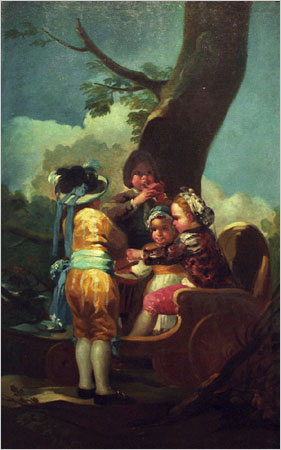
The New York Times reports this morning that Goya's "Children With a Cart" was recovered in good condition on Saturday in New Jersey. The F.B.I. investigators are not releasing many details, possibly because the investigation is ongoing. Apparently, an attorney notified the bureau of the work's location. No details are being released about her identity, or if she is representing one the thieves as a client. There is no word yet on whether the attorney will receive the $50,000 reward offered by the insurer. If the attorney does get the reward money, I'm not sure if she will be required to give any of that money to her clients. That seems like quite an interesting ethical question, and I'm not sure what the outcome might be.

The thieves would be shielded by confidentiality though, so there is no way investigators would be able to track down the thieves without conducting their own investigation. At this point, it seems the FBI is attributing the theft to blind luck on the part of the thieves, and not any inside information as was speculated. The FBI's Newark spokesman, Steve Siegal, says in the NYT,

This time of year, close to Christmas, they probably thought they’d found a truck filled with PlayStations and broke in and started looking for the biggest-looking box. Basically, it’s a target-of-opportunity typical New Jersey cargo theft. There are literally predators — for lack of a better word — who when they see a tractor-trailer or a cargo vehicle parked for any length of time start snooping around.


If anything, that makes the delivery company in charge of transporting the work look even sillier. It's a sad state of affairs when ps2's are harder to steal then a work of art.

I do not anticipate any charges being filed in this case, and the resolution of this mirrors the recovery of a Peruvian gold headdress authorities recovered in London in August. Investigators want to reward thieves who quickly return objects in this way. One of the best shots investigators may have at recovery is if thieves anonymously return stolen objects. Because the objects are so valuable, their safe return is the highest priority. This Goya, like the Peruvian treasure, has a very small potential market. The risk of an arrest pales in comparison with the proceeds of a potential sale, because no reputable buyer would be willing to take on stolen property like this.

Nov 19, 2006

Goya Theft Update

Saturday's New York Times has an update on the theft of Goya's "Children With a Cart". As I said earlier this week, the market for this work is extremely small. Purchasers of the work will not be able to claim they acquired the work in good faith, and thus the Toledo Museum of Art will defeat the possessor's claims. Of course, the thieves may not be concerned with selling the work, they may be trying to ransom the work back to the museum.

The FBI is investigating the theft, and has not released any information to the public. It seems though, that as more time passes, the likelihood of a quick resolutions grows more remote. The Times piece has quite a few details of the theft, which it seems to have gathered from the insurance investigation and interviews with the proprietors of the Pennsylvania Howard Johnson. The painting was taken from the delivery truck overnight, after being parked in the motel's parking lot. At this point, criticism has centered on the driver's decision to stop overnight when they could have completed the drive in a day. Also, these works are not supposed to be left unattended.

Whether this theft was an inside job as a number of commentators have speculated remains to be seen. It might just be an example of a couple of lucky thieves coming across this delivery truck at this Howard Johnson. Look for museums to increase the security procedures involving the transportation of valuable works of art in the future. Many museums depend on the income and prestige which comes with hosting large exhibitions like these. For the general public, it would be a great shame if this theft causes institutions to think twice before loaning their works to other museums.

Nov 14, 2006

Goya Stolen


The New York Sun reported last night that a 1778 work by Francisco de Goya, Children With Cart, pictured here, was stolen near Scranton, Penn. It was being transported to The Guggenheim for an exhibit on Spanish Painting. The FBI is investigating, and has offered a reward of $50,000. The painting is valued at about $1.1 million. The work had been housed at the Toledo Museum of Art in Ohio. It looks to be from his earlier career, before the lead in his paint may have caused his deafness, which resulted in some fantastically-bizarre works.

Why was this work stolen? Surely, the market for the work is quite small, as nobody will be able to claim good faith in buying or selling the work. The thieves may be attempting to ransom the work back to the museum. Criminal penalties are far lower for kidnapping a work of art than they would be for, say, kidnapping a person. The other possibility is that a wealthy collector may have requested it stolen for her own private collection. Some have termed this hypothetical theft-on-demand the Dr. No possibility. If the work is returned, look for it to gain in notoriety.

Nov 7, 2006

Will Billboards help Return $300 Million in Stolen Art?


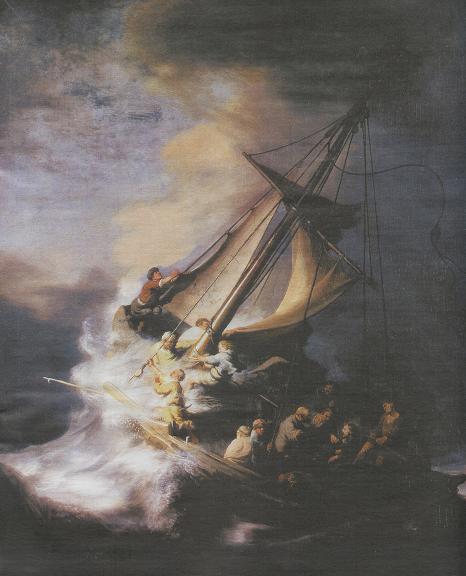
Over the weekend, the Boston Globe picks up a piece by London's Financial Times, that Eric Ives, head of the FBI's major theft unit, is considering using billboards to aid its investigation of the works stolen from the Isabella Stewart Gardner Museum in Boston in 1990. One of the works stolen includes this work, which is Rembrandt's only seascape. The total value of all of the works has been estimated at $300 million. I've written about this theft before, in terms of a new documentary here. The best account of the theft I've found is Court TV's here.

Will Billboard's work? I'm not sure. They certainly can't hurt. The idea, I suppose, is for someone to catch a glimpse of these works and after seeing the billboard, alert the authorities. I'm not sure there would be much of a market for these works, as they are so widely known in the art world, that there would certainly be an impossibility of a good faith purchase. The law would not honor the sale because the buyers should know that these works have been stolen.

Fascinating theories abound, involving Boston Mafia and IRA members. Certainly, no one will be able to sell these works on any licit market, and if the thieves are caught, there may be a prosecution under the National Stolen Property Act if the transaction has a federal character (like crossing state lines for example). At this point, nearly 16 years after the theft, there does not seem to be any leads for the FBI Investigation, and a billboard campaign may serve to renew interest in the theft.

Nov 1, 2006

An Exhibit of Stolen Art in Rome


A new art exhibit in Rome will display 100 works of art that the Italian Art Squad, the Carabinieri Cultural Heritage Protect Unit, have recovered in recent years. The exhibition will take place at the Palazzo Incontro, (Meeting Palace).

It is often said that if we could gather all of the stolen works of art into one museum, it would be the world's finest collection of art. That claim is of course quite far-fetched and nearly impossible to quantify, but perhaps this exhibition will illustrate how much art is being lost.

The exhibition, titled "Stolen art, the return" includes Young girl with red stockings by Amedeo Modigliane (pictured here) which was stolen from its private owner in the 1990's, and has never been publicly displayed. Other works include two paintings by Francesco Barbieri, known as il Guercino. Also, an artifact called the "Ivory Face" uses a technique called chryselephantine which combines Ivory and Gold. Its age and provenance are unknown however, illustrating how much context can be lost when illicit excavation takes place.

The exhibition is quite remarkable, and a very shrewd move by the art squad. It is a very tangible expression of how many works are being lost, and how a well-funded and committed police force can limit the illicit trade in these works.

Oct 4, 2006

Church Thefts

In today's New York Times, this piece details the theft of colonial art from Mexico's rural churches. Apparently, theft from churches in Mexico's colonial heartland near Mexico City has become widespread. According to the National Institute of Anthropology and History in Mexico, 1,000 colonial pieces have been stolen since 1999. In response, the Mexican government is attempting to register the nation's sacred art. According to the Times piece, 600,000 items have been inventoried so far. The institute is also preparing its own Web site of stolen art, so dealers and collectors can no longer claim that there is no record of the theft.

Such a database is both a welcome change, and worrying at the same time. In theory, a database should put dealers of Mexican colonial art on notice that a certain set of objects may be tainted. However, there are a number of such websites now available. See the Art Loss Register for example. The more of these databases there are, the harder it will be for the law to realistically impose an obligation on buyers and sellers of art and antiquities. If each segment of the cultural property market has its own database, this would almost certainly lead to confusion and overlap. One unified website would be a much better system. A buyer or seller could easily check a single website t insure their piece is not stolen.

Labels

"Bronze Statue of a Victorious Youth" (17) 1954 Hague Convention (12) 1972 World Heritage Convention (1) Aboriginal Heritage (1) Aboriginal Heritage Act 1988 (SA) (2) act of state doctrine (1) Admiralty Law (11) Afghanistan (10) Africa (4) Albright-Knox Gallery (3) Aleppo (2) Alfred Stieglitz (2) Alternative Dispute Resolution (1) Angkor (1) Anti-Seizure Legislation (1) antiquites (3) antiquities (337) Antiquities Act 1906 (2) Antiquities leasing (10) antiquities looting (4) antiquities smuggling (3) antiquities theft (6) ARCA (8) ARCA Annual Conference (10) ARCA MA Program (6) Archaeological Resources Protection Act (5) Archival Recovery Team (ART) (3) Archives (1) Armed Conflict (22) Arrests (79) Art and Cultural Heritage Law (1) Art Beat Constables (9) Art Crime Statistics (1) art fraud (9) art history (1) Art Institute Chicago (3) art law (1) Art Loans (9) Art Loss Register (19) Art Market (10) Art Theft (263) Artist Resale Right (1) arts funding (1) Association of Art Museum Directors (AAMD) (8) Athens (3) Auction (99) austerity (2) Australia (7) Austria (3) Authentication (3) Babylon (3) Banksy (1) Big Bend National Park (1) bilateral agreements (2) Black Hills (1) Bolton Forgers (4) Book Theft (3) Brazil (5) British Museum (13) Bronze (5) Bronze Statue of a Victorious Youth (1) Brueghel (1) Bruno Lohse (3) Brussels (1) Bührle Collection Theft (4) Bulgaria (4) Burke and Wills (2) Burns Mummies (1) Byzantine Artifacts (4) Cairo (1) Cairo art theft (2) California Raids (6) Caligula (1) Cambodia (11) Camille Pissarro (7) Carabinieri (6) Caravaggio (1) catalogue raisonné (1) Cellini Salt Cellar (2) Central Park (1) Cerveteri (1) Chance Finds (3) Charles Goldie (1) Chihuly Glass (1) China (16) Christie's (14) Church Thefts (6) Civil War (2) Claude Monet (4) Claudia Seger-Thomschitz (3) Cleveland Bronze Apollo (2) Cleveland Museum of Art (CMA) (5) Coins (7) Colonial Art (1) Columbia (1) Conferences (7) Conservation (1) Conventions (1) Copyright (5) Corot (1) Corrections (1) cosmpoplitanism (4) Costa Rica (2) CPIA (10) criminal charges (5) criminology (1) Crystal Bridges Museum (5) Cultral Property Advisory Committee (9) Cultural First Aid (2) cultural heritage (6) cultural heritage careers (2) Cultural Heritage Moot Court Competition (2) Cultural heritage movement (1) cultural justice (3) cultural policy (18) cultural property (4) Cultural Resource Management (1) cultural security (1) culture funding (1) curatorial theft (2) Cycladic Figurines (1) Cyprus (9) Dahshour (1) Dallas Museum of Art (DMA) (2) Database (5) Databases (4) DCMS (2) Deaccessioning (24) Dead Sea Scrolls (1) Dealing in Cultural Objects (Offences) Act 2003 (4) Declaratory Suits (4) Demand and Refusal (2) Design and Artists Copyright Society (1) Detroit Institute of Art (1) development (1) Dick Ellis (2) Diplomatic Bags (1) Doctrine of Discovery (3) Donald Trump (3) Donny George Youkhanna (2) Dr. No (6) Droite de Suite (2) Dubai (1) due diligence (5) eBay (5) Economics (1) Ecuador (1) Edgar Degas (2) Edinburgh (1) Edoardo Almagia (1) Edvard Munch (2) Egon Schiele (4) Egypt (55) El-Hibeh (2) Elgin Marbles (5) empirical studies (1) England (4) environmental justice (4) Environmental law (2) Erik Nemeth (1) Etruscans (2) Euphronios Krater (4) European Court of Human Rights (1) Export Restrictions (19) Fakes (6) FBI (16) FBI Art Crime Team (16) Festivus (1) Fifth Circuit (1) fire (1) Fisk University (3) Footnotes (59) force multiplier (1) Foreign Sovereign Immunities Act (FSIA) (6) forfeiture (13) Forgery (27) fossils (2) Four Corners Antiquities Investigation (11) fractional ownership (2) Francavilla Marittima (1) France (30) Francesco Rutelli (15) Frans van Mieris (2) Frederick Schultz (3) freedman's town (2) Gaza (1) George Grosz (1) Georgia (1) Georgia O'Keeffe (2) Germanicus (2) Germany (16) Getty (1) Ghent Altarpiece (1) Giacomo Medici (6) Gianfranco Becchina (1) Golf (3) good faith (3) Goya (3) Goya theft (4) graffiti (1) Greece (38) Grosz (1) Henri Matisse (1) Henry Moore (1) Heritage at Risk (1) heritage crime (1) Heritage Crime in Art (1) Hermitage (2) High Court in London (4) historic documents (1) Historic Landmark (1) historic preservation (1) historic weapons (1) Holocaust (Return of Cultural Objects) Act (2) Hopi (1) House of Commons Illicit Trade Advisory Panel (ITAP) (1) Houston (2) Howard Spiegler (2) Human Remains (5) Human Rights (1) Hungary (1) Identification (1) illicit excavation (1) Immigration and Customs Enforcement (16) Immunity (6) Immunity from Seizure Act (ISA) (3) import restrictions (3) in the media (7) Indemnity (1) Indianapolis Museum of Art (5) indictments (5) Indigenous Rights (2) Indonesia (1) injunctions (1) Insider Theft (2) Institute d'Egypte (1) Institute of Art and Law (1) Institutional theft (1) Intellectual Property (4) Intentional Destruction (6) International Criminal Court (ICC) (1) International Journal of Cultural Property (1) internationalism (4) INTERPOL (1) Interview (2) Interviews (2) Iran (8) Iran v. Barakat Galleries Ltd. (6) Iran v. Berend (3) Iraq (46) Isabella Stuart Gardner Museum (7) Islamic art (2) Israel (4) Istanbul (2) Italian Art Squad (5) Italian Culture Ministry (6) Italy (122) Jacques Goudstikker (4) James Ossuary (1) Jan Breugel the elder (2) Jan van Eyck (1) Japan (3) Jeanneret v. Vichy (1) Jeff Tweedy (1) Jenack v. Rabizadeh (1) JMW Turner (2) John Constable (1) Jonah Marbles (1) Jonathan Tokeley-Parry (1) Jordan (2) Joseph Farquharson (2) Journal Articles (1) Journal of Art Crime (1) Ka-Nefer-Nefer (9) Kansas (2) Kansas City (1) Kazimir Malevich (3) Kenya (1) Kingsland (3) Klimt (3) Koh Ker (6) Konowaloff v. Metropolitan Museum of Art (1) Kunsthal Museum Theft (2) La Dea Di Morgantina (6) Lawrence Kaye (1) Lebanon (1) Leonardo Da Vinci (9) Leopold Museum (1) Lewis Chessmen (5) lex originis (3) lex situs (5) Libya (2) Lincoln's Inn theft (1) Lithographs (1) loans (5) London (6) London Art and Antiques Unit (7) London Metropolitan Police (2) loot (1) looting (30) Los Angeles County Museum of Art (LACMA) (2) Los Angeles Museum of Contemporary Art (MOCA) (1) LS Lowry (3) Lucas Cranach (1) Lucas Cranach the Elder (3) Lucian Freud (1) Macedonia (1) Machu Picchu (12) Madonna of the Yarnwinder (recovery) (9) Mali (4) Malta (1) Manchester (2) manuscript (1) Maori (2) maps (2) Marc Chagall (1) Marion True (25) Mark Landis (1) market overt (1) Mausoleum at Helicarnassus (1) Max Stern (3) Maxwell Anderson (3) metal detecting (6) Metropolitan Museum of Art (the Met) (29) Mexico (9) Meyer de Haan (1) MFA Boston (6) Michael Brand (3) Michael C. Carlos Museum (1) Michael Steinhardt (2) Middle Eastern Geodatabase for Antiquities (MEGA) (1) Minneapolis Institue of Arts (MIA) (1) Moctezuma's Headdress (1) Modigliani (2) MoMA (4) Mondrian (1) Monet (3) Montreal Museum of Fine Art (2) Monument Men (5) Monuments Men (1) Moral Rights (3) Morgantina (2) Morgantina Aphrodite (9) Morgantina Treasure (1) Moscow (2) Musée d'Art Moderne theft (1) Museum Acquisitions (1) Museum Governance (1) Museum of Anatolian Civilizations (1) Museum of Fine Arts in Boston (6) museum security (2) museum theft (2) Museums Libraries and Archives Council (MLA) (1) Music (2) Myth (1) Napoleon III (1) National Academy (2) National Archaeological Museum in Naples (1) National Archives (3) National Gallery (Washington) (1) National Historic Preservation Act (2) National Stolen Property Act (8) nations of origin (5) Native American Graves Protection and Repatriation Act (8) Native Americans (17) native cultures (2) Nazi Spoliation (74) Neglect (1) Neil Brodie (1) Nelson-Atkins' Bloch Building (1) Netherlands (10) New Acropolis Museum (3) New Orleans (4) New York (6) New Zealand (7) Nigeria (1) nighthawking (3) Noah Charney (1) Norbert Schimmel (1) Norman Palmer (1) Norman Rockwell (2) Norway (4) NSPA (1) Nuclear Analytical Techniques (1) Odyssey Marine Exploration (23) Olympics (2) Omaha Nebraska (1) Organized Crime (1) Orphaned Works (2) Oskar Kokoschka (2) Oslo (1) Pablo Picasso (16) Pakistan (2) Palestine (3) Panama (1) Paolo Ferri (2) Paris (10) partage (1) Parthenon Marbles (17) Patents (1) Patty Gerstenblith (1) Paul Bator (2) Paul Cezanne (5) Paul Gauguin (4) Pazardzhik Byzantine Silver Hoard (1) Penn Museum (1) Pentagon (1) Pere Lachaise (1) Persepolis (3) Peru (24) Peru Headdress (1) Peter Watson (1) Philadelphia (7) Phillipines (1) Picasso (9) Pierre Le Guennec (1) Pierre Valentin (1) piracy (1) Pollock (1) Pompeii (3) Popular Culture (1) Portable Antiquities Scheme (25) Portrait of Wally (11) Poussin (1) pre-Columbian antiquities (2) pre-emptive archaeology (1) Prince Claus Fund (1) Princeton (4) Private Collectors (2) Private International Law (5) Proceeds of Crime Act 2002 (UK) (1) Prosecutions (7) provenance (13) Prussia (1) Public Art Theft (5) Public Trust (1) Publications (2) Quran (1) Radio (2) Ransom (2) realkulturpolitik (1) recovery (45) Rembrandt (2) Rene Magritte (2) Renoir (2) Renvoi (3) repatriation (121) Restitution (40) reward (1) Rhodes (1) Robert Hecht (8) Robin Symes (1) Rodin (2) Roger Atwood (1) Roman Objects (2) Rome (3) Rothko (1) Royal Academy (1) Rubens (3) Rubin v. Islamic Republic of Iran (2) Russia (11) Sale of "The Cello Player" (1) Sale of the "Gross Clinic" (11) Sale of the Stieglitz Collection (4) Salvage (1) Sao Paulo (2) Sao Paulo Museum of Art (3) Scheduled Ancient Monuments (1) Scholarship - Articles and Essays (57) Scholarship - Book Reviews (3) Scholarship - Books (12) Scholarship - Case Notes (1) Scholarship - Events and Conferences (55) Scholarship - Journal Articles (12) Scholarship - Student Papers (16) Scotland (7) Scotland Yard's Arts and Antiques Squad (1) scrap metal (1) Sculpture (2) security (4) seizure (16) Selling stolen art (1) seminars (1) semiotics (1) Sentencing (2) Serbia (1) settlement (1) Sevso Treasure (6) Shelby White (3) shipwreck (1) Sicily (4) Simon Mackenzie (2) Sisley (4) Slovakia (1) Smithsonian (4) Solomon R. Guggenheim (1) Sonic Fingerprints (1) Sotheby's (13) Sotheby's Paris (1) South Africa (1) South America (1) Spain (21) Spoliation (2) Spoliation Advisory Panel (8) St. Louis Art Museum (8) St. Ninian's Isle Treasure (3) Stair Gallery (2) State Department (2) Statue of a Victorious Youth (1) statute of frauds (1) Statutes of Limitations (10) Stephane Breitwieser (1) Stephen Colbert (1) Steven Spielberg (1) stewardship (2) Stolen Art (11) Stone Age (1) street art (1) study collections (1) Summer Palace Bronzes (7) Sweden (2) Switzerland (13) Syria (7) Taliban (1) Tennessee (3) The Art Fund (1) The Bowers Museum (1) The Discovery Rule (4) the fourth ward (1) The Getty (58) The Gross Clinic (1) The Guggenheim (2) The Holocauset (stolen art) restitution bill (2) the Louvre (2) The Menil (4) The National Gallery (1) The National Gallery (London) (2) the Pirate Party (1) The Scream (1) theft (2) Thomas Eakins (9) Thomas Jefferson (1) Timbuktu (2) Titian (1) Toledo Museum of Art (4) tombaroli (2) tourism (1) transparency (1) Traprain Law (1) Traveling Exhibitions (2) Treasure Act (4) treasure trove (3) Turkey (11) UCC (1) Ukraine (2) UN (2) Underground Salt Museum (1) Underwater Cultural Heritage (32) Underwater Sites - "Black Swan" (3) Underwater Sites - "Blue Baron" (1) Underwater Sites - HMS Victory (3) UNESCO (23) UNESCO Convention (24) UNESCO Convention on the Protection of Underwater Cultural Heritage (9) UNIDROIT Convention (2) United Kingdom (24) United States (12) University College London (1) University of Chicago (1) University of Guelph (1) University of Virginia (3) urban development (1) Van Gogh (7) Vandalism (4) Vatican (1) Vermeer (2) Victoria And Albert Museum (3) Vigango (3) viking (1) Villa Giulia (3) Vineberg v. Bissonnette (4) Visual Artists Rights Act (2) voluntary returns (1) Von Saher v. Norton Simon Museum of Art at Pasadena (3) Watts Towers (1) Waverley Criteria (10) Week in Review (3) West Bank (1) wikiloot (1) Wilco (1) William S. Burroughs (1) Windsor Antiquities Indictment (1) World Heritage Sites (1) World War II (11) Yale University (13) year in review (2) Zahi Hawass (9)

LinkWithin

Related Posts Plugin for WordPress, Blogger...