Showing posts with label antiquities. Show all posts

Jun 11, 2013

Federal agents have seized $100m from Subhash Kapoor

Jason Felch reports that Federal agents have seized a whopping $100 million in art in the past couple years from Subhash Kapoor. Kapoor, an American citizen, is subject to potential criminal charges for dealing in looted and stolen art: a pending criminal trial in India; and he may be prosecuted in the United States as well.

Felch reports on the staggering number of esteemed Museums which have purchased material from Kapoor since:

Since 1974, Kapoor and his Madison Avenue gallery Art of the Past have sold or donated ancient art to the Metropolitan Museum of Art in New York City, the Los Angeles County Museum of Art, the Norton Simon Museum, the Asian Art Museum of San Francisco, the Art Institute of Chicago, the Toledo Museum in Ohio and others. Abroad, his clients included the Musée des Arts Asiatiques-Guimet, Paris; the Museum f¿r Indische Kunst in Berlin; the Royal Ontario Museum in Toronto; the Asian Civilisations Museum in Singapore; and the National Gallery of Australia. To date none of the museums has been accused of possessing stolen art or conspiring with Kapoor. Several have acknowledged having objects from Kapoor but declined to comment on the ongoing investigations.
 This is a staggering array of objects and some very fine Museums.

The piece demonstrates how integral federal forfeitures are in policing the art and antiquities trade in the United States. Whether all that art will be repatriated to Southeast Asia remains to be seen, but the institutions which have material which passed through Kapoor would be wise to start preparing a strategy for the inevitable questions which will arise. Right now he looks to be as big an alleged antiquities smuggler as any of the names we've seen deal in art from Europe or even some of the notorious dealers in looted Mediterranean antiquities.

  1. Jason Felch, Feds pursue Manhattan art dealer suspected of smuggling, L.A. Times, June 11, 2013, http://www.latimes.com/entertainment/arts/culture/la-et-cm-asian-artifact-smuggling-20130611,0,3469733.story.

May 17, 2013

Cambodia Presses Other Museums

Tom Mashberg reports that Cambodia now has requested objects from others, including:
  • Denver Art Museum
  • Cleveland Museum of Art
  • The Norton Simon,
  • And of course Sotheby's which is challenging a federal forfeiture
New York's Metropolitan Museum announced it would return two other statues. It seems to have encouraged the Cambodians and their advocates to look for other similar material. And that precedent set by the Met may compel these other institutions to return objects. From the NYT piece:


The Met’s two statues represent brothers of Bhima who knelt in attendance during the fight. The Met’s statues were acquired in four pieces from donors 1987 to 1992. Those statues, plus the one from Sotheby’s, are known to have gone through a London art dealer, Spink & Son, in the early 1970s. Cambodian officials say the broken pedestals of all those sculptures were left in the ground by the looters. Norton Simon, who died in 1993, bought the Bhima in 1976 from a Madison Avenue Asian art dealer and gave it to the museum in 1980. “In more than three decades, the foundation’s ownership of the sculpture has never been questioned,” the museum said in a statement. The Sotheby’s statue was shipped to New York in 2010 to be sold at auction by its Belgian owner, Decia Ruspoli di Poggio Suasa. Her husband, who has since died, acquired it in 1975 and Sotheby’s estimated its value to be $2 million to $3 million. Experts on antiquities trafficking say teams of bandits used ox carts to trundle their trophies along jungle trails and into Thailand, 15 miles north, during Cambodia’s war years. In their case against Sotheby’s, lawyers for the United States attorney’s office for the Southern District of New York say the statue was one of many shipped illicitly from Bangkok to the United States and Europe after 1970. Sotheby’s says the statue was legally purchased in good faith from a reputable London auction house in 1975 and it “denies knowledge that the Duryodhana statue was stolen.” Cambodia’s secretary of state, Chan Tani, said the looting of Koh Ker is especially crushing because its style of statuary exists nowhere else. “They are part of our soul as a nation,” he said, “and they were brutally stolen.”

 One aspect I find really intriguing is how Cambodia has seemingly eschewed the Italian approach of offering long term loans and continuing to have a relationship with these institutions. Not sure why that may be, I'd be interested in hearing some ideas below in the comments.

Mashberg, Tom. “Cambodia Presses U.S. Museums to Return Antiquities.” The New York Times, May 15, 2013, sec. Arts / Art & Design. 

Aug 23, 2012

The Cleveland Museum of Art Acquires 2 Antiquities

drususminorjpg-89d45d688940f51c.jpg
A Roman bust of Drusus Minor
Last week the Cleveland Museum of Art announced that it had acquired these two antiquities. Both are, based on the pictures, quite beautiful. And certainly would be objects one one expect to see at a museum. The problem with them though is we don't know nearly enough about where they have come from, which means there is a very good chance they may have been looted from their context, stolen, or perhaps even fakes. And given that the museum returned 13 antiquities in 2008, and Turkey has also pressed repatriation claims, one would have thought that the museum would have been cautious to acquire newly-surfaced objects with

The Drusus Minor head has been listed on the AAMD's object registry site. It is a kind of clearing house where museums can place objects with limited histories and allow potential claimants to come forward. The problem of course is how can a nation know an object has been looted from its context. The site lists the country of origin for the object as "probably Algeria although could be anywhere within the ancient Roman Empire". Here is the history of the object listed there:

The Cleveland Museum of Art has provenance information for this work back to the 1960’s, but has been unable to obtain documentary confirmation of portions of the provenance as described below. The work was sold at public auction in 2004 when it first appeared on the art market. The work was initially identified and published as Tiberius, but was later (after 2007) recognized as a likeness of his son, Drusus Minor. A certificate of origin was issued dated the day after the auction by Jean-Philippe Mariaud de Serres (deceased 2007), who assisted the prior owner and consigner, Fernand Sintes. The certificate stated the sculpture came from the collection of Mr. and Mrs. Sintes of Marseilles; that the sculpture had been in Mr. Sintes’s family for many generations; that the family’s name was Bacri; and that they had lived in Algeria since 1860. The museum contacted Mrs. Sintes who confirmed on behalf of herself and Mr. Sintes that Mr. Sintes’ grandfather, Mr. Bacri, had owned the sculpture; that Mr. Sintes inherited the sculpture from his grandfather; that Mr. Sintes brought it from Algeria to Marseilles in 1960; that he had inherited it from his grandfather prior to bringing it to Marseilles; that the sculpture was sold at the Hôtel Drouot in 2004; and that they had worked with Mr. de Serres. The portrait, monumental in scale and of great historical importance, belongs to a major category of Roman imperial portraiture not otherwise represented in the collections of the Cleveland Museum of Art.
The acquisition of these objects-without-history has raised a great deal of attention. As David Gill notes, the earliest documented history of this object was 2004. And the rest of this history is I think little more than mere speculation, with very little solid evidence.

Rick St. Hilaire argues as much:

There is no explanation why the museum did not contact Fernand Sintes. There is also no information about Mr. Bacri's first name, how he came to own the artifact, or if there was paperwork specifically describing that Fernand Sintes would inherit the marble head after his grandfather's death. Did the museum seek out other family members or those in the Bacri family to get a more complete collecting history? That is not known.
Vessel.jpg
A glazed Mayan vessel
And of course the Mayan vessel has a history which only slightly predates 1970. It has appeared in photographs in New York in 1969. But that was the time when the sites in Central and South America were being pillaged on a grand scale. Beautiful objects of course, but what price has been paid for them.


  1. Randy Kennedy, Cleveland Museum Buys Antiquities, Stirs Ethics Debates, The New York Times, August 12, 2012, http://www.nytimes.com/2012/08/13/arts/design/cleveland-museum-buys-antiquities-stirs-ethics-debates.html (last visited Aug 23, 2012)
  2. Steven Litt, Cleveland Museum of Art buys important ancient Roman and Mayan antiquities The Plain Dealer - cleveland.com (2012), http://www.cleveland.com/arts/index.ssf/2012/08/cleveland_museum_of_art_buys_i.html (last visited Aug 23, 2012).

Jun 5, 2012

Chasing Aphrodite interviews Simon Mackenzie

The Chasing Aphrodite blog has a very good extended interview with Simon Mackenzie whowith Neil Brodie—received a substantial research grant to study the illicit trade in antiquities. One highlight:


Most criminologists agree that supply-side interventions are going to be problematic, particularly on their own. The drug trade and prohibition are pretty good examples of trying to control something where there’s a high level of demand in a globalized economy. None of these have particularly good records of success. Most of the current ideas seems to be about reducing demand or, alternatively, taking an end-to-end type solution — take both ends seriously and start to unwind the economic cultural and social forces underpinning the market. Once you see that, strict legal responses begin to look problematic. It’s very difficult for the law to seriously engage with an entrenched, large-scale global trade. The nature of regulatory intervention in the cultural heritage market has largely been legal. Mostly its been about UNESCO, passing laws in source countries, prohibition of theft, and passing laws in market countries to prevent purchase. The interesting question for regulation is how do we build up systems around these laws we have.
My own arguments about the best way to unwind this problem from both ends is here—we need to impart transparency into the market and elevate the standards for the good faith acquisition of these objects.

Apr 4, 2012

US Government's Claim to Ka Nefer Nefer Mask Dismissed

The Ka Nefer Nefer Mask will be staying in St. Louis for now
The Ka Nefer Nefer mask, subject of two lawsuits in federal court, seems likely to stay in St. Louis for the near future. On Monday the U.S. District Court dismissed the U.S. Government's forfeiture claim for the mask, as Rick St. Hilaire reported. The St. Luis Art Museum also has a parallel declaratory judgment action seeking to prevent the government from pursuing a forfeiture in the future.


You can generally read the tea leaves in the first few lines of a court opinion, and when the court wrote "the Government boldly states that it seeks the forfeiture of all rights, title and interest in a 3,200 year old Egyptian Mask . . ." you have a pretty good idea that the U.S. attorney was not able to convince the court to forfeit the mask. It most certainly was involved in a crime, yet the government was unable to allege enough "circumstances" surrounding the mask's journey from Saqqara in Egypt in 1952 to the antiquities market some time later.


The government undercooked its legal analysis of the illegal activities giving rise to a forfeiture in its first forfeiture attempt here. For now it may amend its complaint. If it does, it should perhaps note that Egypt has laws establishing ownership of its antiquities, and there is no set of circumstances under which this mask could have rightfully left Egypt. Perhaps noting that may lead to a different result this time around.

The Government cannot simply rest on its laurels and believe that it can initiate a civil forfeiture proceeding on the basis of one bold assertion that because something went missing from one party in 1973 and turned up with another party in 1998, it was therefore stolen and/or imported or exported illegally.

The court was concerned that the government failed to establish precisely how the mask became stolen property. There is plenty of precedent on point for this legal principle, but the lawyers for the government failed to include enough of it in the complaint. Now the U.S. attorneys will have to return to the drawing board and establish a firmer legal framework for the illegal removal of the mask from Egypt. Making the government's task more difficult, is the lack of evidence provided to them by Egypt establishing how and when the mask was stolen. As a consequence, if I was working on the case, I'd essentially treat it like an antiquities looting case. The theft itself is lost to history. But you don't need those facts, just enough to put the  burden back on the museum's case to show how far back its chain of title can go.

The museum will likely respond that it had no reason to believe the Aboutaam brothers were antiquities dealers to avoid in 1998. Was it established that they routinely dealt in looted objects in 1998, even if that can be established now? The SLAM conducted a search, and while certainly not ideal, it posed questions to officials in Egypt. For lots of background on the mask, see here.

We can ask whether the Museum should do the right thing, but the government attorneys had an opportunity to force them to and failed to allege enough concrete circumstances in its complaint to trigger what would have been a very uncomfortable forfeiture proceeding for the museum—one that coupled with reasonable public pressure exerted by Egypt would have certainly made continued possession of the mask in St. Louis untenable.


Lee Rosenbaum has posted a .pdf of the opinion:
  Ka-Nefer-Nefer Opinion

Feb 20, 2012

Antiquities and the New Leadership at the Getty

Jason Felch reports for the LA Times on the new director of the Getty Museum, Timothy Potts, who has opposed reforms of the antiquities trade. He will join James Cuno, the Getty Trust CEO, who has also been critical of efforts to restrict the flow of looted antiquities. The Getty has a very strict acquisitions policy, so I'm not sure how much their criticism of the reform will lead to the actual acquisition of objects. They will be subject to a great deal of scrutiny like this report where Felch details a previous controversy involving a Roman torso:


 In late 2000, Potts approved the acquisition of a rare Sumerian statuette for $2.7 million. The 15-inch alabaster figure was an ancient masterpiece from the cradle of civilization, the region Potts had specialized in while studying at Oxford. It was to be an important contribution to the Kimbell's small but highly regarded collection. 
But shortly after the statue arrived at the museum, court records show that Potts took the unusual step of returning it to the dealer and asking for a full refund. 
Publicly, Potts said that he wanted to free up money for other acquisitions. But he later testified that he had learned the dealer — Hicham Aboutaam, owner of the New York City antiquities gallery Phoenix Ancient Art — was under investigation by the IRS, and decided against buying from him. 
Soon, though, Potts changed his mind about doing business with Aboutaam. After receiving repayment for the Sumerian statuette in November 2001, Potts moved to acquire a $4-million Roman torso he had admired on an earlier visit to Aboutaam's gallery on East 66th Street in Manhattan.
  1. Jason Felch, Antiquities issue rears head with Getty leaders Potts, Cuno in place, Los Angeles Times Articles, February 17, 2012, http://articles.latimes.com/2012/feb/17/entertainment/la-et-getty-antiquities-20120217 (last visited Feb 20, 2012).

Feb 17, 2012

Armed Antiquities Theft from the Greek Museum in Olympia

The Museum in Olympia, before the theft
There has been another museum theft in Greece. At 7.30 local time this morning two masked men overpowered a security guard and stole between 60-70 objects. The Museum guard was tied and gagged. The BBC reports that "the robbers - one of whom had a gun - targeted the guard during a shift change, after having already knocked out the alarm." Most of the stolen items were small bronze, gold, and clay statuettes, which will be very easy to hide, and unfortunately easy to sell. The thieves were dressed in military fatigues, and were well-armed. Police have described it as a "well-calculated" hit. But other reports indicate the thieves spoke only broken Greek, and that they weren't familiar with the museum, asking where objects like a gold wreath were, even though the museum had none of those objects.

This theft comes after the theft from the National Gallery in Athens, and amid protests and fires which have destroyed some buildings. It also has caused the Greek Culture Minister Pavlos Geroulanos to resign. Connections will be drawn to Greek austerity, but whether it was funding cutbacks which have made this theft possible has not been established. There was a breakdown of security here, and it may be that thieves saw the thefts in Athens and were brazened. A culture ministry official told the AP that the thieves "seem to have operated more as if they were carrying out a holdup".

Yiannis Mavrikopoulos, head of the culture ministry museum and site guards' union put the cutbacks squarely at the feet of the bodies urging Greek cutbacks: "The cutbacks imposed by the European Union and the International Monetary Fund have hurt our cultural heritage, which is also the world's heritage . . . There are no funds for new guard hirings, . . . There are 2,000 of us, and there should be 4,000, while many have been forced to take early retirement ahead of the new program of layoffs. We face terrible staff shortages. As a result, our monuments and sites don't have optimum protection - even though guards are doing their very best to protect our heritage. "
  1. Robbery at Ancient Olympia museum, BBC, February 17, 2012, http://www.bbc.co.uk/news/world-europe-17071934 (last visited Feb 17, 2012).
  2. Nicholas Paphitis, Museum robbed at Greece’s Ancient Olympia, Google News, February 17, 2012, http://www.google.com/hostednews/ap/article/ALeqM5hueW4Ohi6iY0JYUbVnIZslcSHwoA?docId=f762a40068e9489dacd391175db3023e (last visited Feb 17, 2012).

Feb 16, 2012

Antiquities Stolen From Montreal Museum of Fine Arts

An Assyrian bas-relief stolen in October
Two antiquites have been stolen from the Montreal Museum of Fine Arts last October. The theft is just now being publicized. Surveillance video which may show the thief released by AXA Insurance has been embedded below. One objects is a Persian bas-relief, the other is a stone head from the Roman Empire. A $10,000 reward has been offered for anyone with information on the man caught in this security video. It reminds us that video, without more, is of very limited usefulness if the thief leaves the museum with the object. It is worth noting that this is not the first theft from the Montreal MFA, a number of works were stolen in 1972 in a crime which is still unsolved.


Jan 18, 2012

Hecht Trial Ends With a Whimper as Well

“I am not proud to say that Italian justice is slow. It is mortifying.”

So says Paolo Grigio Ferri, the prosecutor who helped build the case against Marion True and Robert Hecht, and also helped secure the return of many objects looted from Italy in recent decades. He was referencing the trial of antiquities dealer Hecht which has ended in Rome as a panel of three judges ruled the five-year statute of limitations expired. This was the same anticlimactic result which ended the trial of Marion. True and Hecht will not have the courtroom certainty of guilt or innocence attached to their names, though many of the important objects they acquired and exchanged have been returned to Italy.

From Elisabetta Povoledo's report:

The court ruling, issued Monday, came in response to a request from Mr. Hecht’s lawyer to dismiss the case because the statute of limitations on the charges had elapsed in 2011. The lawyer, Alessandro Vannucci, said he had hoped the trial would fully exonerate his client, who has always maintained his innocence, “but it was cut short.” This decision “does not do Bob justice,” he said, using Mr. Hecht’s nickname. The judges did not express an opinion on culpability or innocence. But they ruled that a series of objects that had been confiscated from Mr. Hecht’s homes should return to their “rightful owner,” which was identified as the Italian state, a decision Mr. Vannucci said he would contest.
  1. Elisabetta Povoledo, Italian Trial of American Antiquities Dealer Comes to an End, ArtsBeat, January 18, 2012, http://artsbeat.blogs.nytimes.com/2012/01/18/italian-trial-of-american-antiquities-dealer-comes-to-an-end/ (last visited Jan 18, 2012).

Dec 13, 2011

A New Museum Position: Curator of Provenance

A Medallion looted during WWII
Geoff Edgers had a terrific piece over the weekend profiling Victoria Reed, curator of provenance at the MFA Boston. Her position was created in 2010, and is unique in the museum community. She is according to the piece the only curator of provenance at an American museum, a post which can put her in an uneasy position, recommending that the museum should not acquire objects with insufficient history.

Enter Victoria Reed, the MFA’s curator of provenance. Her job, which is almost as rare in the museum world as is the medallion, is to research works with questionable histories both in the collection and on the MFA’s shopping list. As a result, Reed’s other job is to break curators’ hearts. Through months of research, Reed traced the medallion to a museum in Gotha, Germany, that she knew had been looted during the Nazi era. With that information, the MFA’s jewelry curator, Yvonne Markowitz, put the brakes on its purchase. And in September, the Art Loss Register announced that S.J. Phillips Ltd., the dealer who had offered the medallion, would be returning it to the Castle Friedenstein museum.

This can't be an easy position to be in, but as more scrutiny attaches to museums, their collection, and their acquisitions, this kind of position will likely become more and more common. The market and dealers have not been adequately accomplishing this painstaking but necessary task, but perhaps they should be.

Paying for a position like this can be difficult given the funding climate for many museums. The piece notes that the position was funded by an MFA Boston donor, Monica S. Sadler, who stipulated that her position should not be cut from the museum's budget. So other benefactors to museums out there, if you are concerned with the practice at your local museum, give a gift with similar stipulations. Easier said than done of course, but all parties involved should be praised for undertaking an important piece of reform which really could continue to substantially change the importance of provenance research. The piece deals primarily with works of art and paintings, but a position like this which examines antiquities could have even more far-reaching consequences for repatriation and acquisition.
  1. Geoff Edgers, A detective’s work at the MFA, The Boston Globe, December 11, 2011, http://bostonglobe.com/arts/2011/12/11/detective-work-mfa/6iaei4YOQOj83s9u3YfDXO/story.html?s_campaign=sm_fb (last visited Dec 13, 2011).

Nov 17, 2011

"Antiquities and Archaeology" in the Art Newspaper


Three fine articles in the November issue of the Art Newspaper examine where museums and nations go from here after the events of the last ten years. The rules are changing; objects have been returned, and more returns are on the way. When laws have been broken, objects were returned, and precedents are being set. 

As a consequence, the way museums deal with antiquities is changing. As Max Anderson says in Erica Cooke's article, museums are moving away from "treasure houses" and acting instead as stewards of these objects and the heritage. And this may be forced on museums in any respect, as there are indications Italy will continue its recent efforts to stem the illegal trade in antiquities. 

Fabio Isman reports:
Will the return of objectsfrom sites like Cerveteri continue?
[Paolo] Ferri says that the ministry is now looking carefully at “cryptic provenances” such as “Swiss private collection, 1980s” or “English, after 1975” with a view to introducing new legislation.

. . .
It is also worth noting that one of the first things that Ferri has done, since his transfer to the ministry of culture, has been to sharpen its focus on tracking stolen antiquities. The carabinieri are discovering the location of hundreds of antiquities, dug up illegally throughout the country and smuggled abroad from 1970 onwards. Many are in the possession of 40 or more major museums.

“Our intention is not just to get them back but to put a stop to trafficking,” says Ferri, “and I think we are having a degree of success: many museums and countries have changed their rules and regulations. It is not a question of property, but of morality. If the role of museums is to educate, they cannot possibly hang on to illegal artefacts.”
 In a piece by Mauro Lucentini the two authors of "Chasing Aphrodite" offer their thoughts on where things should go from here. Felch notes the important stage we have entered:

This is a critical moment for both parties . . . The coming years will determine whether the spirit of co-operation that now prevails might amount not simply to an armistice, but all-out peace. The Italians must resist the temptation to continue with their iron-fist approach which, in the end, will cost them the public support in the US they have enjoyed until now.

And Frammolino argues something similar, "art is Italy's best ambassador" and that more pieces from Italy should be displayed at the Met. After my experience in Naples last summer, I tend to agree. But I also have a great deal of sympathy for the Italian position, and I'm not sure their approach has been all that "iron-fisted" as Felch describes it. I think the Italians could have been far far more aggressive, and some Italians I've spoken with have said they want a stronger approach, and more objects should be returned, and more collectors and museum officials should have been targeted. For me, the importance of this period will be the precedent set for future action. I'm currently working on a project thinking about the concept of justice, and how legal principles, and collective action should work towards a just result for museums, the public at large, future generations, and nations of origin. It looks to be an exciting time to continue thinking and monitoring these issues.
  1. Erica Cooke, What should we do with “our” antiquities?, The Art Newspaper (2011), http://www.theartnewspaper.com/articles/What+should+we+do+with+%E2%80%9Cour%E2%80%9D+antiquities%3f/25018 (last visited Nov 17, 2011).
  2. Fabio Isman, Justice is slow, but Italy has not given up the fight, The Art Newspaper (2011), http://www.theartnewspaper.com/articles/Justice+is+slow%2c+but+Italy+has+not+given+up+the+fight/24989 (last visited Nov 17, 2011).
  3. Mauro Lucentini, Has peace broken out after the trial of Marion True?, The Art Newspaper (2011), http://www.theartnewspaper.com/articles/Has+peace+broken+out+after+the+trial+of+Marion+True%3f/24988 (last visited Nov 17, 2011).

Sep 26, 2011

Frescoes to Return to Cyprus from the Menil

A view of the Byzantine Fresco Chapel's dome and apse frescoes. Photo: TxDoT / HC
The Byzantine Frescoes on Display at the Menil
Some cultural repatriation news from my neighborhood. The Menil has announced that it will return the byzantine mosaics  frescoes currently housed in a custom-built chapel here in Montrose in Houston. In 1983 Dominique de Menil was offered frescoes from Cyprus. After a rigorous due diligence inquiry, it was discovered that the mosaics had been looted from Cyprus. And in a groundbreaking move, she worked with the theft victim, the Greek Orthodox Church of Cyprus to purchase the mosaics, to restore the damage done to them when they were looted. The mosaics have been displayed since 1997, but next year they will return to Cyprus to go on display in a new museum, though they sadly cannot be returned to the original church, for fear it might be disturbed again.


Menil Director Josef Helfenstein announced in a letter:

After more than two decades in Houston, the beloved Byzantine frescoes will go back to Cyprus in 2012. While this moment is bittersweet, the story of these frescoes—from their rescue, to their long-term loan to us, and now to their return—very much reflects the essence of the Menil Collection, its focus on the aesthetic and the spiritual, and our responsible stewardship of works from other nations and cultures


When we consider when this decision took place, in the 1980s during an era in which so many wealthy collectors bought so much looted art, this long-term lease and 'rescue' of the frescoes really stands apart and should be commended.

I haven't read this in any of the reporting on the Menil, but I've wondered whether there is other art at the Menil which might have been acquired under suspect circumstances. In the antiquities room in the Menil there are a number of works also purchased during this period which might be suspect—red-figured vases, small pre-historic carvings of deities, cycladic figurines. The kinds of objects that were ubiquitous in the market in the 1970s and 1980s, and which we now know were likely looted. These objects may have been lawfully acquired, but its an indication of just how many objects were looted and sold to collectors at this time, and how far law, policy, and behaviors have changed. So I'll cheer the return of these mosaics, and their responsible stewardship but I also wonder, should other objects go back?

    The frescoes now in the Byzantine Fresco Chapel were created in the 13th century for this small chapel in Lysi, Cyprus. Photo: Menil Collection / HC
    The Original Location of the Frescoes in Cyprus
  1. Douglas Britt, Houston’s Menil is returning holy artworks to Cyprus - Houston Chronicle Houston Chronicle (2011), http://www.chron.com/life/article/Houston-s-Menil-is-returning-holy-artworks-to-2186452.php#photo-1621133 (last visited Sep 27, 2011).
  2. Bill Davenport, Space-Age Chapel Will Need New Art: Menil’s Byzantine Frescos a Go-Go Going Glasstire (2011), http://glasstire.com/2011/09/24/space-age-chapel-will-need-new-art-menils-byzantine-frescos-a-go-go-going/ (last visited Sep 27, 2011).
  3. Elisabetta Povoledo, Menil Collection Is to Return Frescoes to Cyprus, New York Times (2011), http://www.nytimes.com/2011/09/24/arts/design/menil-collection-is-to-return-frescoes-to-cyprus.html?_r=1 (last visited Sep 27, 2011).
  4. Kelly Crow, Houston’s Menil Collection to Return Frescoes to Cyprus The Wall Street Journal (2011), http://online.wsj.com/article/SB10001424053111903703604576587072924927678.html (last visited Sep 27, 2011).

Jul 12, 2011

The Third Annual ARCA Conference Last Weekend

Neil Brodie, accepting his ARCA award 

This past weekend ARCA held its annual conference just off the medieval cloister here in Amelia, Italy. As part of the conference ARCA presents its awards to those whose research or work has made a contribution to the field of art and heritage protection. These are nominated by and voted on by ARCA's Trustees and past award winners.

Two of our award winners were able to make it in person this year. Neil Brodie received an award for his scholarship. Neil joined ARCA for the first six weeks of the summer as a writer in residence, offering lectures to students and working on his next piece. But the highlight of the conference for me might have been the standing ovation the students gave him when he won his award. Neil has of course written extensively on the looting of antiquities and their eventual sale. He has conducted archaeological fieldwork and was the former director of the Illicit Antiquities Research Centre at the University of Cambridge. His terrific writing on the illicit trade in antiquities stands as a thoughtful and passionate cry for the preservation of a vanishing and finite resource.

Paolo Ferri
Paolo Ferri was also presented an award for policing and recovery. Dr. Ferri has been a prominent figure in the return of many looted antiquities from North American public and private collections. He now serves as an expert in international relations and recovery of works of art for the Italian Culture Ministry. This was Ferri's first award for all of his work. The man who played such a large role in the return of so many beautiful antiquities to Italy had a quiet and direct manner and throughout the weekend was quick with a smile. He offered some interesting suggestions for future policy, including an International Art Court, but what struck me more than anything was his almost polite insistence for obeying legal and ethical principles. 


The other award winners who were unable to attend were Lord Colin Renfrew, and Prof. John Henry Merryman. 

Lord Renfrew has been a tireless voice in the struggle for the prevention of looting of archaeological sites, and one of the most influential archaeologists in recent decades. At Cambridge he was formerly Disney Professor of Archaeology and Director of the McDonald Institute for Archaeological Research and a Senior Fellow of the McDonald Institute for Archaeological Research. Prof. Merryman is a renowned expert on art and cultural property law who has written beautifully about art and heritage for many years. He currently serves as an Emeritus Professor at Stanford Law School. He adds this award to his impressive list of awards, including the Order of Merit of the Italian Republic and honorary doctorates from Aix-en Provence, Rome (Tor Vergata), and Trieste. His textbook Law, Ethics, and the Visual Arts, first published in 1979 with Albert Elsen, stands as the leading art law text. His writings have shaped the way we think about art and cultural disputes, and have added clarity and rigor to a field he helped pioneer.


Joni on the left, during a break  on Saturday
It was a terrific conference thanks in large part to Joni's terrific planning, and I hope she'll forgive me for dragging her into this undertaking. Thanks as well go to the ARCA staff who worked very hard to make things run smoothly, all of the presenters, students and attendees. These folks made for a super weekend.


Many of these issues can quickly get contentious, but the weekend allowed for plenty of opportunities for discussion, polite disagreement, and conversation. Next year's conference will likely be a few weeks earlier, in June, and I'm very much looking forward to it.


For those who are interested, the schedule of presentations is posted below the jump:


Jun 9, 2011

Looting with Dynamite in Greece

This is the first I've head of using dynamite like this to loot sites: six looters in northern Greece have been arrested for using dynamite at an archaeological site to search for gold:


Authorities said Thursday that the four Greek and two Albanian men were arrested Wednesday after police discovered a 12-meter (40-foot) tunnel blasted into the side of a mountain near the city of Kavala, 700 kilometres (435 miles) north of Athens. 
The tunnel, with support columns and a construction track, was first started in 2008, according to local police, who said the suspects would be charged with illegal excavation, illegal use and possession of explosives, and violating archaeological protection laws. 
Archaeological services would not comment on whether they believed there was buried gold in the area.

May 5, 2011

Looting and Criminal Sentencing in the Four Corners

The Butler Wash Ruins near Blanding, UT
More and more of the Four Corners antiquities cases are entering the sentencing phase, and I want to highlight two profoundly different reactions.

First, Kimberly Alderman (an Assistant Clinical Professor at the University of Wisconsin Law School) argues:


It’s readily apparent that federal prosecutors overcharged the cases in an attempt to justify the immense resources that went into the investigation. One has to wonder if that contributed to the suicide death of Dr. James Redd, who in his medical practice served less advantaged communities in Utah. . . . Illicit excavation is only one misuse of “sacred artifacts.” Another is to use them to justify a witchhunt that serves only government propaganda.

Taking a very different view, Cindy Ho of SAFE argues instead that:

Receiving probation of three- and two- years and a fine of $2,000 and $300 respectively, Jeanne and Jericca Redd joined a number of other defendants who receive a mere slap on the wrist for their contribution to the destruction of cultural heritage and human remains.

In response, SAFE sent a letter (see full text below) to Judge Waddoups expressing our disappointment that the sentencing guidelines were not appropriately followed. Most importantly, that "the leniency shown to the Redds sends the message that such laws are unimportant or do not apply to the Four Corners region, and will encourage rather than deter looters." We did not receive a response from the Judge.
Stronger sentencing and custodial prison terms are poor measures for how seriously judges and the legal system take the looting of ancient sites. And placing the blame squarely on the shoulders of the sentencing Judge here misses the point I think. If you are really upset at the sentences (and I'm not sure you should be) blame should also be placed on the Federal Prosecutors. An axiom of criminal law every law student learns very early is that when defendants plead guilty, they will always receive a decreased sentence. Circumstances such as the personal circumstances of a defendant, their contriteness, and the violent or serious nature of the crime are also considered. One would be hard pressed to imagine a more sympathetic pair of defendants—a Mother and Daughter whose Father and Husband had committed suicide in the wake of the indictment. The U.S. Attorney's in this case pursued a strategy of seeking guilty pleas for many of the defendants, particularly as their witness (and two of the defendants) committed suicide.

These sentences are about the best that could be hoped for. These are not the first prosecutions in the area, but unquestionably these are exceedingly difficult crimes to prosecute and investigate for two reasons. First, the sites are remote and catching the looters in the criminal acts will always be a difficult and expensive proposition. Second, there is noting about the antiquities market which encourages giving the history of objects. Without a consistent way to adequately differentiate licit from illicit objects, the black market will continue to be profitable. Archaeologists and heritage advocates need to ask themselves a hard question: is prohibition working? We can point fingers at collectors and dealers, but this 'superindictment' in the Four Corners region is what enforcement will look like for the foreseeable future.

Mar 7, 2011

Armed Attack on Antiquities Storehouse in Egypt

After the resignation of Zahi Hawass, there are reports of looting and theft including one disturbing report from Kafr el-Sheikh on Saturday:

Forty armed men attacked an antiquities warehouse in the northern Egyptian city of Kafr el-Sheikh on Saturday, shooting at warehouse security men and injuring several, state news agency MENA said. The attack is the second attempt to rob Kafr el-Sheikh's Tal al-Faraeen (Hill of the Pharaohs) antiquities warehouse since Jan. 25, the first day of the nationwide protests that toppled President Hosni Mubarak on Feb. 11.
...
The warehouse doors were destroyed as were display cases, MENA cited the Head of the Central Department of Lower Egyptian Antiquities Mohamed Abdel Maksoud as saying. Some of the attackers had been caught, while others had escaped, he said.

In a statement on his blog yesterday, Hawass confirmed these reports.

So what concrete steps can be taken now? Chris Marinello and the Art Loss Register have pledged their support, but their efforts require the authorities in Egypt to notify them of the specific objects which have been taken. Larry Rothfield argues that while public statements are a necessary step, they have no real effect. He argues institutions should call on their members to help identify and reclaim missing objects, and to pool resources to hire locals and security personnel to protect storehouses and sites. He also suggest financial and logistical support could be provided by the United States to help Egyptians secure and guard their sites.
  1. Forty armed men attack Egypt antiquities store-MENA, Reuters, March 5, 2011, http://af.reuters.com/article/egyptNews/idAFLDE7240E820110305 (last visited Mar 7, 2011).

Feb 4, 2011

Firsthand Report of Looting in Saqqara

The step pyramid of Djoser at Saqqara
There are a number of conflicting reports emerging from Egypt, and as evacuated members of foreign archaeological missions arrive home, we are learning more about what took place in the chaos last weekend. Zahi Hawass is reporting on his website that sites are being protected and that reports of rumors of looting at places like Saqqara are not true. Yet Lee Rosenbaum has been forwarded a firsthand account from a French archaeologists that describes looting last weekend:


The French Archaeological Mission at Saqqara has just left Egypt yesterday and arrived safe today. As most of you are in lack of direct information concerning what happened there, I will try to tell you in brief what I saw. 
On Saturday, the taftish [on-site officer from Egypt's Supreme Council of Antiquities] asked us to stop the work, because the police were not in the capacity of protecting us anymore. In the afternoon, we could see that the police at the police station at the entrance of the resthouses was gone and had left us alone. That is when it all began: Robbers from Saqqara and Abusir became aware of this and they began to spread in the gebel [mountainous desert].

The first afternoon and night, they mainly attacked places which were secured with locks. They broke them and went inside. Most of the time, they destroyed what they saw and not robbed anything, trying to find "treasures." These are not well organised robbers but, mainly, young people from 10 to 20, very probably looking for gold. That is why, when they saw blocks of stone, they most of the time left them, or destroyed them in order to find what was underneath.

I could see them with my eyes the day after, when we made a tour in the gebel with the army. Around 5 p.m., when the sun was still not down, at the muslim cemetery of Abusir, I counted more than 200 young men, excavating in front of us, ready to flee if the army would come down. A tank of the army was there, but they kept on digging. The soldiers were not numerous enough to do anything else than showing they were here. And when we went back, they probably came back in the highs. They were laughing and throwing stones at us. 
. . .
After three days, more and more soldiers arrived in Saqqara and secured more and more of the area. The worse days were Saturday and Sunday. It looks like the army is now securing most of the area, and they made clear that anyone taken would be taken to jail. Hope it works.

Jan 18, 2011

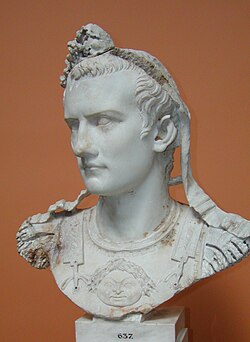
Looted Statute (maybe Caligula) Seized Near Rome

A Bust of Caligula at the Ny Carlsberg Glyptotek
Italian police have arrested a tombarolo with an 8-foot ancient statue not far from Rome. The statue may be worth €1 million. They believe the statue may be of Caligula, and may even have been looted from Caligula's tomb, which has not been discovered. We surely won't know if this tomb or the site was the actual tomb, but if looting is destroying the archaeological record, we are losing information.

Might the record have given us information on Caligula, who may have received a bad rap from the sources which have survived antiquity? Contemporaries describe the emperor as insane, saying he appointed a horse as consul, slept with his sisters, and killed often. But these might have been claims made by his political enemies in the senate and elsewhere—perhaps not too different from today's politics. After all, how could the son of Germanicus (my favorite Roman) have been such a bad guy. Caligula only ruled from AD 37-41, before he was assassinated.

I wonder where this statue was going to be sold? The United States, the middle-East, Asia? Excavations will start to reveal the archaeology of the site where the tomb raider unearthed the massive statue.

  1. Tom Kington, Caligula's tomb found after police arrest man trying to smuggle statue, The Guardian, January 17, 2011, http://www.guardian.co.uk/world/2011/jan/17/caligula-tomb-found-police-statue (last visited Jan 18, 2011).

An Interview with Paolo Giorgio Ferri

Fabio Isman had a terrific interview with Italian Prosecutor Paolo Giorgio Ferri which I've just now gotten around to reading. Ferri was the prosecutor during Marion True's trial in Italy. The discussion ranged from the problem of prosecuting antiquities looting to the international laws which apply, and the damage done by metal detecting. Here is an excerpt:


GDA: What was your first investigation into illegal excavations?
PGF: It was in 1994, with the then sergeant of the carabinieri department for cultural heritage, Vito Barra, now in charge of security at the Vatican Museums. We believed that a statue stolen at Villa Torlonia had been put up for auction at Sotheby’s. So we travelled to London [but made no progress]. Five months later, Sotheby’s sent me the names of two companies: Edition Services and Xoilan Trading. Edition Services is a company owned by Giacomo Medici, until now the only important “art robber” to have been convicted in Italy [Medici is currently appealing]. Xoilan Trading is one of the various names of [companies connected to] the art dealer Robin Symes. But at the time we didn’t know this. Faced with two Panamanian companies, Barra was on the verge of giving up. “No one’s going to tell us anything,” he said. Shortly afterwards, I met Daniela Rizzo, an archaeologist of the monuments office for southern Etruria. Together with Maurizio Pellegrini, from the museum of Villa Giulia, she was to play a crucial role in my work. 
  1. Fabio Isman, “Clandestine excavation is a crime that is hard to prove”, The Art Newspaper, January, 2011, http://www.theartnewspaper.com/articles/%E2%80%9CClandestine+excavation+is+a+crime+that+is+hard+to+prove%E2%80%9D/22164 (last visited Jan 18, 2011).

Sep 7, 2010

Are Iraq's Antiquities in a Revolving Door?

A 4,400 year old statue of King Entemena looted and now returned
In a ceremony today 542 works of art and objects were returned from the United States to Iraq.  Among the items returned were:

[A] 4,400-year-old statue of King Entemena of Lagash looted from the National Museum . . . an even older pair of gold earrings from Nimrud stolen in the 1990’s and seized before being auctioned at Christie’s in New York last December; and 362 cuneiform clay tablets that had been smuggled out of Iraq before the invasion . . .  There was also a more recent relic: a chrome-plated AK-47 with a pearl grip and an engraving of Mr. Hussein, taken by an American solider as booty and displayed at Fort Lewis, in Washington.

Yet a senior Iraqi official admitted that 632 other pieces returned by U.S. forces have apparently gone missing.  They were supposed to have been shipped to the Iraqi Prime Minister's office via a flight authorized by Gen. Petraeus, Steven Lee Myers reports for the NYT that antiquities returned to Iraq are in a "revolving door". Iraq's ambassador to the United States Samir Sumaidaie told reporters "“We asked the US military to move it to Iraq. When the pieces arrived in Iraq, they were delivered to the office of the prime minister and now we are trying to find them”.  Perhaps the attention paid to these newly returned artifact will help to recover the previous shipment.  
  1. Steven Lee Myers, Iraq’s Looted Treasures in a Revolving Door, The New York Times, September 7, 2010, http://www.nytimes.com/2010/09/08/world/middleeast/08iraq.html?_r=1&hp (last visited Sep 7, 2010).
  2. The Associated Press: Hundreds of looted artifacts returned to Iraq, http://www.google.com/hostednews/ap/article/ALeqM5hwK_CSpBxsNuVUEaDuOwmSSCiqGwD9I344LG2 (last visited Sep 7, 2010).
  3. Jane Arraf, 542 antiquities looted in Iraq war return home. Where are the rest?, Christian Science Monitor, , http://www.csmonitor.com/World/Middle-East/2010/0907/542-antiquities-looted-in-Iraq-war-return-home.-Where-are-the-rest (last visited Sep 7, 2010).
Video from the NYT after the jump.


Labels

"Bronze Statue of a Victorious Youth" (17) 1954 Hague Convention (12) 1972 World Heritage Convention (1) Aboriginal Heritage (1) Aboriginal Heritage Act 1988 (SA) (2) act of state doctrine (1) Admiralty Law (11) Afghanistan (10) Africa (4) Albright-Knox Gallery (3) Aleppo (2) Alfred Stieglitz (2) Alternative Dispute Resolution (1) Angkor (1) Anti-Seizure Legislation (1) antiquites (3) antiquities (337) Antiquities Act 1906 (2) Antiquities leasing (10) antiquities looting (4) antiquities smuggling (3) antiquities theft (6) ARCA (8) ARCA Annual Conference (10) ARCA MA Program (6) Archaeological Resources Protection Act (5) Archival Recovery Team (ART) (3) Archives (1) Armed Conflict (22) Arrests (79) Art and Cultural Heritage Law (1) Art Beat Constables (9) Art Crime Statistics (1) art fraud (9) art history (1) Art Institute Chicago (3) art law (1) Art Loans (9) Art Loss Register (19) Art Market (10) Art Theft (263) Artist Resale Right (1) arts funding (1) Association of Art Museum Directors (AAMD) (8) Athens (3) Auction (99) austerity (2) Australia (7) Austria (3) Authentication (3) Babylon (3) Banksy (1) Big Bend National Park (1) bilateral agreements (2) Black Hills (1) Bolton Forgers (4) Book Theft (3) Brazil (5) British Museum (13) Bronze (5) Bronze Statue of a Victorious Youth (1) Brueghel (1) Bruno Lohse (3) Brussels (1) Bührle Collection Theft (4) Bulgaria (4) Burke and Wills (2) Burns Mummies (1) Byzantine Artifacts (4) Cairo (1) Cairo art theft (2) California Raids (6) Caligula (1) Cambodia (11) Camille Pissarro (7) Carabinieri (6) Caravaggio (1) catalogue raisonné (1) Cellini Salt Cellar (2) Central Park (1) Cerveteri (1) Chance Finds (3) Charles Goldie (1) Chihuly Glass (1) China (16) Christie's (14) Church Thefts (6) Civil War (2) Claude Monet (4) Claudia Seger-Thomschitz (3) Cleveland Bronze Apollo (2) Cleveland Museum of Art (CMA) (5) Coins (7) Colonial Art (1) Columbia (1) Conferences (7) Conservation (1) Conventions (1) Copyright (5) Corot (1) Corrections (1) cosmpoplitanism (4) Costa Rica (2) CPIA (10) criminal charges (5) criminology (1) Crystal Bridges Museum (5) Cultral Property Advisory Committee (9) Cultural First Aid (2) cultural heritage (6) cultural heritage careers (2) Cultural Heritage Moot Court Competition (2) Cultural heritage movement (1) cultural justice (3) cultural policy (18) cultural property (4) Cultural Resource Management (1) cultural security (1) culture funding (1) curatorial theft (2) Cycladic Figurines (1) Cyprus (9) Dahshour (1) Dallas Museum of Art (DMA) (2) Database (5) Databases (4) DCMS (2) Deaccessioning (24) Dead Sea Scrolls (1) Dealing in Cultural Objects (Offences) Act 2003 (4) Declaratory Suits (4) Demand and Refusal (2) Design and Artists Copyright Society (1) Detroit Institute of Art (1) development (1) Dick Ellis (2) Diplomatic Bags (1) Doctrine of Discovery (3) Donald Trump (3) Donny George Youkhanna (2) Dr. No (6) Droite de Suite (2) Dubai (1) due diligence (5) eBay (5) Economics (1) Ecuador (1) Edgar Degas (2) Edinburgh (1) Edoardo Almagia (1) Edvard Munch (2) Egon Schiele (4) Egypt (55) El-Hibeh (2) Elgin Marbles (5) empirical studies (1) England (4) environmental justice (4) Environmental law (2) Erik Nemeth (1) Etruscans (2) Euphronios Krater (4) European Court of Human Rights (1) Export Restrictions (19) Fakes (6) FBI (16) FBI Art Crime Team (16) Festivus (1) Fifth Circuit (1) fire (1) Fisk University (3) Footnotes (59) force multiplier (1) Foreign Sovereign Immunities Act (FSIA) (6) forfeiture (13) Forgery (27) fossils (2) Four Corners Antiquities Investigation (11) fractional ownership (2) Francavilla Marittima (1) France (30) Francesco Rutelli (15) Frans van Mieris (2) Frederick Schultz (3) freedman's town (2) Gaza (1) George Grosz (1) Georgia (1) Georgia O'Keeffe (2) Germanicus (2) Germany (16) Getty (1) Ghent Altarpiece (1) Giacomo Medici (6) Gianfranco Becchina (1) Golf (3) good faith (3) Goya (3) Goya theft (4) graffiti (1) Greece (38) Grosz (1) Henri Matisse (1) Henry Moore (1) Heritage at Risk (1) heritage crime (1) Heritage Crime in Art (1) Hermitage (2) High Court in London (4) historic documents (1) Historic Landmark (1) historic preservation (1) historic weapons (1) Holocaust (Return of Cultural Objects) Act (2) Hopi (1) House of Commons Illicit Trade Advisory Panel (ITAP) (1) Houston (2) Howard Spiegler (2) Human Remains (5) Human Rights (1) Hungary (1) Identification (1) illicit excavation (1) Immigration and Customs Enforcement (16) Immunity (6) Immunity from Seizure Act (ISA) (3) import restrictions (3) in the media (7) Indemnity (1) Indianapolis Museum of Art (5) indictments (5) Indigenous Rights (2) Indonesia (1) injunctions (1) Insider Theft (2) Institute d'Egypte (1) Institute of Art and Law (1) Institutional theft (1) Intellectual Property (4) Intentional Destruction (6) International Criminal Court (ICC) (1) International Journal of Cultural Property (1) internationalism (4) INTERPOL (1) Interview (2) Interviews (2) Iran (8) Iran v. Barakat Galleries Ltd. (6) Iran v. Berend (3) Iraq (46) Isabella Stuart Gardner Museum (7) Islamic art (2) Israel (4) Istanbul (2) Italian Art Squad (5) Italian Culture Ministry (6) Italy (122) Jacques Goudstikker (4) James Ossuary (1) Jan Breugel the elder (2) Jan van Eyck (1) Japan (3) Jeanneret v. Vichy (1) Jeff Tweedy (1) Jenack v. Rabizadeh (1) JMW Turner (2) John Constable (1) Jonah Marbles (1) Jonathan Tokeley-Parry (1) Jordan (2) Joseph Farquharson (2) Journal Articles (1) Journal of Art Crime (1) Ka-Nefer-Nefer (9) Kansas (2) Kansas City (1) Kazimir Malevich (3) Kenya (1) Kingsland (3) Klimt (3) Koh Ker (6) Konowaloff v. Metropolitan Museum of Art (1) Kunsthal Museum Theft (2) La Dea Di Morgantina (6) Lawrence Kaye (1) Lebanon (1) Leonardo Da Vinci (9) Leopold Museum (1) Lewis Chessmen (5) lex originis (3) lex situs (5) Libya (2) Lincoln's Inn theft (1) Lithographs (1) loans (5) London (6) London Art and Antiques Unit (7) London Metropolitan Police (2) loot (1) looting (30) Los Angeles County Museum of Art (LACMA) (2) Los Angeles Museum of Contemporary Art (MOCA) (1) LS Lowry (3) Lucas Cranach (1) Lucas Cranach the Elder (3) Lucian Freud (1) Macedonia (1) Machu Picchu (12) Madonna of the Yarnwinder (recovery) (9) Mali (4) Malta (1) Manchester (2) manuscript (1) Maori (2) maps (2) Marc Chagall (1) Marion True (25) Mark Landis (1) market overt (1) Mausoleum at Helicarnassus (1) Max Stern (3) Maxwell Anderson (3) metal detecting (6) Metropolitan Museum of Art (the Met) (29) Mexico (9) Meyer de Haan (1) MFA Boston (6) Michael Brand (3) Michael C. Carlos Museum (1) Michael Steinhardt (2) Middle Eastern Geodatabase for Antiquities (MEGA) (1) Minneapolis Institue of Arts (MIA) (1) Moctezuma's Headdress (1) Modigliani (2) MoMA (4) Mondrian (1) Monet (3) Montreal Museum of Fine Art (2) Monument Men (5) Monuments Men (1) Moral Rights (3) Morgantina (2) Morgantina Aphrodite (9) Morgantina Treasure (1) Moscow (2) Musée d'Art Moderne theft (1) Museum Acquisitions (1) Museum Governance (1) Museum of Anatolian Civilizations (1) Museum of Fine Arts in Boston (6) museum security (2) museum theft (2) Museums Libraries and Archives Council (MLA) (1) Music (2) Myth (1) Napoleon III (1) National Academy (2) National Archaeological Museum in Naples (1) National Archives (3) National Gallery (Washington) (1) National Historic Preservation Act (2) National Stolen Property Act (8) nations of origin (5) Native American Graves Protection and Repatriation Act (8) Native Americans (17) native cultures (2) Nazi Spoliation (74) Neglect (1) Neil Brodie (1) Nelson-Atkins' Bloch Building (1) Netherlands (10) New Acropolis Museum (3) New Orleans (4) New York (6) New Zealand (7) Nigeria (1) nighthawking (3) Noah Charney (1) Norbert Schimmel (1) Norman Palmer (1) Norman Rockwell (2) Norway (4) NSPA (1) Nuclear Analytical Techniques (1) Odyssey Marine Exploration (23) Olympics (2) Omaha Nebraska (1) Organized Crime (1) Orphaned Works (2) Oskar Kokoschka (2) Oslo (1) Pablo Picasso (16) Pakistan (2) Palestine (3) Panama (1) Paolo Ferri (2) Paris (10) partage (1) Parthenon Marbles (17) Patents (1) Patty Gerstenblith (1) Paul Bator (2) Paul Cezanne (5) Paul Gauguin (4) Pazardzhik Byzantine Silver Hoard (1) Penn Museum (1) Pentagon (1) Pere Lachaise (1) Persepolis (3) Peru (24) Peru Headdress (1) Peter Watson (1) Philadelphia (7) Phillipines (1) Picasso (9) Pierre Le Guennec (1) Pierre Valentin (1) piracy (1) Pollock (1) Pompeii (3) Popular Culture (1) Portable Antiquities Scheme (25) Portrait of Wally (11) Poussin (1) pre-Columbian antiquities (2) pre-emptive archaeology (1) Prince Claus Fund (1) Princeton (4) Private Collectors (2) Private International Law (5) Proceeds of Crime Act 2002 (UK) (1) Prosecutions (7) provenance (13) Prussia (1) Public Art Theft (5) Public Trust (1) Publications (2) Quran (1) Radio (2) Ransom (2) realkulturpolitik (1) recovery (45) Rembrandt (2) Rene Magritte (2) Renoir (2) Renvoi (3) repatriation (121) Restitution (40) reward (1) Rhodes (1) Robert Hecht (8) Robin Symes (1) Rodin (2) Roger Atwood (1) Roman Objects (2) Rome (3) Rothko (1) Royal Academy (1) Rubens (3) Rubin v. Islamic Republic of Iran (2) Russia (11) Sale of "The Cello Player" (1) Sale of the "Gross Clinic" (11) Sale of the Stieglitz Collection (4) Salvage (1) Sao Paulo (2) Sao Paulo Museum of Art (3) Scheduled Ancient Monuments (1) Scholarship - Articles and Essays (57) Scholarship - Book Reviews (3) Scholarship - Books (12) Scholarship - Case Notes (1) Scholarship - Events and Conferences (55) Scholarship - Journal Articles (12) Scholarship - Student Papers (16) Scotland (7) Scotland Yard's Arts and Antiques Squad (1) scrap metal (1) Sculpture (2) security (4) seizure (16) Selling stolen art (1) seminars (1) semiotics (1) Sentencing (2) Serbia (1) settlement (1) Sevso Treasure (6) Shelby White (3) shipwreck (1) Sicily (4) Simon Mackenzie (2) Sisley (4) Slovakia (1) Smithsonian (4) Solomon R. Guggenheim (1) Sonic Fingerprints (1) Sotheby's (13) Sotheby's Paris (1) South Africa (1) South America (1) Spain (21) Spoliation (2) Spoliation Advisory Panel (8) St. Louis Art Museum (8) St. Ninian's Isle Treasure (3) Stair Gallery (2) State Department (2) Statue of a Victorious Youth (1) statute of frauds (1) Statutes of Limitations (10) Stephane Breitwieser (1) Stephen Colbert (1) Steven Spielberg (1) stewardship (2) Stolen Art (11) Stone Age (1) street art (1) study collections (1) Summer Palace Bronzes (7) Sweden (2) Switzerland (13) Syria (7) Taliban (1) Tennessee (3) The Art Fund (1) The Bowers Museum (1) The Discovery Rule (4) the fourth ward (1) The Getty (58) The Gross Clinic (1) The Guggenheim (2) The Holocauset (stolen art) restitution bill (2) the Louvre (2) The Menil (4) The National Gallery (1) The National Gallery (London) (2) the Pirate Party (1) The Scream (1) theft (2) Thomas Eakins (9) Thomas Jefferson (1) Timbuktu (2) Titian (1) Toledo Museum of Art (4) tombaroli (2) tourism (1) transparency (1) Traprain Law (1) Traveling Exhibitions (2) Treasure Act (4) treasure trove (3) Turkey (11) UCC (1) Ukraine (2) UN (2) Underground Salt Museum (1) Underwater Cultural Heritage (32) Underwater Sites - "Black Swan" (3) Underwater Sites - "Blue Baron" (1) Underwater Sites - HMS Victory (3) UNESCO (23) UNESCO Convention (24) UNESCO Convention on the Protection of Underwater Cultural Heritage (9) UNIDROIT Convention (2) United Kingdom (24) United States (12) University College London (1) University of Chicago (1) University of Guelph (1) University of Virginia (3) urban development (1) Van Gogh (7) Vandalism (4) Vatican (1) Vermeer (2) Victoria And Albert Museum (3) Vigango (3) viking (1) Villa Giulia (3) Vineberg v. Bissonnette (4) Visual Artists Rights Act (2) voluntary returns (1) Von Saher v. Norton Simon Museum of Art at Pasadena (3) Watts Towers (1) Waverley Criteria (10) Week in Review (3) West Bank (1) wikiloot (1) Wilco (1) William S. Burroughs (1) Windsor Antiquities Indictment (1) World Heritage Sites (1) World War II (11) Yale University (13) year in review (2) Zahi Hawass (9)

LinkWithin

Related Posts Plugin for WordPress, Blogger...