Showing posts with label UNESCO. Show all posts

Dec 3, 2012

UNESCO Director General Bokova on Protecting Cultural Heritage during conflict

Damage in Aleppo, Syria
In an op-ed for the IHT UNESCO Director General Irina Bokova discusses the damage done to cultural sites in northern Mali, Syria and elsewhere. She argues that "Culture stands on the frontline of conflicts, deliberately targeted to fuel hatred and block reconciliation." That's exactly right I think. The challenge will be what the rest of the world can do to prevent and repair this destruction.

She outlines the concrete steps UNESCO is taking: crafting an international legal framework, building stronger culture coalitions, and use culture to prevent conflicts:

Unesco works across the globe to harness the power of culture to bring people together and foster reconciliation. I saw this personally when Unesco helped restore the Old Bridge in Mostar, Bosnia Herzegovina, destroyed during the war in the 1990s. We saw the same power during the restoration of the Koguryio Tombs complex in North Korea, undertaken with the financial support of South Korea. This might sound high-minded compared to the terrible news we hear every day from conflict zones. And it is true that culture alone is not enough to build peace. But without culture, peace cannot be lasting. The world thought big when the convention was adopted in 1972. We need to think big once again, to protect culture under attack. We often hear that protecting culture is a luxury better left for another day, that people must come first. The fact is, protecting culture is protecting people — it is about protecting their way of life and providing them with essential resources to rebuild when war ends. This is why, for culture also, there is a responsibility to protect.

  1. Irina Bokova, Culture in the Cross Hairs, The New York Times, December 2, 2012, http://www.nytimes.com/2012/12/03/opinion/03iht-edbokova03.html (last visited Dec 3, 2012).


Oct 1, 2012

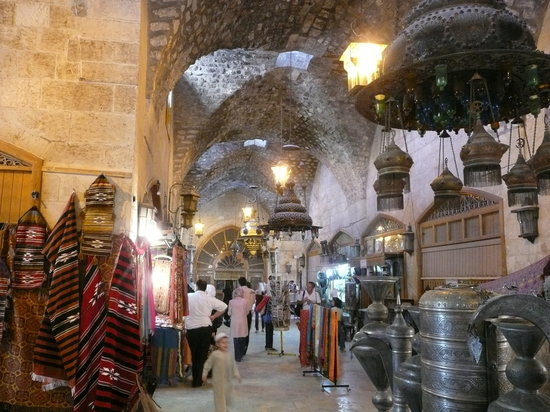
More Reports of Damaged Heritage in Syria

Aleppo's Souk in Better Days
The Souk on fire Saturday
There are more and more reports emerging from Syria which tell of destruction, looted museums, and smuggling salable objects. On Saturday Aleppo's souk was caught in the middle of fighting between rebels and government forces and the souk burned. The old city of Aleppo, where the souk is located is a UNESCO world heritage site. UNESCO Director-General Irina Bokova criticized the destruction over the weekend:

The human suffering caused by this situation is already extreme. That the fighting is now destroying cultural heritage that bears witness to the country’s millenary history - valued and admired the world over - makes it even more tragic. The Aleppo souks have been a thriving part of Syria’s economic and social life since the city’s beginnings. They stand as testimony to Aleppo’s importance as a cultural crossroads since the second millennium B.C.

The souk is situated underneath Aleppo's 13th century citadel. There are reports that government forces have taken up positions in the ancient building. Rodrigo Martin, an expert on Syrian sites said the Souk "was a unique example of medieval commercial architecture" because it offered a progression of hundreds of years of architectural periods, and had been well-preserved.

There have also been reports that items from the National Museum of Aleppo have been moved into the central bank in Damascus for safekeeping. But there have also been reports in Time that museums elsewhere in the country are being looted and arms are being traded for antiquities at the Syria/Lebanon border. In Cairo there will be an emergency meeting to discuss possible efforts the international community can take in response to the damage and looting according to a report in ahram.

Jan 27, 2012

Footnotes


"Le Marché" 

Jan 5, 2012

Pompeii Still at Risk

Martin Bailey for the Art Newspaper reports on UNESCO taking the initial steps towards putting Pompeii on the World Heritage in Danger list. A report published in June (to little fanfare) found that:


Although much of Pompeii ­remains in good repair, the problems are numerous, including “inappropriate restoration ­methods and a general lack of qualified staff… restoration projects are outsourced and the quality of the work of the contractors is not being assessed. An efficient drainage system is lacking, ­leading to water infiltration and excessive moisture that gradually degrades the structural condition of the buildings as well as their decor. The mission was also concerned by the amount of plant growth, particularly ivy.” . . . Pompeii attracted more than 2.3 million visitors in 2010 and on the busiest days it had 20,000. Sheer numbers, along with careless behaviour, are causing considerable damage: “Visitors in groups rub against the decorated walls, all too often with their rucksacks, or lean against them to take the best possible photographs,” says the report.

That has been my experience on visiting Pompeii as well. Do people need to touch and scramble over everything? On visiting the site, perhaps the calls by some to just bury parts of the site, and leave open only those areas which can be properly managed and visited is the right answer. I was surprised to learn that in 1956 there were 66 restored houses open to visitors, but today only 15 are open, and these are badly damaged by ignorant tourists and inefficient security.

There has been €105m set aside by the European Union, and a UNESCO 'action plan' could enable that money to be spent. However the funding cuts at UNESCO which resulted from the unfortunate decision on the one hand by the U.S. to cut all UNESCO support, and second, but UNESCO member states and Palestine to force the political brinksmanship may put that funding in jeopardy.
  1. Martin Bailey, Italy allows Unesco into Pompeii, The Art Newspaper, January 4, 2012, http://www.theartnewspaper.com/articles/Italy+allows+Unesco+into+Pompeii/25422 (last visited Jan 5, 2012).

Jan 18, 2010

Are the Black Hills Cultural Property?


That was the provocative question posed by Melissa Tatum at the AALS Annual Meeting here in New Orleans last weekend. First, a little background.  The Black Hills are a beautiful but small mountain range extending from South Dakota into Wyoming.  Today the region is home to Mount Rushmore, numerous National monuments, the in-progress Crazy Horse Memorial, and the Sturgis Motorcycle Rally.  But of course before 19th century Americans moved to the area, it was the home of indigenous groups; first the Cheyenne, and later the Lakota.

Apologies for any mistakes in this history, but as I understand it in 1868, the United States signed the Treaty of Fort Laramie, which essentially gave the Lakota nation ownership of the Black Hills.  This treaty was signed after the Lakota defeated U.S. forces.  Soon after though this treaty was violated until it was eventually revoked.  Tatum noted that the city of Deadwood was founded at this time, and references the recent HBO show.  "Deadwood" was set in the 1870's, and was based on the real life people and events of the town's early history.  The town began as a mining camp, in an area outside of the law.  The very founding of the camp was illegal, as the land was owned by the Lakota people.  The show examines this lawlessness in a number of ways.  In the real Deadwood, it was the discovery of gold which brought miners to the area.  This led to armed conflict (including Custer's defeat) which culminated in 1877 when the Federal governemnt seized control of the Black Hills for good.  


In 1980, the Sioux nation won a hard fought court victory.  United States v. Sioux Nation of Indians, 448 U.S. 371 (1980).  The Supreme Court upheld an award for the value of the land in 1877, along with 103 years of interest.  However the Sioux have refused to accept this sum, and instead want the return of the land. 

Against this background, Tatum asked whether existing Cultural Property law might provide a remedy allowing the Sioux to secure the return of the land itself.  In so doing, she moved the conversation beyond the typical repatriation request and instead challenged some of the basing foundations of cultural property law itself.  She argued property should be amended to offer legal definitions which are more culture-specific.  Tatum also asked whether the Black Hills might fit within some of the definitions of cultural property as provided in the 1954 Hague Convention, and various UNESCO conventions, including the 1970 Convention.  She offered as one solution, the potential for multiple cultures to use and enjoy public lands.  This is the current model in many Federal land management systems. 

Tatum put cultural property scholarship into concrete terms, pointing out why the Sioux should be entitled to some remedy, and offering a pointed critique of the current flaws in cultural property law.  I'm very much looking forward to the final paper. 

Sep 11, 2009

Soft Cultural Power

The Economist examines how well UNESCO manages its list of World Heritage Sites:


This year’s most dramatic move was a rare decision to strip a place—Dresden and the surrounding Elbe valley—of its status as a “World Heritage Site”: that is, a location deemed to be of universal worth to humanity by virtue of its built environment, ecological importance or both.
The German metropolis, belatedly restored to its Baroque glory after massive wartime bombing, was punished because of a motorway bridge that threatens to wreck the skyline. (The only other place to have been delisted is an antelope sanctuary in Oman, where the government actually wanted to renounce the status.) Meanwhile UNESCO accepted 13 new sites, including a sacred peak in Kyrgyzstan and a fortress in Burkina Faso, bringing to 890 the number of places under its purview.

What makes this whole procedure tolerable (and indeed, respected) is that it is a voluntary arrangement between governments, with groups of states taking turns to form committees that duly exercise UNESCO’s moral power. At least in theory, it is not the permanent staff of the World Heritage Centre (a smallish part of the UNESCO bureaucracy) who exercise dominion over the glories of the earth, but the 186 states that have ratified the World Heritage Convention and thus signed up to the notion that some places are too precious to be left at the mercy of one government alone.
 For an earlier post on the promise and peril of declaring an area a World Heritage Site, see this earlier post

Apr 29, 2009

The Challenge of UNESCO World Heritage Sites

Simon Usborne has an extended piece for the Telegraph examining the difficult task UNESCO has in selecting and preserving heritage sites. A number of pressures make this a difficult task, from too many visitors to looting to environmental or other factors. Pictured here is Monte Albán near Oaxaca, Mexico. The site is reportedly under threat as its carvings are exposed to the elements, it has been looted, and a nearby fire damaged it in 2006. The site is a World Heritage Site, which brings visitors and attention, but not perhaps enough resources for protection, preservation or crowd management.

One difficulty is the huge number of sites the agency is responsible for:


Unesco insists all its sites adhere to strict rules about management and planning, but could it be that the task facing the organisation – effectively to protect the planet – has become so daunting as to be impossible? If it has, the man in charge must have one of the toughest jobs in the world. Speaking from his Paris office, Francesco Bandarin admits it's a tall order. "Sometimes you feel it's impossible to control everything, especially when you look at our founding principles," he says. "Our list is growing and the number of requests is growing, and it seems like the more work you do the more you get. It's a very big job – too big."
Bandarin suggests a solution would be to maintain a central committee, but to break some of the bureaucracy by handing partial autonomy to an "effective network of heritage institutes". Unesco has launched a review of its practises and Bandarin expects big changes by 2012, when World Heritage turns 40. "It's the only way we can cope with the crazy volume of work," he says.

Feb 26, 2009

Student Comment on American Cultural Heritage Law

Katherine D. Vitale has posted on SSRN her Student Comment, The War on Antiquities: United States Law and Foreign Cultural Property, 84 Notre Dame L. R. 101 (2009). 

She criticizes the general trend of American cultural heritage policy, and is far too kind I think to museums and antiquities dealers generally.  She has some very interesting things to say about the AAMD Guidelines, and does a very good job putting the recent California searches in context, perhaps helping to explain why a year has elapsed with little apparent progress.  

From the Abstract:

The use of the National Stolen Property Act and Archaeological Resources Protection Act as mechanisms to protect cultural property taken from a foreign state through prosecution of individuals who buy, sell, and otherwise deal in such property is in direct tension with the Convention on Cultural Property Implementation Act ("CPIA"), a statute enacted in accordance with an international treaty to which the United States is a party. This Note explores how criminal liability under United States law for museum officials and others who acquire art, archaeological materials, and especially antiquities, originating in foreign nations conflicts with CPIA's treatment of foreign cultural property. Part I discusses the principle of protection of cultural property in international law and the manifestation of this principle in the United Nations Educational, Scientific and Cultural Organization's 1970 Convention on the Means of Prohibiting and Preventing the Illicit Import, Export and Transfer of Ownership of Cultural Property ("1970 UNESCO Convention"). Part II examines the 1970 UNESCO Convention's influence on United States civil law and policy regarding foreign cultural property, and on the acquisitions policies of international and domestic museums. Part III discusses criminal penalties under both the National Stolen Property Act and the Archaeological Resources Protection Act for those who knowingly acquire stolen foreign cultural property. Part IV analyzes the conflict between policies on foreign cultural property followed by the United States and domestic museums and the application of criminal penalties in art-trafficking cases. In addition, this Part explores the consequences of the conflict for both the United States and individuals, and suggests resolutions to the conflict through law. Finally, Part V concludes that in order for the United States to fulfill its obligation under the 1970 UNESCO Convention, it must stop conducting a war on antiquities-and those who acquire them.

Nov 12, 2008

Preserving Babylon

Christopher Torchia and Ammar Al-Musawi have an interesting article for the AP on UNESCO efforts to rescue the ancient city of Babylon.

Now, for the first time, global institutions led by the U.N. are thoroughly documenting the damage and how to fix it. A UNESCO report due out early next year will cite Saddam's construction but focus, at the Iraqi government's request, on damage done by U.S. forces from April to September 2003, and the Polish troops deployed there for more than a year afterward.

The U.S., which turned Babylon into a military base, says the looting would have been worse but for the troops' presence. The U.S. also says it will help rehabilitate Babylon, funding an effort by the World Monuments Fund and Iraq's State Board of Antiquities and Heritage, but has yet to release precise funding figures.

Archaeologists hope the effort will lead someday to new digging to follow up on the excavations done by a German team in the early 1900s.

"The site is tremendously important," said Gaetano Palumbo of the New York City-based World Monuments Fund. Yet in its present state, Babylon is "hardly understandable, as a place where so much happened in history."

The damage at Babylon is a tragedy, but hopefully the damage done can be reversed and the site can be protected and preserved for enjoyment and study. Perhaps the slew of Babylon-centered exhibits and books detailed by the Art Newspaper will help to raise awareness.

Nov 7, 2008

Meaningful Discourse

There is a core of agreement even among the most diametrically opposed heritage advocates.

For example on Wednesday of this week the BBC program Today featured a brief piece with James Cuno and Colin Renfrew debating some of the foundational issues of heritage policy. What I find striking, is how to the casual observer much of what Cuno and Renfrew are discussing would appear to not be too far apart. They'll both agree I think that the looting of sites is a problem, and museums should not acquire stolen or looted antiquities and works of art. They will disagree vigorously on what exactly constitutes 'stolen' or 'looted'.

I'd argue that the disagreement, and much of the petty argument which takes place on the nets and at conferences actually makes the task of all sides more difficult, and is counterproductive. I'd like to see some real meaningful discourse, and a lot less sniping and unproductive exaggerations on both sides. Sadly all too often the disagreements make the american electoral process look sane and measured in comparison, not an easy task. The end result is a situation where the public often does not know how or why these issues matter.

Take for example the recent Interpol Symposium on the Theft of and Illicit Traffic in Works of Art,Cultural Property and Antiques in which a "lack of awareness among the general public of the importance of cultural heritage and the need for it to be protected," and recommend that "INTERPOL, UNESCO and ICOM: Jointly seek ways of raising awareness among law-enforcement services, those responsible for safeguarding religious heritage, the major players in the art market and the conservation world, and the general public, with regard to protecting cultural property and combating illegal trafficking." (via).

Sep 11, 2008

UNESCO Takes UK to Task

Severin Carrell has an interesting story in the Guardian on UNESCO's concerns over how the UK is protecting and preserving these ancient sites:

Edinburgh
Site The "remarkable" medieval Old Town and Georgian New Town of central Edinburgh [Pictured Above] were listed in 1995.
Problem Unesco fears several building projects in the city centre and Leith docks will damage the site's architectural heritage. It "deeply regrets" the city has approved a hotel, office and housing complex by the Royal Mile, and is sending inspectors to visit.

Stonehenge and Avebury
Site The neolithic stone circle and avenues, and the associated megalith circles at Avebury, were listed in 1986.
Problem A cause of anxiety for 22 years, Unesco is angry that plans to reroute the A344 with a tunnel and build an offsite visitors' centre have again been scrapped. It "regrets" the continued delays and "urges" ministers to act quickly.

Neolithic ruins, Orkney
Site Skara Brae, Maeshowe and the Ring of Brodgar were among the ancient sites listed in 1999.
Problem Three planned wind turbines will be visible and Unesco wants the project stopped. Historic Scotland agrees they will damage it. A public inquiry will report soon. 

Bath
Site The city's grand neo-classical Georgian crescents, terraces and squares were listed in 1987.
Problem Unesco fears plans to build 2,000 flats in buildings up to nine storeys, and an engineering school sponsored by James Dyson, will damage the site's setting. It is sending inspectors and wants the schemes blocked until its committee has studied the plans.

Liverpool
Site Its maritime mercantile city, with its churches and Georgian warehouses, was listed in 2004.
Problem Unesco is happy the city swiftly acted on concerns that a new museum, a 24-storey tower and a new conference centre threatened the site's setting and integrity. Unesco wants further action to protect it.

Westminster, London
Site The Palace of Westminster, Westminster Abbey and St Margaret's Church were listed in 1987.
Problem Unesco believes several new tower blocks, including the 170-metre Beetham tower in Southwark and a 144m tower at Doon Street, will affect the site. It is annoyed its demands for a buffer zone and a detailed study of the skyline have been ignored.

Tower of London
Site The Norman tower and its 13th-century walls were listed in 1988.
Problem New buildings, such as the 66-storey "shard of glass" tower and a 39-floor tower at Fenchurch Street, will dominate the skyline. Unesco "regrets" the UK has failed to implement a robust buffer zone or an effective local plan. It is threatening to put the tower on its "world heritage in danger" list.

May 1, 2008

Can the West do More to Protect Iraqi Antiquities?


Dr. Bahaa Mayah, a special adviser to Iraq'a Minister of Tourism and Antiquities, has strongly criticized the response of the West to the trade in looted or stolen antiquities originating from Iraq. Dr. Mayah held a press conference yesterday at the British Museum, and argued it was the occupying forces' responsibility to retrieve the valuable objects taken since 2003. He also urged a global ban on Iraqi antiquities via a UN Security Council resolution. He said "Our antiquities are scattered everywhere from America to Europe. This problem is not new but it has intensified since 2oo3 and is now becoming a bigger problem."

Speaking of America specifically, he argued "America is co-operating and not co-operating at the same time. We were grateful when they returned the Statue of Entemena (from 2,430BC) but at the same time, you see auctioneers all over the country trading in our antiquities. No action is being taken". This statement, curiously, comes on the same day the Department of State published a notice of an import Restriction to Protect the Cultural Heritage of Iraq.

You can also hear his comments on BBC Radio 4's Front Row program here, his interview starts at about 18 minutes in, which David Gill has noted this morning as well.

There at three separate issues here, first is what can be done to prevent looting in Iraq and how to regulate the illicit trade in Iraqi antiquities. Second, is the damage done by occupying forces to important sites at Babylon and elsewhere. Finally, there is the claim for restitution for objects which have long in the British Museum collection. The first two, it seems to me are related. The final question, which speaks to the notion of Universal Museums, must be separated. Every time this kind of discussion spins off into a discussion of the Parthenon Marbles and other restitutions, I think we lose site of the present ongoing issue: the looting of sites, and the illicit trade.

I am sympathetic to Dr. Mayar, as he must find it difficult dealing with a myriad of different agencies in Europe, and he feels the burden is on the source nation to give evidence of of an object's illicit nature. Unfortunately this is the regime which the 1970 UNESCO Convention has produced, and efforts to create an effective multilateral agreement in this arena have been notoriously difficult. I think that must surely be tied to the disagreement and acrimonious nature the debates often engender.

Prof. Patty Gerstenblith has noted before that a lot of the reporting and discussion of the law as it pertains to the antiquities trade is wrong, and misses the point completely. I have to agree. Dr. Mayar talks about the incomplete response of the West to the trade in Iraqi antiquities, but I think the US and the UK have taken the necessary steps to attach criminal penalties to this trade. International law already bans the trade in Iraqi antiquities, under UN Security Council Resolution 1483:

Decides that all Member States shall take appropriate steps to facilitate the safe return to Iraqi institutions of Iraqi cultural property and other items of archaeological, historical, cultural, rare scientific, and religious importance illegally removed from the Iraq National Museum, the National Library, and other locations in Iraq since the adoption of resolution 661 (1990) of 6 August 1990, including by establishing a prohibition on trade in or transfer of such items and items with respect to which reasonable suspicion exists that they have been illegally removed, and calls upon the United Nations Educational, Scientific, and Cultural Organization, Interpol, and other international organizations, as appropriate, to assist in the implementation of this paragraph;


In the United Kingdom, the Theft Act 1968, the Proceeds of Crime Act 2002, and the Iraq (UN Sanctions) Order 2003 creates a criminal offence for merely being in possession of Iraqi Antiquities.

The United States has banned the import of Iraqi antiquities, and the National Stolen Property Act, as well as the powerful Civil Forfeiture mechanisms available to Federal Prosecutors strongly regulate the criminal aspects of the trade.

The difficulty of course, and its one that Dr. Mayar speaks to, is the difficulty in establishing evidence of the fact that an object originated in Iraq, when it could have originated from any one of a number of countries. Are there Iraqi antiquities currently being sold in the United States and United Kingdom? I'll confess I don't know. His comments strongly indicate they are, but I'm unaware of such sales, or any reports indicating this is the case.

Ultimately, I think the US and the UK in particular have taken nearly all the steps they can to regulate the criminal aspects of the trade. To shift burdens any further would, without being overly dramatic here, require Constitutional-level reworking, to allow fewer rights for criminal defendants. That is a step no thinking person can responsibly advocate. That's at the core of my arguments about the utility of the criminal response to the illicit trade. The solution, as I see it, is to introduce a way for cultural property transactions to require title history, provenance and findspot information for antiquities. This would give real effect to the law. Without such information, the antiquities trade will continue to evade effective regulation. Think about the California searches from earlier this year, despite a dramatic raid, we have yet to see any charges filed. Though this is heresy to even suggest for many in the archaeological community, this will in my view require compromise and will almost certainly require a liberalization of the trade in some respects.

Mar 21, 2008

Have American Museums Initiated "Real Change"?

Lee Rosenbaum has a very interesting post detailing her thoughts of the "Return of Cultural Objects" conference held in Athens this week. She participated in the panel titled "Museums, Sites and Cultural Context", and described her own presentation as follows:

[I] lampooned (and occasionally praised) strategies used in labeling and installing antiquities by American museums, which often have scant information about the archaeological context of objects in their collections. I was struck by the contrast between American labels and those at Athens' National Archaeological Museum, where almost every object is accompanied by information on where it was found.

I ended by championing the view that I share in common with my hosts, singling out two examples from U.S. museums that fit the Parthenon marbles theme---ancient objects that had been fragmented and should be reassembled through the amicable cooperation of the different owners.


However she expressed a more unpopular view when she argued, in sharp contrast to Ricardo Elia, that "there had been substantial recent changes in American museums' antiquities-collecting policies, which had been implemented to varying degrees." It's great to get this kind of quick reaction to the discussion. As to the substance of the claim, whether there has been real change, I think Rosenbaum is probably right, but only for a limited number of museums. A couple institutions, the Getty and the Indianapolis Museum of Art have very strict acquisition policies that are the gold-standard. However these kinds of policies are still voluntary, and there are a number of other institutions who are still dragging their feet. Look to the recent raids in California of LACMA and other institutions for evidence of a failure to reform. Ultimately, both Elia and Rosenbaum are correct, depending on which institutions they might be discussing.

This calls to mind the recent string of repatriations from North American institutions, which can be seen as responses to earlier acquisition policies which may have been lacking. Stacey Falkoff, a third-year law student at Brooklyn Law School has published an interesting student note, Mutually-Beneficial Repatriation Agreements: Returning Cultural Patrimony, Perpetuating the Illicit Antiquities Market in 16 Brooklyn Journal of Law and Policy 265 (2007). She does a great job of describing and compiling the recent string of repatriations, and draws some conclusions. She argues two things essentially, that these Mutually Beneficial Repatriation Agreements (MBRAs) actually perpetuate the illicit trade by mitigating the damage which these institutions suffer when a repatriation takes place, thereby making it easier for museums to acquire potentially-looted objects, and second they hamper the formation of judicial precedent utilizing international conventions.

Certain aspects of these MBRAs may be questioned, however she doesn't do a good enough job showing how the judicial interpretation may be needed, and she falls into the trap many student notes have of relying too much on secondary sources and other articles. I would give the piece high marks for thoroughly analyzing these recent agreements, and its well-researched as far as many of these secondary sources.

I'd argue the law may be complex in this area, but more judicial interpretation is not necessarily needed. I would come to a different conclusion. I think these repatriation agreements are a good thing, and I certainly think the Met will think twice before acquiring another "orphan" such as the Euphronios Krater, which was seen as suspicious when it was acquired.

Mar 19, 2008

Insurgents Selling Antiquities in Iraq

The AP is reporting on the views of Marine Colonel Matthew Bogdanos, a participant in this weeks conference in Athens. Bogdanos is a New York assistant DA, and was instrumental in the efforts by US forces to undo much of the damage and looting which occurred when the invasion began.

He argued it was "undeniable" that extremist groups were using antiquities smuggling to gain funds. As he said, "the Taliban are using opium to finance their activities in Afghanistan... Well, they don't have opium in Iraq, what they have is an almost limitless supply of is antiquities. And so they're using antiquities." He even has heard from sources that Hezbollah is taxing antiquities.

The claim is open to speculation of course, because so much of the trade is hidden. However Bogdanos is a passionate and thoughtful advocate for the protection of Iraq's national heritage, and as such the Pentagon and World leaders would be wise to listen. The more attention the looting problem in Iraq receives the better. Unfortunately, the US and Europe are doing very little to prevent this smuggling or to protect archaeological sites in Iraq.

Sadly, I think antiquities from this region will be appearing on the market for decades to come, and as such buyers, who should perhaps know better, will be confronted with the same embarrassing legal and ethical questions which have plagued North American institutions in recent years in their acquisitions of antiquities from Southern Italy. Of course they can avoid this controversy by refusing to purchase potentially tainted objects.

Mar 18, 2008

The Long Shadow of the Parthenon


Michael Liapis, Greek Minister of Culture, gave the opening remarks at the conference on "Return of Cultural Property to its Country of Origin". He managed to get a good deal of press coverage, including a Reuters story.

Unfortunately I found his comments unhelpful, as did David Gill. He attempts to link the Greek quest for the return of the Parthenon marbles from the British Museum and elsewhere with the decisions by the Getty, the Met, and the MFA in Boston to return relatively recent and looted antiquities. The two claims could not be more different. One can be characterized as a historical dispute, while the others are examples of clear wrongful conduct, many of which involved criminal wrongdoing.

Liapis argues "More and more museums are adopting tighter ethics codes and governments promote bilateral and international cooperation (for the return of ancient objects)... So an ideal momentum is being created ... for clear solutions on this issue."

Gill responds, quite rightly, that the major difference between these two claims is context. We know where the Parthenon Marbles came from, we have their context. In fact one can see the context from the new Parthenon Museum, pictured here. However we don't know for sure where many of the looted antiquities which were returned in recent years came from. Their context is lost to us. He follows this up by asking a pointed question in return, will Greece take steps to return Bulgarian silver from the Pazardzhik Byzantine Silver Hoard?

Others have perhaps said this more persuasively than I, but I think cultural policymakers only make the situation worse when they link historical events such as Lord Elgin's removal of the marbles with recent criminal activity on a widespread scale. There may be a persuasive claim for the return of the marbles to Athens, however such a claim is not likely to succeed by making such unhelpful comparisons.

The closer link is with the Bulgarian silver, which it seems Greek's legal system is unable to adequately return to Bulgaria.

On an unrelated note, the Acropolis museum, where this event is being held was reviewed by Richard Lacayo.

Mar 14, 2008

Conference: Return of Cultural Property to its Country of Origin.

Next week in Athens at the New Acropolis Museum, the Hellenic Ministry of Culture, in cooperation with UNESCO will sponsor a conference on "Return of Cultural Property to its Country of Origin". Here is an excerpt of the press release by UNESCO:


The conference participants will reflect upon and exchange experiences on the issue of the return of cultural property, examining several successful return cases, including: the Axum Obelisk from Italy to Ethiopia, the return of the Stone Birds of Great Zimbabwe from Germany to Zimbabwe, the return of human remains to the Ngarrindjeri Aboriginal tribe of South Australia, the “Utimut” cooperation project for the return of cultural objects from Denmark to Greenland, the reunification of a Neo-Sumerian alabaster figure (cooperation project between the Louvre Museum and the Metropolitan Museum of New York) and the case of the ceremonial mask of the Kwakwaka'wakw people of Vancouver Island between the British Museum and Canada.

On the second day, four thematic workshops will debate:
• Ethical and Legal Aspects,
• Mediation and Cultural Diplomacy,
• Museums, Sites and Cultural Context
• International Cooperation and Research.

Discussions will also take place on ways to strengthen the action of the Intergovernmental Committee for Promoting the Return of Cultural Property to its Countries of Origin or its Restitution in case of Illicit Appropriation.

Established by UNESCO in 1978, the Intergovernmental Committee provides a framework for discussion and negotiation on the return or restitution of cultural property. The committee, composed of 22 elected member states, remains strictly advisory, establishing forums for debate and offering non-legally binding recommendations.

Proceedings will be published and made available for the 15th session of the Intergovernmental Committee, scheduled for June 2009. The return and restitution of cultural property will also be the theme of another meeting to be held in November this year in Seoul (Republic of Korea), where an extraordinary session of the Intergovernmental Committee will be held to mark its 30th anniversary.

* The New Acropolis Museum, 2-4 Makriyanni Str, 117 42, Athens Greece


A Program of the events is here, and an impressive cast of heritage thinkers and experts have been assembled, including at least two fellow bloggers, Lee Rosenbaum and David Gill who will hopefully share their thoughts when they return.

Feb 13, 2008

Did UN Troops Violate the 1954 Hague Convention?

I am just catching up on this story, but it strikes me as particularly troubling. 6,000 year-old paintings of animal and human figures have been spray-painted over by UN peacekeepers in the Western Sahara. The UN personnel with the Minurso mission in the Western Saraha signed and dated their work, and in some cases revealed their identities. As the Times reported back in January:

One Croatian peacekeeper scrawled “Petar CroArmy” across a rock face. Extensive traces of pigment from rock painting are visible underneath. Another left behind Cyrillic graffiti, and “Evgeny” from Russia scribbled AUI, the code for the Minurso base at Aguanit. “Mahmoud” from Egypt left his mark at Rekeiz Lemgasem, and “Ibrahim” wrote his name and number over a prehistoric painting of a giraffe. “Issa”, a Kenyan major who signed his name and wrote the date, had just completed a UN course, Ethics in Peacekeeping, documents show.
The Middle East Online reported that Morocco's director of national heritage has accused the UN forces of graffiti on ancient sites, but also the theft of cave paintings, desecrating graves, and removing engraved paving stones.

Such disregard for important heritage of course implicates the 1954 Convention for the Protection of Cultural Property in the Event of Armed Conflict. To add to the difficulty, the head of the UN mission in Western Sahara (Minurso), seems to have bungled an apology, and served to incite more unrest between the groups he should be monitoring.

I'd really recommend those interested to have a look at what David Nishimura has to say on this, as I picked up the story from him. He notes the parallels with the coverage of the theft of objects from the Iraqi Museum, and the part coalition forces may have played in the looting of the museum in Baghdad. However he notes "the greatest damage in Iraq has been indirect, a consequence of civil disorder, rather than the direct result of military action. The vandalism in the Sahara is particularly shocking due to its deliberateness and the identity of those responsible, along with the complete lack of mitigating circumstances."

I think that's exactly right, and this story has received very little media attention in the West, particularly in the United States. There was a lot of legitimate outrage at the actions of the US military on the heels of the looting of the Baghdad Museum, however the actions of these UN forces deserves an equal measure of outrage in my view, and the troops responsible should be subjected to criminal penalties for looting and vandalizing these sites. Sadly, I think this reveals just how ineffective the international legal regime has been in protecting sites during armed conflict.

I know by monitoring the url logs that this site attracts some interest of journalists, notably when some of my ideas may prove useful for a story, which is great. However rather than writing the same story about Marion True for example, why not broaden coverage to encompass the full nature and extent of the antiquities problem?

Dec 16, 2007

A Cultural Property Registry?

On Thursday Donn Zaretsky at the always-enjoyable art law blog continued his discussion of the fake Gaugin Faun statue. Specifically, he wondered what kind of international registry might have prevented this kind of fraud, and asked me how I would envision a registry. I have a few thoughts on the subject, but they're still in an early stage.

I had originally intended to put discussions of a potential registry and some concrete reforms of the market which are needed in the thesis. It's not in there though because I simply ran out of space, and I'll have to save those ideas for some future work I suppose. I don't have a definitive answer for how an international registry might be constructed. Ideally an international body such as UNESCO would step forwards and create one, however that is far too ambitious an undertaking for that organization given its current state of funding. The industry itself could choose to regulate itself more closely, but it gains more profit by not revealing information information. In the end, the art market needs a registry like MLB, the NFL and other sports leagues need a test for Human Growth Hormone. But neither is likely to arise soon.

It's a difficult potential issue because there a number of serious obstacles to creating a registry. The Art Loss Register and other databases exist, but they aren't the answer to the whole problem. The current market structure earns more money without a registry. Here's how: if I have a painting and want to sell it I can take it to an auction house. Now I'm a lowly PhD student, and that's certainly not a lucrative career choice. If someone were to purchase the painting from me directly they would have a great deal of bargaining power if they knew my relative financial position. The painting might be worth $20,000; however the purchaser may realize my financial position and negotiate the deal lower. Auctions take place anonymously and avoid this. In many if not most transactions, we are unaware who the buyer and seller are. For the fake Faun, the consignor was Mrs. Greenhalgh using her maiden name. Had the buyer known she was living in council housing, might they have been less inclined to purchase the object, or even have more cause to doubt its authenticity? I think so certainly.

A good recent article in the Florida Law Review proposes a torrens registration scheme for works of art. Bruce W. Burton, IN SEARCH OF JOHN CONSTABLE'S THE WHITE HORSE: A CASE STUDY IN TORTURED PROVENANCE AND PROPOSAL FOR A TORRENS-LIKE SYSTEM OF TITLE REGISTRATION FOR ARTWORK, 59 Fla. L. Rev. 531 (2007). The introduction lays out the main argument:

At least forty percent of valuable artwork circulating in the marketplace is either forged or misattributed. Apart from this significant problem of art authenticity, the chains of title showing current ownership of many genuine and properly attributed objects are defective. These defects are due to incompleteness of the historical records, innocent error, lapse of time, fraudulent manipulation, or theft. This Article explores the dual complexities of properly establishing a valuable art object's correct provenance-that is to say, determining both the authenticity as well as the chain of legal ownership of the work. This Article also examines the six principal legal doctrines that human society has designed to resolve competing ownership claims and the significant moral shortcomings of each doctrine. Most significantly, this Article presents a proposal for a much-needed reform in the law of art provenance.
The proposed reform is modeled on the Torrens land-title registration system in effect in Australia, parts of the United Kingdom, and a handful of states in the United States. The reform would offer the following: (1) a legal system for conclusively registering both the ownership and authenticity of any valuable piece of artwork; (2) fundamental fairness to all parties claiming an interest in the artwork; (3) assured financial compensation to any innocent party whose claim to the artwork has been injured or lost by operation of the Torrens-like system; (4) permanent and visible public records of art ownership; and (5) enhanced market stability because of the certitude and transparency afforded to art consumers by such a title registration system.

Burton makes a good case, but it would rely on individual states to implement the system, creating a patchwork of coverage. That would be better than nothing I suppose. In the end buyers of art, and even authenticators get excited by the prospect of rediscovering "lost" art or works which have gone missing. It can happen in legitimate ways as evidenced by the trash-rescue earlier this year. However, such a system leaves open the possibility of forgers, and also creates havoc in the antiquities trade for source nations and sites. The best advantage of a registration system would not necessarily be that it prevents these kinds of fraudulent transactions today, but that it builds up a body of knowledge about an object's provenance so as to prevent such mistakes in the future. As it stands now, we still aren't certain how many more forgeries by Greenhalgh may have been sold.

Nov 25, 2007

Rare Good News in Iraq


There appears to be some rare good news in Baghdad of late. There are indications that attacks in Iraq are way down. Also, John Swain of the Sunday Times reports today on the likely reopening of the Baghdad Museum next month, according to Amira Emiran the acting director.
Visits will be confined to just two galleries on the ground floor containing Assyrian and Islamic treasures that are too large and heavy to be easily removed. The remaining 16 galleries will remain empty and closed and security will be tight. Nevertheless, Iraqi and American officials are keen to portray the opening as a sign that security in Baghdad has improved after the chaos of the past few years...

The Assyrian Hall has monumental sculptures, including stone panels from the royal palace at Khorsabad and two winged bulls. The other large gallery that is opening, the Islamic Hall, has the eighth century mihrab from the Al-Mansur mosque in Baghdad. It is also hoped to display 10 monumental Parthian sculptures from Hatra in the courtyard which links the two galleries and through which visitors will pass.

The decision was welcomed by Matthew Bogdanos, a colonel in the US Marine Corps reserves, who investigated the theft and destruction of thousands of artefacts from the museum and from thousands of Iraq’s poorly protected historic sites where looting has been conducted “on an industrial scale” since the war.

Bogdanos, a New York prosecutor, said: “I don’t know if there is any such thing as a right or wrong moment to open the museum. But great things are won by great risk and the museum should open and it should stay open. If it means doubling security, then double security.”

Estimates of the number of missing objects vary, but about 10,000 objects are probably still missing, out of a total of 15,000 objects taken. One piece still missing is the ivory plaque pictured above, Lioness Attacking a Nubian, 8th c. BC. News of the reopening is welcome news, especially given it was seldom open to the public in the two decades preceding the invasion of Iraq in 2003. The announcement was made last week at the meeting of UNESCO's International Coordination Committee for the Safeguarding of Iraqi Cultural heritage.


The news from Iraq is not all good however. The Bush administration is tempering its goals in Iraq, as military progress has been gained but the US will begin its major drawdown of troops following the "surge", (i.e. escalation). US Officials are lowering their expectations, dropping plans for an oil-sharing plan and regional elections. The increase has yielded some important military successes, reflected in the decrease in attacks, but this military presence is not sustainable. One wonders if the decision to reopen the museum was made by Iraqi's or if it was encouraged by their American counterparts. Even if it were the latter, the fact that Iraqis may now be able to view some objects safely is perhaps cause for cautious optimism.


Aug 29, 2007

UNESCO Condemnation of the Black Swan Recovery

Koichiro Matsuura has an interesting editorial in yesterday's Miami Herald on Odyssey Marine, underwater archaeology and the Black Swan wreck. He is exactly right about the number of wrecks under the sea, how important they are, and what a resource they could be if excavated scientifically. I agree that commercial exploitation certainly damages underwater archaeological sites, but UNESCO needs to do a better job of bridging the gap between archaeology and commerce.

Rather than attempting to ban all commercial use of underwater sites, why not move forward and show how commercial exploitation can be sensitive to the archaeological context when done properly? Instead of taking a combative approach, why not co-opt these salvage operations as archaeological efforts?

Admiralty law is one of the oldest branches of the law, dating back thousands of years. The presumption has long been that the salvor will be entitled to a portion of what they find on the ocean because they have risked their equipment, or their lives in some cases to salvage underwater sites. That general position will not change any time soon. The 2001 UNESCO Underwater Heritage Convention takes an aggressive line, and prohibits all commercial exploitation of underwater cultural heritage. This is a step many nations will refuse to take. Only 15 nations have signed on, and the convention requires 20 before it enters into force. In this case, by arguing too vehemently, I think UNESCO has left itself with no say on the disposition of underwater sites found in international waters.

Here is the full text of Matsuura's editorial:

www.unesco.org

It may be the richest treasure ever discovered in a shipwreck -- hundreds of thousands of gold and silver coins. A private firm announced it had recovered them from a colonial-era vessel, dubbed the ''Black Swan.'' The story came out last May and attracted worldwide attention. But the Black Swan isn't a unique case. A few months ago, important finds were made of sunken ships, and at least one of them, off the coast of Cirebon, in Java, was destroyed. Many other such wrecks have been found and looted in recent years, in locations ranging from the northern Atlantic to the South China Sea.

Underwater cultural heritage is as precious as heritage on land. It comprises archaeological sites of great significance such as the ruins of the Alexandria lighthouse, one of the ancient world's seven wonders; the Carthage of antiquity in North Africa; the fabulous Mahabalipuram and Dwarka temples in India; and numerous Neolithic villages that remain submerged in the Black Sea.

It also includes the remains of King Philip II of Spain's invincible Armada and Kublai Khan's fleet, as well as an estimated three million sunken ships scattered on the ocean floors. These underwater archaeological sites are often better preserved than sites on dry land because cultural heritage is protected by a slow rate of deterioration and the lack of oxygen. Their inaccessibility further shields them from looting. They can therefore teach us a great deal about the origins and history of civilization.

There is an urgent need to protect this underwater cultural heritage, which for the last several years has come increasingly under threat. Technical progress in detection and diving and escalating prices on the international market for objects snatched from the deep have led to the loss of many particularly valuable archaeological sites and seen their precious cultural objects dispersed. The problem is further aggravated by the overly prevalent view of such archaeological sites as ''treasures'' that can be discovered and appropriated. They should in fact be considered essential elements of a common cultural heritage, as communal property to be preserved.

The perspective must change. UNESCO has been fighting for years to change it. In November 2001, its General Conference adopted the Convention on the Protection of the Underwater Cultural Heritage. This international treaty, which now counts 15 states parties, will enter into force when 20 countries have ratified it.

The UNESCO text defines underwater cultural heritage as ''all traces of human existence having a cultural, historical or archaeological character that have been partially or totally under water, periodically or continuously, for at least 100 years.'' It promotes in situ preservation, given the importance of the historical context of the submerged cultural objects as well as the favorable conditions for conserving these objects, namely the lack of oxygen and slow deterioration as long as they remain underwater.

Condemn looting

Without presuming to resolve the sensitive issue of property of cultural objects that may be disputed between several states -- generally the state of the ship's flag and the coastal state -- and without prohibiting professional archaeology or preventing recovery activities by explorers working in responsible ways, the text establishes the principle that ``Underwater cultural heritage shall not be commercially exploited.''

The international community must mobilize to ratify the Convention on the Protection of the Underwater Cultural Heritage. If we condemn acts of looting in which archaeological sites are gutted with bulldozers or Mayan steles and Khmer sculptures torn out with chain-saws, then we must also sanction underwater looting that deprives future generations of the context surrounding artifacts. The international community must have means at its disposal that are commensurate with its ambitions to protect the integrity of its underwater cultural heritage.

Koichiro Matsuura is director-general of UNESCO.

Labels

"Bronze Statue of a Victorious Youth" (17) 1954 Hague Convention (12) 1972 World Heritage Convention (1) Aboriginal Heritage (1) Aboriginal Heritage Act 1988 (SA) (2) act of state doctrine (1) Admiralty Law (11) Afghanistan (10) Africa (4) Albright-Knox Gallery (3) Aleppo (2) Alfred Stieglitz (2) Alternative Dispute Resolution (1) Angkor (1) Anti-Seizure Legislation (1) antiquites (3) antiquities (337) Antiquities Act 1906 (2) Antiquities leasing (10) antiquities looting (4) antiquities smuggling (3) antiquities theft (6) ARCA (8) ARCA Annual Conference (10) ARCA MA Program (6) Archaeological Resources Protection Act (5) Archival Recovery Team (ART) (3) Archives (1) Armed Conflict (22) Arrests (79) Art and Cultural Heritage Law (1) Art Beat Constables (9) Art Crime Statistics (1) art fraud (9) art history (1) Art Institute Chicago (3) art law (1) Art Loans (9) Art Loss Register (19) Art Market (10) Art Theft (263) Artist Resale Right (1) arts funding (1) Association of Art Museum Directors (AAMD) (8) Athens (3) Auction (99) austerity (2) Australia (7) Austria (3) Authentication (3) Babylon (3) Banksy (1) Big Bend National Park (1) bilateral agreements (2) Black Hills (1) Bolton Forgers (4) Book Theft (3) Brazil (5) British Museum (13) Bronze (5) Bronze Statue of a Victorious Youth (1) Brueghel (1) Bruno Lohse (3) Brussels (1) Bührle Collection Theft (4) Bulgaria (4) Burke and Wills (2) Burns Mummies (1) Byzantine Artifacts (4) Cairo (1) Cairo art theft (2) California Raids (6) Caligula (1) Cambodia (11) Camille Pissarro (7) Carabinieri (6) Caravaggio (1) catalogue raisonné (1) Cellini Salt Cellar (2) Central Park (1) Cerveteri (1) Chance Finds (3) Charles Goldie (1) Chihuly Glass (1) China (16) Christie's (14) Church Thefts (6) Civil War (2) Claude Monet (4) Claudia Seger-Thomschitz (3) Cleveland Bronze Apollo (2) Cleveland Museum of Art (CMA) (5) Coins (7) Colonial Art (1) Columbia (1) Conferences (7) Conservation (1) Conventions (1) Copyright (5) Corot (1) Corrections (1) cosmpoplitanism (4) Costa Rica (2) CPIA (10) criminal charges (5) criminology (1) Crystal Bridges Museum (5) Cultral Property Advisory Committee (9) Cultural First Aid (2) cultural heritage (6) cultural heritage careers (2) Cultural Heritage Moot Court Competition (2) Cultural heritage movement (1) cultural justice (3) cultural policy (18) cultural property (4) Cultural Resource Management (1) cultural security (1) culture funding (1) curatorial theft (2) Cycladic Figurines (1) Cyprus (9) Dahshour (1) Dallas Museum of Art (DMA) (2) Database (5) Databases (4) DCMS (2) Deaccessioning (24) Dead Sea Scrolls (1) Dealing in Cultural Objects (Offences) Act 2003 (4) Declaratory Suits (4) Demand and Refusal (2) Design and Artists Copyright Society (1) Detroit Institute of Art (1) development (1) Dick Ellis (2) Diplomatic Bags (1) Doctrine of Discovery (3) Donald Trump (3) Donny George Youkhanna (2) Dr. No (6) Droite de Suite (2) Dubai (1) due diligence (5) eBay (5) Economics (1) Ecuador (1) Edgar Degas (2) Edinburgh (1) Edoardo Almagia (1) Edvard Munch (2) Egon Schiele (4) Egypt (55) El-Hibeh (2) Elgin Marbles (5) empirical studies (1) England (4) environmental justice (4) Environmental law (2) Erik Nemeth (1) Etruscans (2) Euphronios Krater (4) European Court of Human Rights (1) Export Restrictions (19) Fakes (6) FBI (16) FBI Art Crime Team (16) Festivus (1) Fifth Circuit (1) fire (1) Fisk University (3) Footnotes (59) force multiplier (1) Foreign Sovereign Immunities Act (FSIA) (6) forfeiture (13) Forgery (27) fossils (2) Four Corners Antiquities Investigation (11) fractional ownership (2) Francavilla Marittima (1) France (30) Francesco Rutelli (15) Frans van Mieris (2) Frederick Schultz (3) freedman's town (2) Gaza (1) George Grosz (1) Georgia (1) Georgia O'Keeffe (2) Germanicus (2) Germany (16) Getty (1) Ghent Altarpiece (1) Giacomo Medici (6) Gianfranco Becchina (1) Golf (3) good faith (3) Goya (3) Goya theft (4) graffiti (1) Greece (38) Grosz (1) Henri Matisse (1) Henry Moore (1) Heritage at Risk (1) heritage crime (1) Heritage Crime in Art (1) Hermitage (2) High Court in London (4) historic documents (1) Historic Landmark (1) historic preservation (1) historic weapons (1) Holocaust (Return of Cultural Objects) Act (2) Hopi (1) House of Commons Illicit Trade Advisory Panel (ITAP) (1) Houston (2) Howard Spiegler (2) Human Remains (5) Human Rights (1) Hungary (1) Identification (1) illicit excavation (1) Immigration and Customs Enforcement (16) Immunity (6) Immunity from Seizure Act (ISA) (3) import restrictions (3) in the media (7) Indemnity (1) Indianapolis Museum of Art (5) indictments (5) Indigenous Rights (2) Indonesia (1) injunctions (1) Insider Theft (2) Institute d'Egypte (1) Institute of Art and Law (1) Institutional theft (1) Intellectual Property (4) Intentional Destruction (6) International Criminal Court (ICC) (1) International Journal of Cultural Property (1) internationalism (4) INTERPOL (1) Interview (2) Interviews (2) Iran (8) Iran v. Barakat Galleries Ltd. (6) Iran v. Berend (3) Iraq (46) Isabella Stuart Gardner Museum (7) Islamic art (2) Israel (4) Istanbul (2) Italian Art Squad (5) Italian Culture Ministry (6) Italy (122) Jacques Goudstikker (4) James Ossuary (1) Jan Breugel the elder (2) Jan van Eyck (1) Japan (3) Jeanneret v. Vichy (1) Jeff Tweedy (1) Jenack v. Rabizadeh (1) JMW Turner (2) John Constable (1) Jonah Marbles (1) Jonathan Tokeley-Parry (1) Jordan (2) Joseph Farquharson (2) Journal Articles (1) Journal of Art Crime (1) Ka-Nefer-Nefer (9) Kansas (2) Kansas City (1) Kazimir Malevich (3) Kenya (1) Kingsland (3) Klimt (3) Koh Ker (6) Konowaloff v. Metropolitan Museum of Art (1) Kunsthal Museum Theft (2) La Dea Di Morgantina (6) Lawrence Kaye (1) Lebanon (1) Leonardo Da Vinci (9) Leopold Museum (1) Lewis Chessmen (5) lex originis (3) lex situs (5) Libya (2) Lincoln's Inn theft (1) Lithographs (1) loans (5) London (6) London Art and Antiques Unit (7) London Metropolitan Police (2) loot (1) looting (30) Los Angeles County Museum of Art (LACMA) (2) Los Angeles Museum of Contemporary Art (MOCA) (1) LS Lowry (3) Lucas Cranach (1) Lucas Cranach the Elder (3) Lucian Freud (1) Macedonia (1) Machu Picchu (12) Madonna of the Yarnwinder (recovery) (9) Mali (4) Malta (1) Manchester (2) manuscript (1) Maori (2) maps (2) Marc Chagall (1) Marion True (25) Mark Landis (1) market overt (1) Mausoleum at Helicarnassus (1) Max Stern (3) Maxwell Anderson (3) metal detecting (6) Metropolitan Museum of Art (the Met) (29) Mexico (9) Meyer de Haan (1) MFA Boston (6) Michael Brand (3) Michael C. Carlos Museum (1) Michael Steinhardt (2) Middle Eastern Geodatabase for Antiquities (MEGA) (1) Minneapolis Institue of Arts (MIA) (1) Moctezuma's Headdress (1) Modigliani (2) MoMA (4) Mondrian (1) Monet (3) Montreal Museum of Fine Art (2) Monument Men (5) Monuments Men (1) Moral Rights (3) Morgantina (2) Morgantina Aphrodite (9) Morgantina Treasure (1) Moscow (2) Musée d'Art Moderne theft (1) Museum Acquisitions (1) Museum Governance (1) Museum of Anatolian Civilizations (1) Museum of Fine Arts in Boston (6) museum security (2) museum theft (2) Museums Libraries and Archives Council (MLA) (1) Music (2) Myth (1) Napoleon III (1) National Academy (2) National Archaeological Museum in Naples (1) National Archives (3) National Gallery (Washington) (1) National Historic Preservation Act (2) National Stolen Property Act (8) nations of origin (5) Native American Graves Protection and Repatriation Act (8) Native Americans (17) native cultures (2) Nazi Spoliation (74) Neglect (1) Neil Brodie (1) Nelson-Atkins' Bloch Building (1) Netherlands (10) New Acropolis Museum (3) New Orleans (4) New York (6) New Zealand (7) Nigeria (1) nighthawking (3) Noah Charney (1) Norbert Schimmel (1) Norman Palmer (1) Norman Rockwell (2) Norway (4) NSPA (1) Nuclear Analytical Techniques (1) Odyssey Marine Exploration (23) Olympics (2) Omaha Nebraska (1) Organized Crime (1) Orphaned Works (2) Oskar Kokoschka (2) Oslo (1) Pablo Picasso (16) Pakistan (2) Palestine (3) Panama (1) Paolo Ferri (2) Paris (10) partage (1) Parthenon Marbles (17) Patents (1) Patty Gerstenblith (1) Paul Bator (2) Paul Cezanne (5) Paul Gauguin (4) Pazardzhik Byzantine Silver Hoard (1) Penn Museum (1) Pentagon (1) Pere Lachaise (1) Persepolis (3) Peru (24) Peru Headdress (1) Peter Watson (1) Philadelphia (7) Phillipines (1) Picasso (9) Pierre Le Guennec (1) Pierre Valentin (1) piracy (1) Pollock (1) Pompeii (3) Popular Culture (1) Portable Antiquities Scheme (25) Portrait of Wally (11) Poussin (1) pre-Columbian antiquities (2) pre-emptive archaeology (1) Prince Claus Fund (1) Princeton (4) Private Collectors (2) Private International Law (5) Proceeds of Crime Act 2002 (UK) (1) Prosecutions (7) provenance (13) Prussia (1) Public Art Theft (5) Public Trust (1) Publications (2) Quran (1) Radio (2) Ransom (2) realkulturpolitik (1) recovery (45) Rembrandt (2) Rene Magritte (2) Renoir (2) Renvoi (3) repatriation (121) Restitution (40) reward (1) Rhodes (1) Robert Hecht (8) Robin Symes (1) Rodin (2) Roger Atwood (1) Roman Objects (2) Rome (3) Rothko (1) Royal Academy (1) Rubens (3) Rubin v. Islamic Republic of Iran (2) Russia (11) Sale of "The Cello Player" (1) Sale of the "Gross Clinic" (11) Sale of the Stieglitz Collection (4) Salvage (1) Sao Paulo (2) Sao Paulo Museum of Art (3) Scheduled Ancient Monuments (1) Scholarship - Articles and Essays (57) Scholarship - Book Reviews (3) Scholarship - Books (12) Scholarship - Case Notes (1) Scholarship - Events and Conferences (55) Scholarship - Journal Articles (12) Scholarship - Student Papers (16) Scotland (7) Scotland Yard's Arts and Antiques Squad (1) scrap metal (1) Sculpture (2) security (4) seizure (16) Selling stolen art (1) seminars (1) semiotics (1) Sentencing (2) Serbia (1) settlement (1) Sevso Treasure (6) Shelby White (3) shipwreck (1) Sicily (4) Simon Mackenzie (2) Sisley (4) Slovakia (1) Smithsonian (4) Solomon R. Guggenheim (1) Sonic Fingerprints (1) Sotheby's (13) Sotheby's Paris (1) South Africa (1) South America (1) Spain (21) Spoliation (2) Spoliation Advisory Panel (8) St. Louis Art Museum (8) St. Ninian's Isle Treasure (3) Stair Gallery (2) State Department (2) Statue of a Victorious Youth (1) statute of frauds (1) Statutes of Limitations (10) Stephane Breitwieser (1) Stephen Colbert (1) Steven Spielberg (1) stewardship (2) Stolen Art (11) Stone Age (1) street art (1) study collections (1) Summer Palace Bronzes (7) Sweden (2) Switzerland (13) Syria (7) Taliban (1) Tennessee (3) The Art Fund (1) The Bowers Museum (1) The Discovery Rule (4) the fourth ward (1) The Getty (58) The Gross Clinic (1) The Guggenheim (2) The Holocauset (stolen art) restitution bill (2) the Louvre (2) The Menil (4) The National Gallery (1) The National Gallery (London) (2) the Pirate Party (1) The Scream (1) theft (2) Thomas Eakins (9) Thomas Jefferson (1) Timbuktu (2) Titian (1) Toledo Museum of Art (4) tombaroli (2) tourism (1) transparency (1) Traprain Law (1) Traveling Exhibitions (2) Treasure Act (4) treasure trove (3) Turkey (11) UCC (1) Ukraine (2) UN (2) Underground Salt Museum (1) Underwater Cultural Heritage (32) Underwater Sites - "Black Swan" (3) Underwater Sites - "Blue Baron" (1) Underwater Sites - HMS Victory (3) UNESCO (23) UNESCO Convention (24) UNESCO Convention on the Protection of Underwater Cultural Heritage (9) UNIDROIT Convention (2) United Kingdom (24) United States (12) University College London (1) University of Chicago (1) University of Guelph (1) University of Virginia (3) urban development (1) Van Gogh (7) Vandalism (4) Vatican (1) Vermeer (2) Victoria And Albert Museum (3) Vigango (3) viking (1) Villa Giulia (3) Vineberg v. Bissonnette (4) Visual Artists Rights Act (2) voluntary returns (1) Von Saher v. Norton Simon Museum of Art at Pasadena (3) Watts Towers (1) Waverley Criteria (10) Week in Review (3) West Bank (1) wikiloot (1) Wilco (1) William S. Burroughs (1) Windsor Antiquities Indictment (1) World Heritage Sites (1) World War II (11) Yale University (13) year in review (2) Zahi Hawass (9)

LinkWithin

Related Posts Plugin for WordPress, Blogger...