Showing posts with label Armed Conflict. Show all posts

Apr 8, 2013

Looting at Ebla in Syria

On Saturday CJ Chivers reported on looting in Syria, in particular at the ancient site of Ebla:

For decades Ebla has been celebrated for the insights it offers into early Syrian civilization. The scenes here today offer something else: a prime example of a peculiar phenomenon of Syria’s civil war — scores, if not hundreds, of archaeological sites, often built and inhabited millenniums ago because of their military value, now at risk as they are put to military use once more. Seen from afar, Ebla is a mound rising above the Idlib plain. It was first settled more than 5,000 years ago. It eventually became a fortified walled city whose residents worshiped multiple gods, and traded olive oil and beer across Mesopotamia. The city was destroyed around 2200 B.C., flourished anew several centuries later and then was destroyed again. The latest disruption came after war began in 2011. Once rebels pushed the army back and into nearby garrisons, the outcropping upon which Ebla rests presented a modern martial utility: it was ideal for spotting passing government military planes.
The piece also has a very good video report, showing the site: http://nyti.ms/XkR4EY

  1. C. J. Chivers, Syrian War Devastates Ancient Sites, The New York Times, April 6, 2013.

Dec 13, 2012

Documenting Destruction in Syria from Afar

Since Clemency Coggins criticized the looting of Maya sites in an influential 1969 article, there is a rich tradition of young archaeologists criticizing looting and destruction of sites. PRI continues its excellent reporting of looting in areas in the Middle East by speaking with Emma Cunliffe, an archaeologist who has been tracking the destruction and looting of sites in Syria using facebook feeds and Youtube videos. We don't just hear anecdotal stories of looting anymore, often times if someone has a phone or suitable camera, we can see video as well.

Every day she goes online, sometimes for a few hours, to monitor the Facebook feeds of local Syrian groups for word about damaged sites. She’ll scroll past horrific photos of dead children till she comes across mention of a new archaeological site that was shelled or plundered. She says it’s incredible just how much you can find out from these posts. “It’s a new world online now,” she says. “The prevalence of social networking sites like Facebook, ease of access to YouTube, and the way that most people’s mobile phones can take video, means that, all those people who are desperate to share information have a real easy way to upload it and make it accessible.” Cunliffe did her Ph.D research on monitoring Syrian archaeological sites with satellite imagery. When fighting turned fierce in Syria, she began to consult imagery much closer to the ground – videos and photos posted by concerned Syrian citizens. Sites were being damaged and also looted.

PRI embedded videos of looting in Syria. This video Cunliffe found shows looting in a necropolis in Northern Syria:


  1. Clemency Coggins, Illicit traffic of Pre-Columbian antiquities, 29 Art J. 94–114 (1969).
  2. Daniel Estrin, Why One Researcher is Documenting the Damage to Syria’s Archaeological Sites PRI’s The World (2012), http://www.theworld.org/2012/12/syria-archaeological-treasures/ (last visited Dec 13, 2012).
 

Oct 9, 2012

More on the Destruction in Syria


Destruction in Aleppo

Michael Danti, an archaeologist who has worked near Aleppo talks about the damage to the Souk there and elsewhere in Syria on PRI's the world. It is a 6 minute interview:
 

Oct 1, 2012

More Reports of Damaged Heritage in Syria

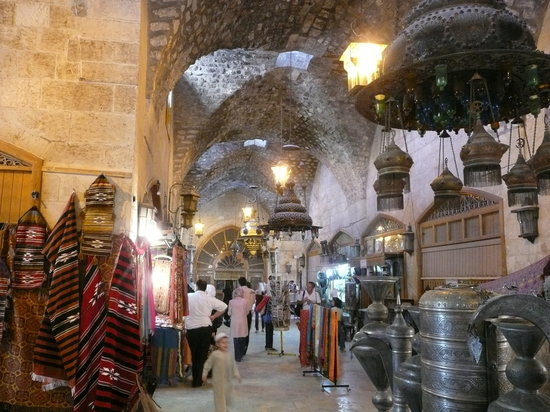
Aleppo's Souk in Better Days
The Souk on fire Saturday
There are more and more reports emerging from Syria which tell of destruction, looted museums, and smuggling salable objects. On Saturday Aleppo's souk was caught in the middle of fighting between rebels and government forces and the souk burned. The old city of Aleppo, where the souk is located is a UNESCO world heritage site. UNESCO Director-General Irina Bokova criticized the destruction over the weekend:

The human suffering caused by this situation is already extreme. That the fighting is now destroying cultural heritage that bears witness to the country’s millenary history - valued and admired the world over - makes it even more tragic. The Aleppo souks have been a thriving part of Syria’s economic and social life since the city’s beginnings. They stand as testimony to Aleppo’s importance as a cultural crossroads since the second millennium B.C.

The souk is situated underneath Aleppo's 13th century citadel. There are reports that government forces have taken up positions in the ancient building. Rodrigo Martin, an expert on Syrian sites said the Souk "was a unique example of medieval commercial architecture" because it offered a progression of hundreds of years of architectural periods, and had been well-preserved.

There have also been reports that items from the National Museum of Aleppo have been moved into the central bank in Damascus for safekeeping. But there have also been reports in Time that museums elsewhere in the country are being looted and arms are being traded for antiquities at the Syria/Lebanon border. In Cairo there will be an emergency meeting to discuss possible efforts the international community can take in response to the damage and looting according to a report in ahram.

Aug 28, 2012

Raising Awareness With Playing Cards

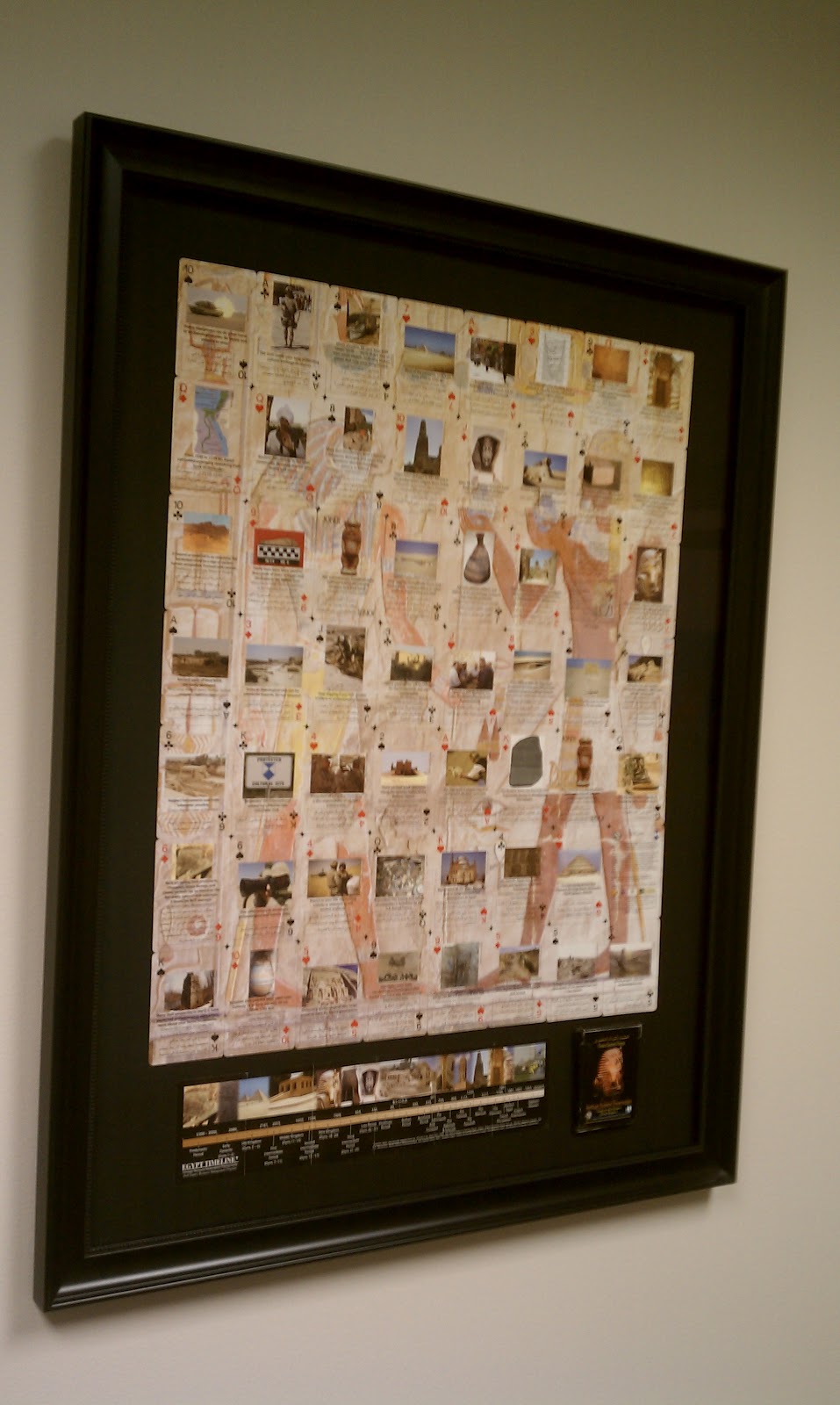
At the annual ARCA conference this summer in Amelia, a reporter based in Rome, Nancy Greenleese, was able to interview Laurie Rush and Joris Kila on efforts to protect culture during armed conflict, of which these cards are an excellent example.

Archeological playing cards created by US Army archeologist Dr. Laurie Rush and academic colleaguesSoldiers often enter conflict zones with limited knowledge of local cultural and historical nuances. Archaeologist Laurie Rush recognized that their ignorance can make conflicts worse. So she helped create a deck of playing cards that displays photos and messages about cultural heritage in Iraq, Afghanistan and Egypt. The Ishtar Gate of ancient Babylon Troops see pictures of Buddhist statues and tablets when playing poker and other games with the cards. They may discover that buying and selling antiquities is illegal or be reminded to look before digging. And Rush's concept has caught on: Soldiers from the US and other countries have snapped up more than 165,000 decks. The US invasion of Iraq offered examples of what troubled Rush about soldiers' cultural knowledge. When American and Polish forces were building a camp in the ancient Iraqi city of Babylon in 2003, they inadvertently crushed ancient brick pavement and marred dragon decorations on the Ishtar Gate. "It immediately occurred to me that a better educated force would not have made those kinds of mistakes," Rush told DW.
 Though I write about cultural heritage law, I spend most of my time teaching law students. It can sometimes be hard to explain to my colleagues just what it is that I write about, apart from the broad "art law". So when I was fortunate enough to get my hands on one of the decks of cards which are increasingly being given to troops who enter conflict zones abroad, I thought at once of framing them.
  1. Nancy Greenleese, It’s all in the cards, Inside Europe (2012), http://bit.ly/O29VOY.
  2. Nancy Greenleese, Archeologist saves cultural treasures with cards Deutsche Welle (2012), (last visited Aug 27, 2012).

Examining the Wartime Looting of Art with Art

I have been alerted to a very interesting project conceived by Rob van Leijsen, Art Handling in Oblivion. It is a catalogue of five different instances of wartime looting. As issues of theft and looting become more widely understood I think more and more artists will decide to take up these issues in their own work. From the description:


The catalogue does not pursue to answer questions of restitution, but evokes discussion by contextualizing the objectives and procedures of wartime art looting. The glued catalogues are cut open on a predefined spot on the table. The central part of the display is designed for consultation and reading, and on the other end envelopes with copies addressed to the concerned museums are placed. This project was conceived by Rob van Leijsen as a graduation project at the Master Design Spaces & Communication at Head Genève (Haute École d'Art et de Design). 185 x 260 mm, 368 pages, laserprint on 70 gr. Edixion Offset, 20 copies (first edition).


Jun 30, 2012

Dr. Laurie Rush on "Cultural Property Protection as a Force Multiplier"

Laurie Rush, and Army archaeologist who has directed the In Theater Heritage Training Program for Deploying Personnel has a very interesting piece tin the March-April edition of Military Review, Cultural Property Protection as a Force Multiplier in Stability Operations The piece focuses on the work of the Monuments officers during WWII, but has much to say about the continued importance of heritage protection today. An excerpt:
Few contest the long-term value of cultural property protection during fullspectrum operations. However, one might reasonably question its immediate benefits to Western military personnel facing hostile engagements in today’s complex conflict situations. One immediate response refers to the media battle that is an inevitable part of all modern conflict. Just as the Italians and Germans used propaganda effectively to advance their causes during the African and Italian campaigns, the terrorists and insurgents of today are often on the scene with video cameras. The British monuments program in 1943 began in part as a response to an Italian propaganda effort centering on the ancient Roman city of Cyrenica in Libya. After the ancient site changed hands from the Italians to the British and back to the Italians, the Italian government put together a propaganda campaign with the message that the British had shown no respect for the glory of ancient Rome. The Italians faked damage to the museum, photographed statues under reconstruction and added captions accusing the British of deliberately breaking them, and offered examples of graffiti written in English. The power of these materials was manifest. They helped convince the Italian people that the British had no respect for any element of Italian or Roman history and culture.
The whole piece merits a good read, highly recommended. I wonder if the protection of these sites and objects can be considered an economic, cultural or other 'multiplier' as well, extending the arguments and resources we might dedicate to their protection outside of conflict zones as well.

Jun 11, 2012

Nemeth on strategic protection of cultural heritage

Does the citizen protection at the Cairo Museum
offer lessons for strategic protection of heritage?
Erik Nemeth makes an interesting point in a special contribution to the Chicago Tribune. Rather than just consider what museums or 'source nations' lose when objects are repatriated; why not consider the gain and strategic benefit returns can offer to the returning nation or museum. And what other benefits might occur during armed conflict if heritage sites are aggressively protected?

The political turbulence in Egypt, Libya and Bahrain has seen both looting of artifacts and destruction of monuments. Last year, citizens linked arms in front of the Egyptian Museum in Cairo with some success. This and other instances like it suggest potential for proactive protection of cultural artifacts, particularly in light of the U.S. ratification of the 1954 Hague Convention in 2009. Indeed, U.S. foreign policy can parlay risk to cultural property into diplomacy by insisting that military interventions, even when the U.S. is not engaged militarily, include a strategy for securing museums, monuments and sites of archaeological significance that along with tactical bombing avoids collateral damage. America might also assess objects that are likely targets for repatriation and consider offering their return as part of a strategy for relations with the nation of origin. If engaged in conflict — or even if not — an active interest in protecting the local cultural property would serve the purposes of garnering political goodwill and creating an opportunity for communication with the local government and potentially the insurgency.
  1. Erik Nemeth, Repatriating part of Saddam statue could promote diplomacy, Chicago Tribune, June 7, 2012, http://articles.chicagotribune.com/2012-06-07/news/ct-perspec-0607-artifacts-20120607_1_hiram-bingham-iii-artifacts-collateral-damage (last visited Jun 10, 2012).

May 3, 2012

Destruction and Looting in Syria

AP Photo of destruction in Homs
There are increasing reports of destruction in Syria. Sites like Krak des Chavaliers, Palmyra, Elba, and historic buildings in Homs are all at risk. Government forces in some cases are shelling civilian areas—the Citadel of Al Madeeq has been shelled, with a tragic result for the site and for the inhabitants.

The AP describes the damage: "shells thudded into the walls of the 12th century al-Madeeq Citadel, raising flames and columns of smoke as regime forces battled with rebels in March. The bombardment punched holes in the walls, according to online footage of the fighting."

There are reports of looting, including some by government forces and others. Rodrigo Martin, an archaeologist who has worked in Syria describes some of the destruction:

We have facts showing that the government is acting directly against the country's historical heritage,. . . What we know . . . Syrian heritage has already provided a huge quantity of information, but we can safely say that the part that has not yet been studied is even bigger,. . . [the destruction] is like burning a page in the book of history of mankind.
This kind of damage, which approaches intentional destruction similar to the destruction of the Buddhas at Bamiyan will be difficult to prevent. With respect to the looting and damage being done, sadly there are not a whole lot of good options the heritage community can call for, apart from a peaceful resolution of the conflict, and renewed vigilance in the marketplace to watch out for the kinds of objects which looters may be taking from Syria.
  1. Syria’s Cultural Treasures Latest Uprising Victim, NPR.org,   May 1, 2012, http://www.npr.org/templates/story/story.php?storyId=151783292 (last visited May 3, 2012).

Feb 28, 2012

Cambodia Disputing a Koh Ker statue up for auction at Sotheby's


The disputed limestone Koh Ker statue
Cambodia is asking for assistance from the U.S. government in repatriating a limestone statue which was likely looted during the Vietnam War/Khmer Rouge era. Jane Levine, compliance director for Sotheby's argues that "there are widely divergent views on how to resolve conflicts involving cultural heritage objects". Here is mine.

The statue has considerable value, its pre-sale auction price was estimated at between $2-3 million. That estimate will likely be considerably less after the report in the New York times, detailing the dubious history of the object. Sotheby's claims the object was acquired by a "noble European lady" in 1975. Hardly a complete history of the object, and hardly enough to invoke the protections of good faith. The absence of information should not confer the benefits of a good faith purchase. Sotheby's argues the burden should be placed on Cambodia. I wonder though if the blunt reality of two feet without a body might lead a thinking person to a different conclusion. No museum can ethically acquire this object. Though the Norton Simon has a similar statue, also without feet, no word yet on whether Cambodia may seek the repatriation of that statue as well.

I would expect if a resolution between Sotheby's and Cambodia cannot be reached that the government consider using its forfeiture powers on the grounds the statue was under the ownership of Cambodia after a 1925 French colonial law declaring objects in Cambodia to be the exclusive property of the state.

Should the forfeiture proceeding be declined, I would urge Cambodia or its lawyers to consider using a civil action using as a precedent the English case, Bumper Development Corp. v Commissioner of Police for the Metropolis [1991] 1 WLR 1362. That case successfully achieved the repatriation of an object taken from an Indian temple, but it was the temple itself was given legal rights as a party. Perhaps there is a legal personality in Cambodia which might offer a similar connection to this statue.
    A Pedestal in Cambodia, which might be the base
  1. Tom Mashberg & Ralph Blumenthal, Sotheby’s Caught in Dispute Over Prized Cambodian Statue, The New York Times, February 28, 2012, http://www.nytimes.com/2012/02/29/arts/design/sothebys-caught-in-dispute-over-prized-cambodian-statue.html (last visited Feb 28, 2012).

Feb 6, 2012

More Context on the Menil Frescoes

The Frescoes at the Menil in Montrose
The return of the Byzantine Frescoes to Cyprus presents an opportunity to consider what will happen to the physical space which was specially created to house them at the Menil in Houston. But it also offers an opportunity to look back at the acquisition process for the frescoes. Lisa Gray reports that at the time of the acquisition, Dominique de Menil understood they were dealing with 'Thugs':

An example of the chopped up mosaics before restoration
De Menil and her associates had flown to Munich, expecting to see two Byzantine frescoes of unusual excellence. Their contact, Turkish businessman Aydin Dikmen, led the little party to a ratty neighborhood at the edge of Munich, then up a flight of stairs to an apartment that had no electricity. In a room lit only by two candles, de Menil was shown two pieces of plaster (John the Baptist, plus part of an angel) propped against a wall. Other bits were packed in a crate. De Menil was horrified. "The pieces were too much chopped up to derive any impression of beauty," she later told Texas Monthly reporter Helen Thorpe. "It was like a miserable human being that has to be brought to the hospital." Through translators, Dikmen told her that the frescoes had been discovered under rubble at a construction site in Turkey. The de Menil party doubted the story. But de Menil agreed to pay Dikmen earnest money in exchange for the right to buy them in the future. At that point, she did something unusual for the wild-and-woolly 1980s antiquity market: She began earnestly trying to track down the frescoes' rightful owner. Eventually, after many letters exchanged by lawyers and embassies, it became clear that the frescoes had been stolen from a tiny church near the town of Lysi, on the island of Cyprus. In 1974, after Turkey invaded northern Cyprus, looters systematically robbed the area's churches and monuments of anything they could carry off. In the little church at Lysi, where the frescoes were painted into the walls' plaster, they'd glued cloth to the walls' surfaces, then used a chain saw and chisel to hack away Christ, Mary and the angels, yielding 38 cloth-fronted pieces.

It is a fascinating story of one of the rare examples of a collector working with the original owner to solve a theft, restore the mosaics, display them, and return them to Cyprus. But in this case, the thieves were rewarded. The mosaics were stripped from their church, sold on the international market in Munich. So it is a good result, and the Menil and the Byzantine Church of Cyprus should be rewarded, and yet this was a success for the thieves as well.
The Chapel in Lysi, Cyprus where the mosaics were stolen


  1. Lisa Gray, Afterlife for a chapel, Houston Chronicle, February 5, 2012, http://www.chron.com/life/gray/article/Gray-Afterlife-for-a-chapel-2968817.php#src=fb (last visited Feb 6, 2012).

Nov 28, 2011

Art Crime and War Course in Hamilton, New Zealand

Hamilton, New Zealand
One of the highlights of ARCA's Certificate program each summer is a course taught by Judge Arthur Tompkins. For those willing and able to make it to New Zealand in February, which is the Antipodean summer, the University of Waikato’s Te Piringa-Faculty of Law and the University’s Centre for Continued Education have recently announced a forthcoming five-day summer intensive course, entitled “Art Crime during Armed Conflict”.

I cannot recommend Judge Tompkins's course highly enough, he covers art and war from ancient times in Greece and Rome up to the present Iraq and Afghanistan conflicts.

Here are the details:
Continuing Education Flyer for Art Crime During Armed Conflict


Aug 30, 2011

Nemeth on Antiquities (UPDATE w/ image)

Erik Nemeth has recently posted a number of interesting articles on SSRN examining 'cultural security' and the task of quantifying antiquities looting.

Cultural Security: From Concept to Engagement:


Recent armed conflict in Iraq and Afghanistan and political violence in Egypt have revealed the strategic significance of cultural property. This paper assesses the role of historic sites and antiquities in foreign engagement. Over the past century, U.S. foreign policy has had successes and shortcomings in leveraging protection of cultural patrimony to strategic advantage. The contrast of successful policy on the protection of immovable cultural property, such as religious monuments, in armed conflict and missed opportunities for tactical intelligence on the trade in movable cultural property, such as antiquities trafficking, identifies potential for development of foreign policy.

Market Value of Culture: Quantifying the Risk of Antiquities Looting:

The traditionally clandestine nature of the art market poses challenges to assessing looting and trafficking in developing nations. In the absence of direct information on transactions in source nations, sales at auction provide a sense of the market value and trade volume of antiquities and primitive art. Auction houses openly publish results of auctions and enable access to sales archives through web sites. On-line access to sales archives creates a substantive pool of data on hammer prices from auctions around the world. Sales archives also contain detailed descriptions of the artworks. The description that accompanies an auction lot can identify the geographic origin of the artwork. Data mining of sales archives for hammer price and origin enables analysis of market value by source nation. The analysis assesses relative market value and, thereby, contributes to an assessment of relative risks of looting across developing nations.
Both short essays are highly recommended.

Aug 22, 2011

Did Marion True Ever Catch a Looter or Dealer?

One of the stolen Mosaics at issue in the case
Some folks on the internet are not too pleased about the letter I collaborated on with Noah Charney re-examining Hugh Eakin's review of Chasing Aphrodite. A pointed response by David Gill here, and another critic wonders "whether anything done by Marion True herself actually led to the capture and conviction of a single looter of archaeological sites, or advanced any "Research into Crimes against Art"?

Yes, she certainly did, according to the Seventh Circuit Court of Appeals. As anyone should know who claims to study looting of archaeology and heritage, Marion True was the hero of one of the most prominent antiquities cases of the last thirty years, AUTOCEPHALOUS GREEK-ORTHODOX CHURCH OF CYPRUS vs.GOLDBERG, 917 F. 2d 278 (7th Cir., 1990) (available here). The case involved an antiquities dealer, Peg Goldberg, as well as Michel van Rijn. A helpful summary of the case is available here from IFAR.  I discuss the case at some length in  an article where I argue the nation of origin's law should be applied more often in cross-border trafficking in pieces of cultural heritage.

But with respect to Marion True, she is the unabashed hero of the case. From the opinion by Chief Judge Alex Bauer:

Peg Goldberg’s efforts soon turned to just that: the resale of these valuable mosaics. She worked up sales brochures about them, and contacted several other dealers to help her find a buyer. Two of these dealers’ searches led them both to Dr. Marion True of the Getty Museum in California. When told of these mosaics and their likely origin, the aptly-named Dr. True explained to the dealers that she had a working relationship with the Republic of Cyprus and that she was duty-bound to contact Cypriot officials about them. Dr. True called Dr. Vassos Karageorghis, the Director of the Republic’s Department of Antiquities and one of the primary Cypriot officials involved in the worldwide search for the mosaics. Dr. Karageorghis verified that the Republic was in fact hunting for the mosaics that had been described to Dr. True, and he set in motion the investigative and legal machinery that ultimately resulted in the Republic learning that they were in Goldberg’s possession in Indianapolis.
(emphasis added)

The opinion is also widely cited because of a concurring opinion by Judge Cudahy embedding the 1954 Hague Convention and the 1970 UNESCO Convention into cultural heritage law, a precedent which has had a number of important effects.

Marion True is no saint, nobody would argue she is, but her story is more complicated than merely painting her as the endpoint for looted antiquities. She did so much more, as Jason Felch and Ralph Frammolino explain in their book. Italian officials will tell you if asked that the case was brought against her because they had the evidence, not necessarily because she was the worst offender. And yes, she was instrumental in returning at least one looted object.  group of looted objects.

Apr 19, 2011

More War, More Looting

Jason bringing Pelias the Golden Fleece
From Jason and his argonauts to Thomas Bruce, seventh Earl of Elgin, cultural takings are nothing new. So argues Richard J. Evans—Professor of History at Wolfson College, Cambridge, and Chair of the U.K. Spoliation Advisory Panel—in a terrific long-read that argues the looting of heritage during wartime continue despite attempts to police conflict.

It is a beautifully written historical summary of wartime looting, which puts the ancient world, modern unrest, and World War II in historical context. I really recommend giving the entire piece a read, but here are some highlights:

The history of [looting] goes back far indeed, beginning perhaps with Jason and the Argonauts looting the Golden Fleece; and it continued with the Romans’ habit of looting art from conquered cities in order to parade it through the streets of Rome in the ceremonial procession of the Roman triumph before putting it on display in the Forum.
. . .

ELGIN’S ACTIONS reflected his belief that educated Englishmen were the true heirs of classical civilization, whose legacy permeated the minds of educated elites across Europe. This influence was nowhere greater than in revolutionary France, where Napoleon’s victorious armies began concluding a series of treaties with conquered states across Europe, notably the Treaty of Tolentino, signed by the pope in 1797, that allowed them to appropriate artworks to stock the Louvre Museum, founded in 1793.

. . .

It is vital to learn the lessons of the Second World War and put effective arrangements in place in advance of future fighting to rescue and restore cultural objects and prevent looting. Such arrangements were not made in Iraq in 2003, and the devastation was vast. The international community cannot prevent looting and destruction in the course of civil unrest, but it can take steps to minimize it in cases of interstate conflicts. Above all, the art and museum world needs to be more vigilant in monitoring the trade in looted goods in the wake of conflicts such as those in Iraq or Afghanistan, and law-enforcement agencies need to step in with sanctions against those who encourage—or benefit—from it. In a globalized world, every state has, as the Hague Convention urged more than a century ago, a duty to act as the trustee of the culture of all nations, not just its own.


  1. Richard J. Evans, Art in the Time of War, The National Interest, May-June 2011, http://nationalinterest.org/article/art-the-time-war-5163 (last visited Apr 19, 2011).

Jun 22, 2010

Archaeologists Warn of Danger to Sites in Afghanistan

AFP reports on damage to cultural heritage in Afghanistan today.  We heard a lot about damage done in Iraq, but as Larry Rothfield and others have pointed out, Afghanistan is a chance to correct the mistakes that were made in Iraq.  It looks like it might be a failed opportunity.  It is a familiar story of a flawed market, economic instability, and little enforcement. 


KABUL — A senior Western archaeologist in Afghanistan says he is struggling to protect a vast wealth of cultural treasures from being stolen and smuggled to wealthier countries, or worse, destroyed altogether.
"I think there is absolutely no site in this country which is unaffected," Philippe Marquis, the director of a team of French government-funded archaeologists operating in Afghanistan, told AFP in a recent interview.
"The illegal trade in antiquities is very significant, and is related to all the illegal activities which are going on in Afghanistan," he added.
Afghanistan's position on the ancient Silk Road that linked east with west has left the country with a rich cultural heritage.
But decades of war have hampered efforts to conduct proper archaeological investigations, while a lack of regulation means that priceless treasures are being smuggled out of the country at an alarming rate.
The looting is often carried out by poor villagers who are paid by middlemen often based elsewhere in the region -- a problem the French have gone some way to addressing by paying the looters to work on their digs instead.
But Marquis believes much of the blame lies elsewhere. It is illegal to take object more than 100 years old out of Afghanistan, but enforcement of the law is weak, and most stolen antiquities are smuggled to wealthier countries.
The United Nations recently sought the advice of the French archaeologists after it discovered a large number of Afghan antiquities in the shipment of a departing staff member.
"People are often not even aware of the importance, they just think, well this would be nice on a shelf in my house in France or the UK," says Marquis.
  1. Claire Cozens, AFP: Archaeologists seek protection for Afghan treasures (2010), http://www.google.com/hostednews/afp/article/ALeqM5jf-EWqmhK3CiG7XGyGyVtOsNWZ8g (last visited Jun 22, 2010).

Aug 27, 2009

Looted Picasso Recovered in Iraq

This work by Pablo Picasso, which was looted by an Iraqi soldier during the 1990 invasion of Kuwait has been recovered by Iraqi security forces.  The painting has clearly been folded, and is badly damaged. As usual, the trick isn't stealing a work, it is trying to sell it—even in Iraq. 

From the Times:


The soldier had been trying to sell it, allegedly asking for $450,000 (£278,000). The market value is estimated to be $10 million.  The masterpiece, which is signed by Picasso, was seized this week during a raid on the house belonging to the suspect near the mainly Shia city of Hillah, about 60 miles south of Baghdad.  A security official said that the painting was tracked to the property, but officers feared that the suspect would burn the artwork if they attempted a raid, so they lured the man into the street where he was arrested.  The suspect claimed to be an electrician, but the official says that he is a former member of the security forces who has a relative from Mukhabarat (Saddam’s former security force) that entered Kuwait.

Apr 20, 2009

"they forgot about culture"

David Glenn, who is doing some very good writing on the antiquities trade for the Chronichle of Higher Education has a Q & A with Larry Rothfield discussing the invasion of Iraq and the looting of sites and museums there ($) (cross-posted at Safe-Corner).  Here is an excerpt:

Q. Why did the United States do such a bad job of protecting the museum in 2003?
Before the war, nobody except archaeologists was worried about civilians looting the archaeological sites and the museum. And that includes the Iraqi exiles who were advising the State Department's Future of Iraq Project, which was supposed to develop plans for the postwar period. They set up working groups on all sectors of society — but they forgot about culture.

Q. But would it have made a difference if the Future of Iraq Project had paid attention to culture?

No, it wouldn't have made any difference at all, given that the military threw all of their plans in the garbage can anyway.

Now, the military itself was very interested in doing its job in terms of protecting cultural sites and museums. But under international law, its job is defined as not destroying or looting cultural sites itself — not as preventing civilians from destroying sites.

So before the war, they reached out to archaeologists, and they did a perfect job of identifying sites to put on a no-strike list. None of those sites was destroyed in active combat operations.

Unfortunately, they ignored warnings from the same archaeologists they were working with that the museums and sites might be looted by Iraqis. The Pentagon should have known about that issue. Nine museums were looted after the 1991 Gulf War. The military did not learn its lesson from that experience.

Jan 29, 2009

Damage to Heritage in Gaza

Lauren Gelfond Feldinger has a report in the Art Newspaper to damage to Gaza's cultural sites:

JERUSALEM. After a 3,500-year history of invasions, the latest war on the beleaguered coastal strip of Gaza has once again put historic sites at risk.
The fragile ceasefire in force at the time of writing has allowed some information to emerge about the fate of Gaza’s cultural heritage. Gaza’s only museum, a private antiquities museum run by Gazan contractor and collector Jawdat Khoudary, was badly damaged during Israel’s 22 days of air and land strikes. The glass doors and windows have been shattered and the roof and walls have been damaged. Roman and Byzantine pottery, Islamic bronze objects and many amphorae have been destroyed, initially during shooting 20m to 200m away, and later because of nearby shelling, with one direct hit to the museum’s conference hall, Mr Khoudary said. Amphorae, clay and ceramic vessels with two looped handles, were created in Gaza and the region during the fourth to seventh centuries for holding wine, olive oil and food and trading perishable commodities.

Meanwhile, anxieties are growing about the fate of the city’s antiquities. “I am very concerned: the entire Gaza Strip is an archaeological site,” Palestinian archaeologist Professor Moain Sadeq said.

Professor Sadeq founded the Palestinian Antiquities Department of Gaza in 1994, and is currently a visiting lecturer at the University of Toronto while in contact daily with Gaza. “Historical sites and buildings in Gaza are adjacent to urban areas, so any location that was hit as a target also put the nearby historical sites and buildings in danger,” he said. Major sites where damage is expected because of heavy fighting in adjacent areas include: Tell es-Sakan, an early Bronze Age settlement that is the largest and oldest walled Canaanite city in the local region, and the oldest Egyptian fortified site outside of Egypt; Tel el-Ajull, an important middle and late Bronze period city that was an important trade hub between ancient Egypt and the Levant; and the remains of Anthedon, a Hellenist port. The Byzantine church of Jabalya was also near heavy fighting, and was the site of partial damage by Israeli tanks during an incursion in 2005. Al-Zeitoun residential quarter in Gaza’s Old City, a medieval historic district, has also been largely destroyed, Professor Sadeq added.

Archaeologists are expecting assessment of all of Gaza’s historical sites to be slow. As humanitarian assistance is the urgent priority, serious archaeological surveys of historic sites will be delayed. “I hope that Israel and the Palestinians will work to restore the sites. I am worried about Gaza sites that were excavated and are above the ground because I am sure during the military activity that some sites have been damaged,” Dr Yigal Yisrael, of the Israel Antiquities Authority Ashkelon region and Western Negev said.

Oct 17, 2008

A History of Spoliation

Wayne Sandholtz has written a historical account of plunder and the norms which aim to prevent it over the last 200 years, Prohibiting Plunder. I have not had a chance to read it, but it looks promising. Here's the description:

For much of history, the rules of war decreed that "to the victor go the spoils." The winners in warfare routinely seized for themselves the artistic and cultural treasures of the defeated; plunder constituted a marker of triumph. By the twentieth century, international norms declared the opposite, that cultural monuments should be shielded from destruction or seizure. Prohibiting Plunder traces and explains the emergence of international rules against wartime looting of cultural treasures, and explores how anti-plunder norms have developed over the past 200 years. The book covers highly topical events including the looting of thousands of antiquities from the Iraqi National Museum in Baghdad, and the return of "Holocaust Art" by prominent museums, including the highly publicized return of five Klimt paintings from the Austrian Gallery to a Holocaust survivor.

The historical narrative includes first-hand reports, official documents, and archival records. Equally important, the book uncovers the debates and negotiations that produced increasingly clear and well-defined anti-plunder norms. The historical accounts in Prohibiting Plunder serve as confirming examples of an important dynamic of international norm change. Rules evolve in cycles; in each cycle, specific actions trigger arguments about the meaning and application of rules, and those arguments in turn modify the rules. International norms evolve through a succession of such cycles, each one drawing on previous developments and each one reshaping the normative context for subsequent actions and disputes. Prohibiting Plunder shows how historical episodes interlinked to produce modern, treaty-based rules against wartime plunder of cultural treasures.

Ingo Venzke has a review in 19 European Journal of International Law 866 (2008).

Labels

"Bronze Statue of a Victorious Youth" (17) 1954 Hague Convention (12) 1972 World Heritage Convention (1) Aboriginal Heritage (1) Aboriginal Heritage Act 1988 (SA) (2) act of state doctrine (1) Admiralty Law (11) Afghanistan (10) Africa (4) Albright-Knox Gallery (3) Aleppo (2) Alfred Stieglitz (2) Alternative Dispute Resolution (1) Angkor (1) Anti-Seizure Legislation (1) antiquites (3) antiquities (337) Antiquities Act 1906 (2) Antiquities leasing (10) antiquities looting (4) antiquities smuggling (3) antiquities theft (6) ARCA (8) ARCA Annual Conference (10) ARCA MA Program (6) Archaeological Resources Protection Act (5) Archival Recovery Team (ART) (3) Archives (1) Armed Conflict (22) Arrests (79) Art and Cultural Heritage Law (1) Art Beat Constables (9) Art Crime Statistics (1) art fraud (9) art history (1) Art Institute Chicago (3) art law (1) Art Loans (9) Art Loss Register (19) Art Market (10) Art Theft (263) Artist Resale Right (1) arts funding (1) Association of Art Museum Directors (AAMD) (8) Athens (3) Auction (99) austerity (2) Australia (7) Austria (3) Authentication (3) Babylon (3) Banksy (1) Big Bend National Park (1) bilateral agreements (2) Black Hills (1) Bolton Forgers (4) Book Theft (3) Brazil (5) British Museum (13) Bronze (5) Bronze Statue of a Victorious Youth (1) Brueghel (1) Bruno Lohse (3) Brussels (1) Bührle Collection Theft (4) Bulgaria (4) Burke and Wills (2) Burns Mummies (1) Byzantine Artifacts (4) Cairo (1) Cairo art theft (2) California Raids (6) Caligula (1) Cambodia (11) Camille Pissarro (7) Carabinieri (6) Caravaggio (1) catalogue raisonné (1) Cellini Salt Cellar (2) Central Park (1) Cerveteri (1) Chance Finds (3) Charles Goldie (1) Chihuly Glass (1) China (16) Christie's (14) Church Thefts (6) Civil War (2) Claude Monet (4) Claudia Seger-Thomschitz (3) Cleveland Bronze Apollo (2) Cleveland Museum of Art (CMA) (5) Coins (7) Colonial Art (1) Columbia (1) Conferences (7) Conservation (1) Conventions (1) Copyright (5) Corot (1) Corrections (1) cosmpoplitanism (4) Costa Rica (2) CPIA (10) criminal charges (5) criminology (1) Crystal Bridges Museum (5) Cultral Property Advisory Committee (9) Cultural First Aid (2) cultural heritage (6) cultural heritage careers (2) Cultural Heritage Moot Court Competition (2) Cultural heritage movement (1) cultural justice (3) cultural policy (18) cultural property (4) Cultural Resource Management (1) cultural security (1) culture funding (1) curatorial theft (2) Cycladic Figurines (1) Cyprus (9) Dahshour (1) Dallas Museum of Art (DMA) (2) Database (5) Databases (4) DCMS (2) Deaccessioning (24) Dead Sea Scrolls (1) Dealing in Cultural Objects (Offences) Act 2003 (4) Declaratory Suits (4) Demand and Refusal (2) Design and Artists Copyright Society (1) Detroit Institute of Art (1) development (1) Dick Ellis (2) Diplomatic Bags (1) Doctrine of Discovery (3) Donald Trump (3) Donny George Youkhanna (2) Dr. No (6) Droite de Suite (2) Dubai (1) due diligence (5) eBay (5) Economics (1) Ecuador (1) Edgar Degas (2) Edinburgh (1) Edoardo Almagia (1) Edvard Munch (2) Egon Schiele (4) Egypt (55) El-Hibeh (2) Elgin Marbles (5) empirical studies (1) England (4) environmental justice (4) Environmental law (2) Erik Nemeth (1) Etruscans (2) Euphronios Krater (4) European Court of Human Rights (1) Export Restrictions (19) Fakes (6) FBI (16) FBI Art Crime Team (16) Festivus (1) Fifth Circuit (1) fire (1) Fisk University (3) Footnotes (59) force multiplier (1) Foreign Sovereign Immunities Act (FSIA) (6) forfeiture (13) Forgery (27) fossils (2) Four Corners Antiquities Investigation (11) fractional ownership (2) Francavilla Marittima (1) France (30) Francesco Rutelli (15) Frans van Mieris (2) Frederick Schultz (3) freedman's town (2) Gaza (1) George Grosz (1) Georgia (1) Georgia O'Keeffe (2) Germanicus (2) Germany (16) Getty (1) Ghent Altarpiece (1) Giacomo Medici (6) Gianfranco Becchina (1) Golf (3) good faith (3) Goya (3) Goya theft (4) graffiti (1) Greece (38) Grosz (1) Henri Matisse (1) Henry Moore (1) Heritage at Risk (1) heritage crime (1) Heritage Crime in Art (1) Hermitage (2) High Court in London (4) historic documents (1) Historic Landmark (1) historic preservation (1) historic weapons (1) Holocaust (Return of Cultural Objects) Act (2) Hopi (1) House of Commons Illicit Trade Advisory Panel (ITAP) (1) Houston (2) Howard Spiegler (2) Human Remains (5) Human Rights (1) Hungary (1) Identification (1) illicit excavation (1) Immigration and Customs Enforcement (16) Immunity (6) Immunity from Seizure Act (ISA) (3) import restrictions (3) in the media (7) Indemnity (1) Indianapolis Museum of Art (5) indictments (5) Indigenous Rights (2) Indonesia (1) injunctions (1) Insider Theft (2) Institute d'Egypte (1) Institute of Art and Law (1) Institutional theft (1) Intellectual Property (4) Intentional Destruction (6) International Criminal Court (ICC) (1) International Journal of Cultural Property (1) internationalism (4) INTERPOL (1) Interview (2) Interviews (2) Iran (8) Iran v. Barakat Galleries Ltd. (6) Iran v. Berend (3) Iraq (46) Isabella Stuart Gardner Museum (7) Islamic art (2) Israel (4) Istanbul (2) Italian Art Squad (5) Italian Culture Ministry (6) Italy (122) Jacques Goudstikker (4) James Ossuary (1) Jan Breugel the elder (2) Jan van Eyck (1) Japan (3) Jeanneret v. Vichy (1) Jeff Tweedy (1) Jenack v. Rabizadeh (1) JMW Turner (2) John Constable (1) Jonah Marbles (1) Jonathan Tokeley-Parry (1) Jordan (2) Joseph Farquharson (2) Journal Articles (1) Journal of Art Crime (1) Ka-Nefer-Nefer (9) Kansas (2) Kansas City (1) Kazimir Malevich (3) Kenya (1) Kingsland (3) Klimt (3) Koh Ker (6) Konowaloff v. Metropolitan Museum of Art (1) Kunsthal Museum Theft (2) La Dea Di Morgantina (6) Lawrence Kaye (1) Lebanon (1) Leonardo Da Vinci (9) Leopold Museum (1) Lewis Chessmen (5) lex originis (3) lex situs (5) Libya (2) Lincoln's Inn theft (1) Lithographs (1) loans (5) London (6) London Art and Antiques Unit (7) London Metropolitan Police (2) loot (1) looting (30) Los Angeles County Museum of Art (LACMA) (2) Los Angeles Museum of Contemporary Art (MOCA) (1) LS Lowry (3) Lucas Cranach (1) Lucas Cranach the Elder (3) Lucian Freud (1) Macedonia (1) Machu Picchu (12) Madonna of the Yarnwinder (recovery) (9) Mali (4) Malta (1) Manchester (2) manuscript (1) Maori (2) maps (2) Marc Chagall (1) Marion True (25) Mark Landis (1) market overt (1) Mausoleum at Helicarnassus (1) Max Stern (3) Maxwell Anderson (3) metal detecting (6) Metropolitan Museum of Art (the Met) (29) Mexico (9) Meyer de Haan (1) MFA Boston (6) Michael Brand (3) Michael C. Carlos Museum (1) Michael Steinhardt (2) Middle Eastern Geodatabase for Antiquities (MEGA) (1) Minneapolis Institue of Arts (MIA) (1) Moctezuma's Headdress (1) Modigliani (2) MoMA (4) Mondrian (1) Monet (3) Montreal Museum of Fine Art (2) Monument Men (5) Monuments Men (1) Moral Rights (3) Morgantina (2) Morgantina Aphrodite (9) Morgantina Treasure (1) Moscow (2) Musée d'Art Moderne theft (1) Museum Acquisitions (1) Museum Governance (1) Museum of Anatolian Civilizations (1) Museum of Fine Arts in Boston (6) museum security (2) museum theft (2) Museums Libraries and Archives Council (MLA) (1) Music (2) Myth (1) Napoleon III (1) National Academy (2) National Archaeological Museum in Naples (1) National Archives (3) National Gallery (Washington) (1) National Historic Preservation Act (2) National Stolen Property Act (8) nations of origin (5) Native American Graves Protection and Repatriation Act (8) Native Americans (17) native cultures (2) Nazi Spoliation (74) Neglect (1) Neil Brodie (1) Nelson-Atkins' Bloch Building (1) Netherlands (10) New Acropolis Museum (3) New Orleans (4) New York (6) New Zealand (7) Nigeria (1) nighthawking (3) Noah Charney (1) Norbert Schimmel (1) Norman Palmer (1) Norman Rockwell (2) Norway (4) NSPA (1) Nuclear Analytical Techniques (1) Odyssey Marine Exploration (23) Olympics (2) Omaha Nebraska (1) Organized Crime (1) Orphaned Works (2) Oskar Kokoschka (2) Oslo (1) Pablo Picasso (16) Pakistan (2) Palestine (3) Panama (1) Paolo Ferri (2) Paris (10) partage (1) Parthenon Marbles (17) Patents (1) Patty Gerstenblith (1) Paul Bator (2) Paul Cezanne (5) Paul Gauguin (4) Pazardzhik Byzantine Silver Hoard (1) Penn Museum (1) Pentagon (1) Pere Lachaise (1) Persepolis (3) Peru (24) Peru Headdress (1) Peter Watson (1) Philadelphia (7) Phillipines (1) Picasso (9) Pierre Le Guennec (1) Pierre Valentin (1) piracy (1) Pollock (1) Pompeii (3) Popular Culture (1) Portable Antiquities Scheme (25) Portrait of Wally (11) Poussin (1) pre-Columbian antiquities (2) pre-emptive archaeology (1) Prince Claus Fund (1) Princeton (4) Private Collectors (2) Private International Law (5) Proceeds of Crime Act 2002 (UK) (1) Prosecutions (7) provenance (13) Prussia (1) Public Art Theft (5) Public Trust (1) Publications (2) Quran (1) Radio (2) Ransom (2) realkulturpolitik (1) recovery (45) Rembrandt (2) Rene Magritte (2) Renoir (2) Renvoi (3) repatriation (121) Restitution (40) reward (1) Rhodes (1) Robert Hecht (8) Robin Symes (1) Rodin (2) Roger Atwood (1) Roman Objects (2) Rome (3) Rothko (1) Royal Academy (1) Rubens (3) Rubin v. Islamic Republic of Iran (2) Russia (11) Sale of "The Cello Player" (1) Sale of the "Gross Clinic" (11) Sale of the Stieglitz Collection (4) Salvage (1) Sao Paulo (2) Sao Paulo Museum of Art (3) Scheduled Ancient Monuments (1) Scholarship - Articles and Essays (57) Scholarship - Book Reviews (3) Scholarship - Books (12) Scholarship - Case Notes (1) Scholarship - Events and Conferences (55) Scholarship - Journal Articles (12) Scholarship - Student Papers (16) Scotland (7) Scotland Yard's Arts and Antiques Squad (1) scrap metal (1) Sculpture (2) security (4) seizure (16) Selling stolen art (1) seminars (1) semiotics (1) Sentencing (2) Serbia (1) settlement (1) Sevso Treasure (6) Shelby White (3) shipwreck (1) Sicily (4) Simon Mackenzie (2) Sisley (4) Slovakia (1) Smithsonian (4) Solomon R. Guggenheim (1) Sonic Fingerprints (1) Sotheby's (13) Sotheby's Paris (1) South Africa (1) South America (1) Spain (21) Spoliation (2) Spoliation Advisory Panel (8) St. Louis Art Museum (8) St. Ninian's Isle Treasure (3) Stair Gallery (2) State Department (2) Statue of a Victorious Youth (1) statute of frauds (1) Statutes of Limitations (10) Stephane Breitwieser (1) Stephen Colbert (1) Steven Spielberg (1) stewardship (2) Stolen Art (11) Stone Age (1) street art (1) study collections (1) Summer Palace Bronzes (7) Sweden (2) Switzerland (13) Syria (7) Taliban (1) Tennessee (3) The Art Fund (1) The Bowers Museum (1) The Discovery Rule (4) the fourth ward (1) The Getty (58) The Gross Clinic (1) The Guggenheim (2) The Holocauset (stolen art) restitution bill (2) the Louvre (2) The Menil (4) The National Gallery (1) The National Gallery (London) (2) the Pirate Party (1) The Scream (1) theft (2) Thomas Eakins (9) Thomas Jefferson (1) Timbuktu (2) Titian (1) Toledo Museum of Art (4) tombaroli (2) tourism (1) transparency (1) Traprain Law (1) Traveling Exhibitions (2) Treasure Act (4) treasure trove (3) Turkey (11) UCC (1) Ukraine (2) UN (2) Underground Salt Museum (1) Underwater Cultural Heritage (32) Underwater Sites - "Black Swan" (3) Underwater Sites - "Blue Baron" (1) Underwater Sites - HMS Victory (3) UNESCO (23) UNESCO Convention (24) UNESCO Convention on the Protection of Underwater Cultural Heritage (9) UNIDROIT Convention (2) United Kingdom (24) United States (12) University College London (1) University of Chicago (1) University of Guelph (1) University of Virginia (3) urban development (1) Van Gogh (7) Vandalism (4) Vatican (1) Vermeer (2) Victoria And Albert Museum (3) Vigango (3) viking (1) Villa Giulia (3) Vineberg v. Bissonnette (4) Visual Artists Rights Act (2) voluntary returns (1) Von Saher v. Norton Simon Museum of Art at Pasadena (3) Watts Towers (1) Waverley Criteria (10) Week in Review (3) West Bank (1) wikiloot (1) Wilco (1) William S. Burroughs (1) Windsor Antiquities Indictment (1) World Heritage Sites (1) World War II (11) Yale University (13) year in review (2) Zahi Hawass (9)

LinkWithin

Related Posts Plugin for WordPress, Blogger...